AI Data Privacy: Research Tools That Don't Train on Your Data
AI data privacy for research tools: what no training on your data must cover, and how traceable, auditable research keeps sensitive due diligence defensible.

Quick Answer
An AI research tool is suitable for sensitive enterprise work only when customer data is excluded from model training and every material research step can be reconstructed. Privacy controls contain the data; audit trails make the resulting recommendation defensible to compliance teams, auditors, boards, and regulators.
Introduction
Enterprise data privacy compliance is a prerequisite for AI-assisted due diligence, not a feature to evaluate after deployment. A vendor that accepts confidential prompts but cannot explain training use, access boundaries, retention, or research provenance leaves compliance teams carrying the risk. Financial services adoption is moving quickly: 40% of surveyed industry respondents report advanced AI adoption, while only 20% of regulators report the same level, according to advanced AI adoption. That gap turns every vendor review into a governance decision, not merely a technology purchase. Shopmonkey's case study shows what a governed research workflow can change: its underwriting team cut research from hours to minutes per account.
Key Takeaways:
Training exclusion must cover prompts, documents, outputs, and metadata.
Least-privilege access limits what an agent can retrieve or expose.
Audit-ready evidence connects research conclusions to their sources and actions.
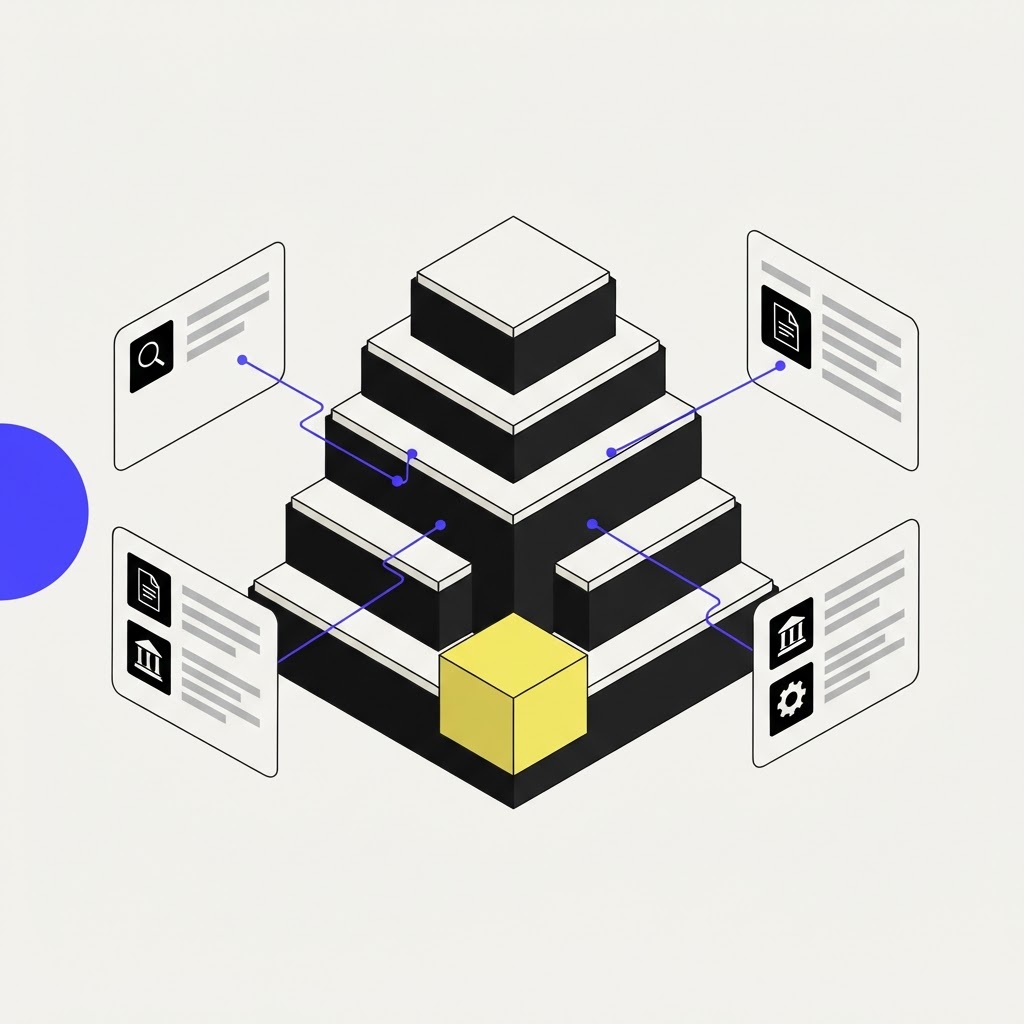
Enterprise Data Privacy Compliance Starts With a Verifiable Boundary
"We do not train on your data" should mean more than an assurance in a sales conversation. It should describe a documented boundary that prevents customer prompts, uploaded files, retrieved records, and generated outputs from entering a provider's model-training pipeline. For secure AI for corporate due diligence, that boundary protects deal theses, counterparty records, adverse-media findings, and internal legal analysis from becoming reusable vendor data.
What no training on customer data must cover
Compliance teams should test the claim against the complete information path, from ingestion through retention and deletion. The operational question is simple: can the vendor identify what data enters the system, who can access it, where it is processed, how long it persists, and whether it can influence future model behavior?
Inputs: Prompts and uploaded documents stay outside training datasets.
Outputs: Reports and work products are not reused for model improvement.
Metadata: Query histories and identifiers receive defined handling controls.
Retention: Configurable retention supports deletion and contractual obligations.
Access: Scoped credentials restrict data retrieval to approved permissions.
Why privacy language alone is insufficient
Privacy promises do not establish whether a research conclusion is reliable, reproducible, or reviewable. Under GDPR, the scope of personal data is broad, and the EDPB's Opinion 28/2024 holds that AI models trained on personal data are not anonymous by default, so each model needs a case-by-case assessment, as one 2026 EDPB AI model opinion analysis explains. A buyer needs controls that govern the data lifecycle and evidence that shows what the agent reviewed, which sources informed its conclusion, and what actions followed.
A practical review should separate confidentiality from accountability. Confidentiality protects the research record from inappropriate access. Accountability supplies traceable AI decision trails that allow a reviewer to challenge a source, verify a claim, or understand why an escalation occurred.

Data Governance for High-Stakes Work Requires Evidence, Not Assurances
Data governance for high-stakes work should be evaluated through controls a security, legal, and compliance team can inspect. This includes isolation, identity controls, retention practices, decision logging, and deployment architecture. A generic chat interface may be useful for drafting, but it rarely supplies the evidence needed for institutional onboarding, acquisition diligence, or continuous KYC.
Which controls should a vendor security review require?
Start with the controls that determine whether sensitive research stays contained. A vendor security diligence process should request written answers on model training, subprocessors, data residency where relevant, incident handling, deletion workflows, and access logging. It should also require a demonstration of how a reviewer exports the supporting evidence behind an agent's result.
Security frameworks provide a useful way to organize this review. The Trust Services Criteria define what a SOC 2 audit evaluates, and Security is the only criterion required for every SOC 2 audit, while others can be added to the report scope. That does not make a SOC 2 report a substitute for product-level validation; it means the review should connect policy controls to the actual behavior of the research workflow.
Grep supports this standard with no model training on customer data, scoped least-privilege credentials, configurable retention with delete-on-request, and exportable decision trails for audit. Grep's guide to the SOC 2 security review of AI platforms is a useful companion, because a compliance buyer needs to assess both the control environment and the research evidence produced inside it.
How do VPC deployment and sandboxing change the risk?
Secure VPC deployment for AI agents gives an enterprise a controlled network boundary for sensitive workloads, while sandboxing limits what an agent can access or execute within that boundary. The distinction matters: a private deployment reduces exposure paths, but it does not by itself prove that the agent used authorized data or reached a defensible conclusion. Review VPC deployment options alongside identity design, egress restrictions, credential scope, and evidence retention.
For an AI due diligence platform, the table below separates controls that protect information from controls that make the work reviewable.
Control area | What to verify | Due diligence outcome | Evidence to retain |
|---|---|---|---|
No-training policy | Inputs and outputs excluded from model improvement | Confidential deal data remains contained | Contract terms and technical documentation |
Least-privilege credentials | Agent access limited to approved systems and data | Reduced unnecessary data exposure | Permission records and access logs |
VPC deployment | Private network boundary and controlled connectivity | Stronger isolation for sensitive workloads | Architecture and network-control records |
Decision trails | Sources, reasoning steps, and outputs can be exported | Reviewable and challengeable findings | Research report and source record |
Retention controls | Deletion and retention settings match policy | Reduced persistence of sensitive materials | Retention configuration and deletion logs |
The decisive tradeoff is not privacy versus speed. It is whether speed produces evidence that can survive a challenge after a transaction, onboarding decision, or compliance escalation has already occurred.
Turn Privacy Controls Into an Audit-Ready Research Process
Automated compliance oversight becomes defensible only when privacy controls are built into the operating workflow. Assign an accountable owner for each agent, define its permitted sources and actions, establish escalation rules, and retain evidence in a form reviewers can access without reconstructing the work from screenshots or chat histories.
What should an auditable research record contain?
Auditable AI research should preserve the assignment, the source set, the time of retrieval, the agent's cited findings, material limitations, and the human decision that followed. This gives second-line risk, internal audit, and legal teams a usable record when a result is disputed. It also distinguishes a research deliverable from a fluent answer that cannot be inspected.
Grep's Agent creates citation-backed reports, slide decks, and spreadsheets for high-stakes research, while Loops and Monitors support scheduled or event-triggered workflows and always-on screening. That matters when a counterparty changes leadership, a portfolio company updates its website, or a regulatory development changes the risk profile after the original review closed.
How should buyers test a platform before production?
Run a controlled pilot using a realistic but approved research case, then ask reviewers to reproduce a material conclusion from the exported record. Test whether the platform exposes source citations, preserves the decision path, honors credential boundaries, supports deletion requests, and produces an escalation trail that a nontechnical reviewer can follow. For teams evaluating auditor-approved research tools, the useful test is not whether the answer sounds convincing, but whether the record explains why it should be trusted.
Do not treat adoption as proof of governance maturity. Among financial-services respondents surveyed in the same Cambridge report, 79% report process automation at pilot stage or beyond, 75% report data visualization, and 69% report data and knowledge management, yet only 14% see AI as transformational to organizational strategy and competitive advantage. A privacy-first implementation closes that execution gap by tying each agent to controls, accountable decisions, and retained evidence.

Conclusion
High-stakes AI research needs a firm data boundary and a complete evidence trail. Require written no-training commitments, least-privilege access, appropriate deployment controls, retention governance, and exports that let reviewers reconstruct material findings. For compliance and risk operations that need custom agents for due diligence, institutional onboarding, and continuous monitoring, Grep is built around traceable, auditable work that can be defended to a board or regulator. Privacy prevents unnecessary exposure; auditability makes the resulting decision accountable.
Need a reviewable research workflow for sensitive work? Explore Grep's custom agents and assess their controls against your governance requirements.
Frequently Asked Questions (FAQs)
How to ensure data privacy with enterprise AI?
Data privacy with enterprise AI is ensured by verifying that customer prompts, files, outputs, and relevant metadata are excluded from training, protected by scoped access controls, governed by retention settings, and supported by contract terms and technical evidence that compliance teams can inspect.
Why is defensible AI critical for financial compliance?
Defensible AI is critical for financial compliance because a regulated organization must be able to explain the sources, process, controls, limitations, and accountable human decision behind a risk assessment when internal audit, a client, or a regulator challenges the outcome.
Can AI agents provide audit-ready research reports?
AI agents can provide audit-ready research reports when the platform preserves source citations, retrieval context, material research steps, outputs, and human review decisions in an exportable record that allows an independent reviewer to test the basis for each conclusion.
Is AI-driven due diligence safe for institutional onboarding?
AI-driven due diligence is safe for institutional onboarding when deployment uses approved data boundaries, least-privilege credentials, controlled retention, clear escalation rules, and a reviewable record, because those controls limit exposure while preserving accountability for final decisions.
Why do enterprises need traceable AI research?
Enterprises need traceable AI research because a conclusion without its sources and decision path cannot be independently challenged or validated, which creates avoidable risk when the work supports onboarding, investments, vendor reviews, compliance actions, or executive decisions.
How does Grep compare to Perplexity on data privacy and governance?
Perplexity states that its Enterprise plans never use customer data for model training, while its Free, Pro, and Max plans have AI data retention, which allows queries to be used for model improvement, turned on by default unless the user switches it off. Grep commits to no model training on customer data, along with scoped least-privilege credentials, configurable retention with delete-on-request, VPC deployment options, and exportable decision trails for auditable due diligence and compliance research. For any vendor, confirm the training, retention, and deletion terms in the contract rather than relying on a plan name.
About the Author
AJ Asver is the Founder and CEO of Grep, with experience building fintech products at Coinbase and Brex. A four-time founder and Oxford computer science graduate, he focuses on AI agents for due diligence, compliance, KYC, and other high-stakes enterprise research workflows. Connect on LinkedIn.