AI Investment Due Diligence With an Audit-Ready Trail
AI investment due diligence needs more than speed - it needs a trail regulators and boards can trust. See how auditable AI agents change deal prep.
Quick Answer
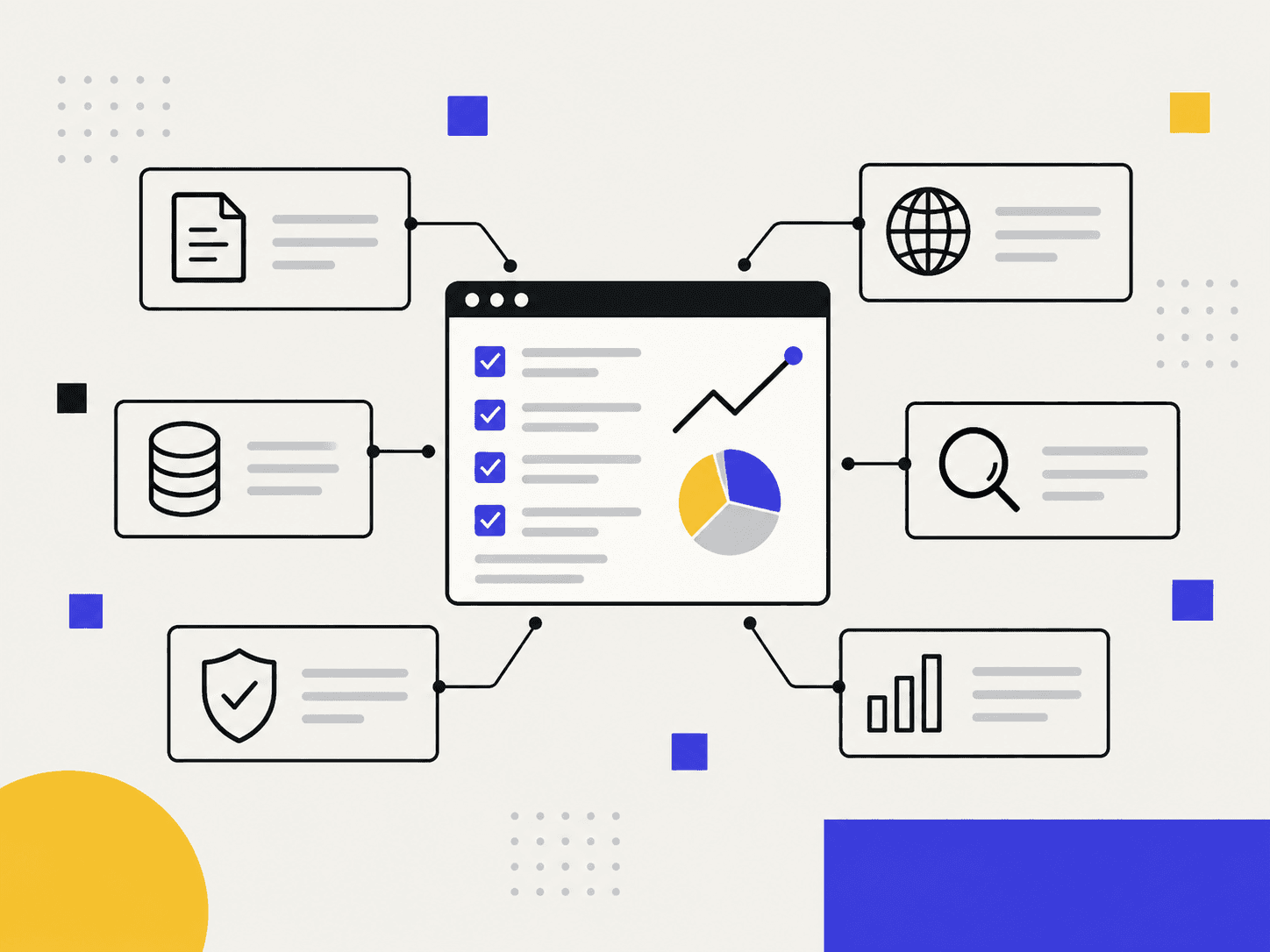
AI investment due diligence is audit-ready only when every material conclusion can be traced to source evidence, reviewed in context, and preserved as part of a decision record. Generic copilots can accelerate reading, but high-stakes diligence requires persistent research context, exportable trails, and monitoring that continues after the investment committee meets.
Introduction
An investment thesis that cannot show its sources becomes difficult to defend when a committee, auditor, or regulator challenges it. Effective AI investment research must therefore produce more than summaries: it must document evidence, rationale, ownership, and unresolved risks. This matters across acquisitions, counterparties, portfolio companies, and executive reviews, where a missed regulatory development can change the risk profile after the initial memo is complete. Bad research does not merely cost time. It can weaken a decision when scrutiny arrives.
Key Takeaways:
Traceable citations turn AI-generated findings into reviewable evidence.
Decision trails must preserve sources, rationale, reviewers, and final outputs.
Continuous monitoring keeps diligence current after an initial assessment.
Why AI investment research needs an audit-ready evidence trail
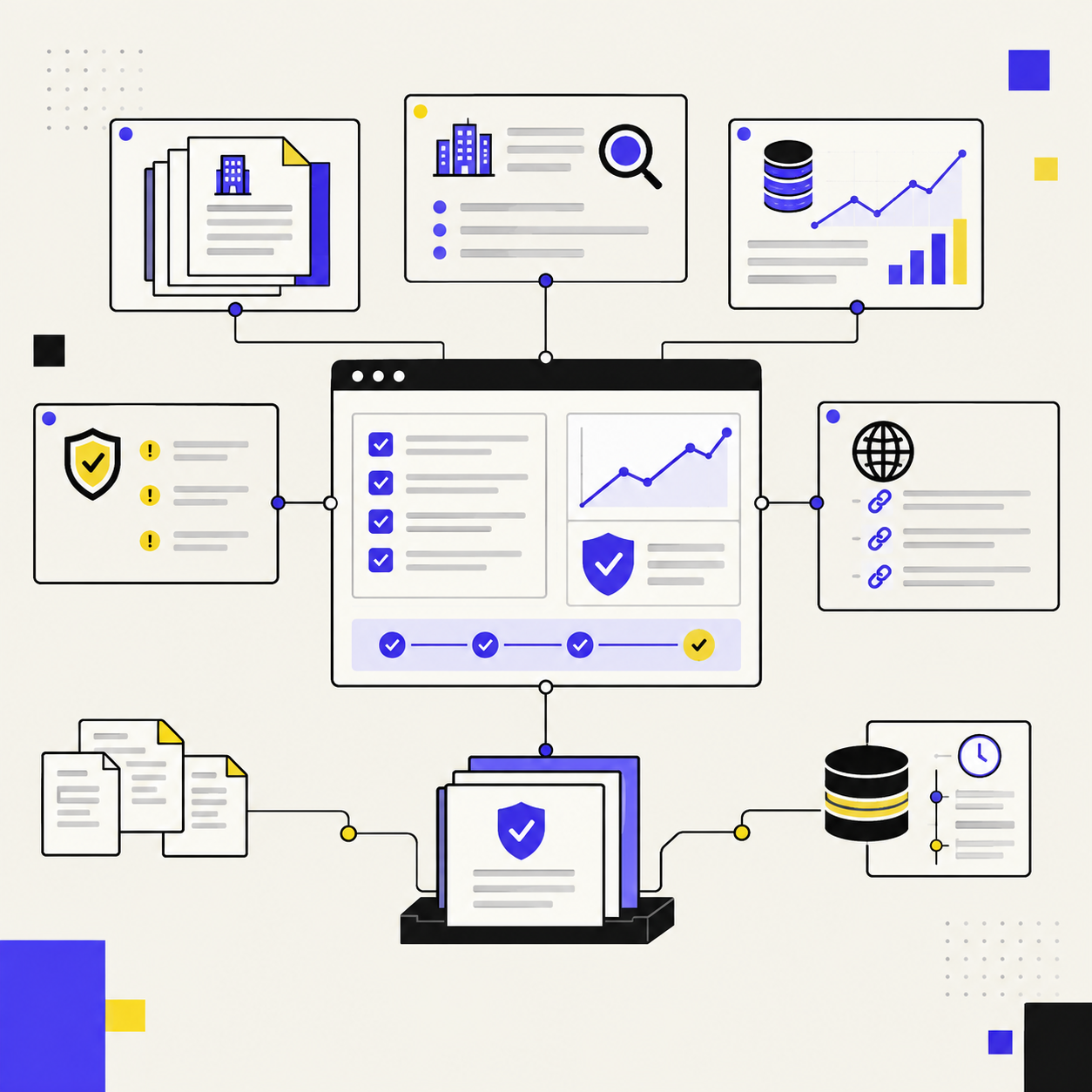
An audit-ready trail connects each conclusion to the underlying record and makes the review process visible. For investment teams, this means a reader can distinguish verified facts from analytical judgment, inspect the source behind a risk flag, and understand what information was unavailable when the decision was made. That standard supports both faster review and more disciplined challenge.
Citation-backed sourcing makes conclusions testable
A defensible diligence report should cite the document, webpage, filing, or data point supporting each material statement. Source links alone are not enough when the evidence changes over time or when a reviewer needs to test whether the source actually supports the claim. Strong research capabilities preserve evidence alongside the finding, allowing legal, risk, and investment professionals to validate the conclusion without repeating the entire investigation.
Source context: Preserve the relevant passage, not only a homepage link.
Claim mapping: Connect each material conclusion to supporting evidence.
Confidence markers: Separate verified facts from unresolved inferences.
Research scope: Record what sources and entities were reviewed.
Persistent context prevents diligence from resetting
One-off chats create fragmented workpapers because relevant findings remain trapped in separate prompts, documents, and inboxes. Persistent research memory lets a team retain prior entity profiles, known concerns, prior reviewer decisions, and new evidence in one continuing record. This is especially important for VC and private equity teams, where the same company may be reviewed before an investment, during follow-on financing, and again during exit planning. Wisdom Ventures Operating Partner Zoe Rogers describes this kind of continuing research support as "effectively filling part of the analyst function as the firm scales," a relevant signal for deal teams weighing whether persistent context can carry real analytical weight across a company's lifecycle.
What an enterprise AI due diligence platform must preserve
An enterprise AI due diligence platform should preserve the reasoning chain, not just produce a polished narrative. The practical test is straightforward: can a reviewer reconstruct what was known, which sources were used, what the system concluded, and what a human approved or changed? If the answer is no, the output is a draft, not a diligence record.
Exportable decision trails support compliance oversight
Exportable records allow teams to provide a complete diligence package to investment committees, internal audit, counsel, or regulators without rebuilding the file under deadline pressure. For investment advisers, AI compliance considerations include understanding the tool's functions and limitations, identifying AI-related risks, and documenting the rationale behind advice. Larger organizations may also need cross-functional governance involving legal, compliance, IT, and investment professionals.
Microsoft states that audit logs for interactions with non-Microsoft AI applications under its pay-as-you-go model are retained for 180 days. That can assist with activity review, but it does not by itself create a complete investment-grade record tying evidence, judgment, and committee-ready conclusions together.
The comparison below separates general-purpose assistance from the controls required for defensible investment work.
Capability | Generic AI copilot | Custom diligence agent | Why it matters |
|---|---|---|---|
Document summaries | Can generate summaries | Can generate cited research outputs | Reviewers can test material claims |
Research context | Often prompt-specific | Persistent entity and decision context | Prior diligence informs later reviews |
Decision record | Interaction logs may exist | Exportable source-to-conclusion trail | Supports audit and committee review |
Ongoing risk review | Typically user-initiated | Scheduled or event-triggered monitoring | Findings remain current |
The key distinction is not whether a system can write a memo. It is whether the memo remains inspectable after the person who prompted it has moved on.
Evaluation should test governance, not presentation quality
During a pilot, require the provider to demonstrate how it handles source selection, testing, risk identification, exceptions, and reviewer feedback. The AI RMF Playbook connects AI governance with organizational risk controls and recommends documenting risk mapping, measurement processes, and standards. NIST guidance on generative AI governance addresses testing, incident identification, and information sharing. A system that produces elegant prose but cannot show its work has failed the core diligence test.
From one-time reports to continuous portfolio monitoring
Initial diligence is a snapshot, while investment risk evolves through leadership changes, regulatory actions, website updates, hiring signals, and shifting counterparties. Continuous monitoring converts those signals into an ongoing review process, so teams can revisit a thesis based on documented changes rather than anecdotal updates. These investment research workflows help organize that continuing review.
Custom agents align research to the actual decision
Custom AI agents for venture capital due diligence can be designed around an investment committee's required questions, risk taxonomy, approval steps, and reporting format. Instead of asking users to translate a generic chatbot response into a compliant workpaper, the agent can prepare citation-backed reports, slide decks, and spreadsheets that match the review process. Grep operates as an investment diligence platform for this type of high-stakes work, with traceable outputs intended for board and regulatory scrutiny.
This approach supports scaling investment research without headcount because analysts can focus on evaluating evidence, testing assumptions, and resolving exceptions. It does not remove accountability. It makes the human review point more explicit and better documented.
Monitoring closes the gap between approval and oversight
Grep's Loops and Monitors combine scheduled or event-triggered workflows with always-on screening for changes affecting companies and counterparties. A portfolio team can retain an initial diligence package while adding later alerts about leadership, regulatory, website, or job-posting changes, creating a chronology that helps explain how risk evolved.
Conclusion
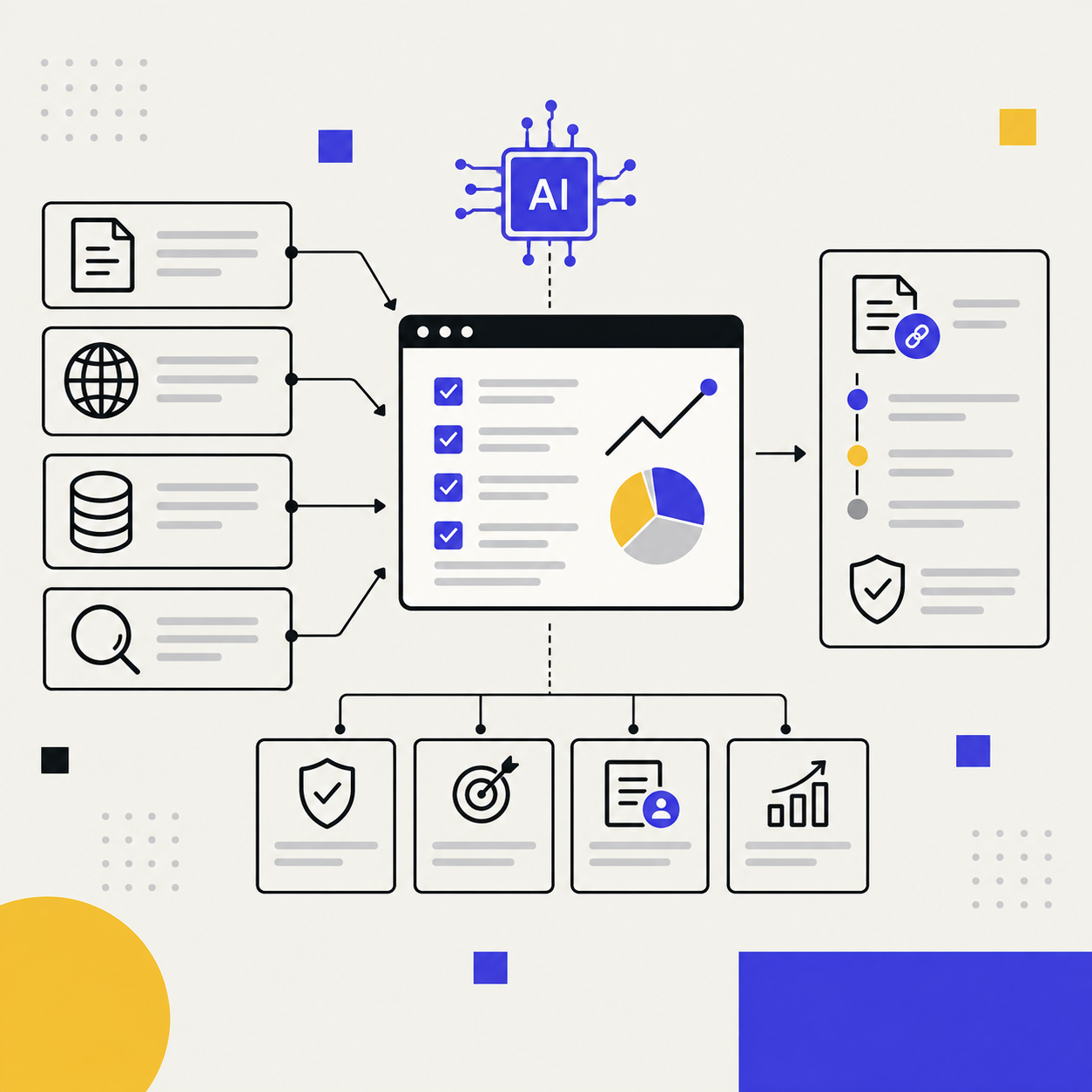
Audit-ready AI diligence begins with traceability, not automation volume. Demand citation-backed findings, persistent research context, exportable decision trails, and ongoing monitoring before relying on AI for a consequential investment decision. Generic copilots may help individuals draft and summarize, but custom agents are built around the evidence and governance requirements of the work. For teams evaluating an AI transformation program, Grep provides custom agents for diligence, compliance oversight, and continuous monitoring with outputs designed to be auditable and defensible.
Ready to test a defensible diligence workflow? Explore Grep for high-stakes investment research.
Frequently Asked Questions (FAQs)
How to automate due diligence for institutional investors?
To automate due diligence for institutional investors, configure agents around approved research questions, source standards, review gates, and export requirements so automation accelerates evidence collection while accountable professionals still validate conclusions and resolve material exceptions.
What makes AI research defensible to regulators?
AI research is defensible to regulators when the organization can show source provenance, documented methodology, known limitations, human oversight, risk controls, and a preserved record explaining how the output contributed to a decision.
Can AI agents replace manual investment research?
AI agents cannot replace manual investment research entirely because material judgments, conflict assessment, and final accountability remain human responsibilities, but they can reduce repetitive collection and synthesis work while making the underlying evidence easier to review.
How do custom AI agents support high-stakes financial compliance?
Custom AI agents support high-stakes financial compliance by following defined control requirements, producing structured evidence records, escalating exceptions, and retaining decision context that compliance teams can examine during supervisory reviews or internal investigations.
Why is traceable output critical for investment AI?
Traceable output is critical for investment AI because an investment committee must be able to test the evidence behind a recommendation, identify unsupported claims, understand uncertainty, and defend the process used to reach its decision.
Is AI research secure enough for enterprise financial use?
AI research can be secure enough for enterprise financial use when deployment, access credentials, data retention, vendor controls, and review procedures align with the institution's policies, risk assessment, and applicable contractual obligations.
About the Author
Daniel Park is a Risk & Regulatory Intelligence Lead focused on regulatory intelligence, sanctions compliance, AML, KYB, and risk assessment. His work translates complex compliance expectations into practical controls for risk officers and legal teams using AI-powered intelligence systems.