AI Productivity Tools Compliance Teams Should Buy in 2026
Generic copilots fall short on regulated work. See which custom AI agents for high-stakes work compliance and risk teams should prioritize buying in 2026.

Quick Answer
Compliance teams should buy AI systems that preserve sources, decision trails, and review controls, not generic assistants that produce untraceable drafts. In 2026, the priority categories are continuous monitoring, auditable research agents, and institutional onboarding automation that can support KYC, AML, and board-level scrutiny.
Introduction
Generic copilots can speed up summarization, but they create risk when an analyst must explain why a counterparty cleared review or why an escalation occurred. Productivity software for enterprises must do more than generate text in regulated operations: it must retain evidence, expose reasoning inputs, and support accountable human review. The operational cost of weak traceability is not merely rework; it can delay onboarding, weaken risk decisions, and leave compliance leaders unable to defend an outcome. High-stakes work demands a durable record, not a polished answer alone.
Key Takeaways:
Buy systems that link conclusions to verifiable evidence and review history.
Prioritize continuous monitoring over isolated point-in-time compliance checks.
Require governance controls before deploying agents on regulated decisions.
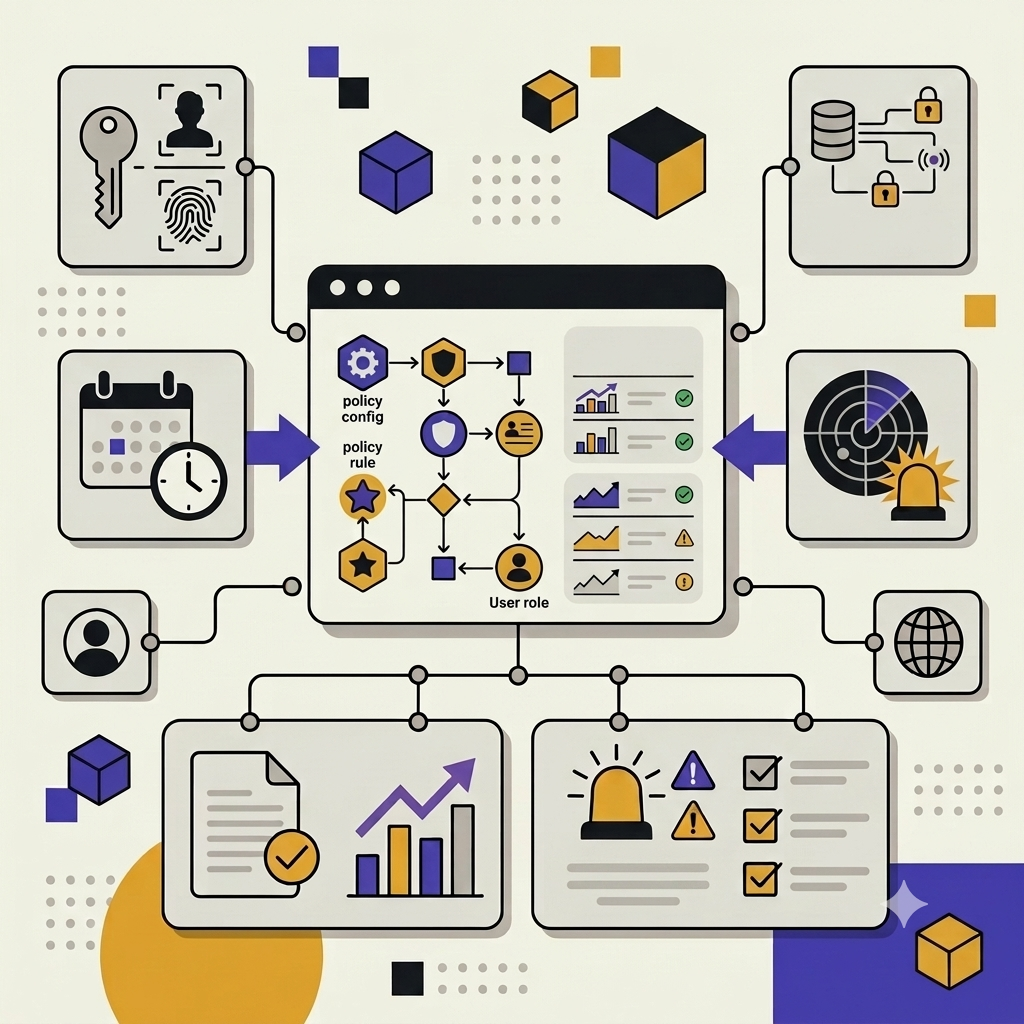
Automated Compliance Monitoring Tools Need Persistent Evidence
One-time screening cannot keep pace with counterparties, beneficial owners, and regulations that change after onboarding. Always-on KYC and AML monitoring solutions should identify defined changes, preserve the evidence behind each alert, and route material findings to an accountable reviewer instead of treating the initial approval as permanent.
What Continuous Monitoring Must Detect
Monitoring only creates value when it watches signals tied to a documented risk policy. A reliable program distinguishes a meaningful change from routine noise, records why the signal matched, and lets an analyst close or escalate the result with a durable rationale.
Ownership changes: Flag altered beneficial ownership or corporate control.
Leadership changes: Surface new executives and directors for review.
Sanctions signals: Re-screen relevant parties against current watchlists.
Website changes: Detect shifts in products, geography, or stated activity.
Regulatory changes: Track obligations affecting the customer relationship.
Move From Alerts to Reviewable Decisions
Transaction monitoring systems identify activity that merits investigation, while customer monitoring addresses changes in the underlying relationship profile. Teams should connect their transaction monitoring systems to research workflows that collect supporting context, document the analyst's conclusion, and retain the reasoning for subsequent quality assurance. Grep's Loops and Monitors combine scheduled or event-triggered work with an always-on screening surface for continuous KYC and changes across companies, leadership, job postings, and regulatory conditions. Shopmonkey saw its research time drop from hours to minutes per account after moving this kind of monitoring work onto Grep, closing 64 research jobs in its first 30 days and beating Gemini head-to-head.
Productivity Software for Enterprises: Custom AI Agents for High-Stakes Work
Custom AI agents for high-stakes work matter when a team needs repeatable research that follows its own policies, data sources, and escalation logic. The buying test is simple: can the system produce a citation-backed report that a compliance officer can inspect, challenge, and present to a board or regulator?
Build Research Around the Entity and the Risk Question
Enterprise due diligence software should organize work around a clear question, such as whether an acquisition target, vendor, or institutional client presents a risk that requires approval conditions. It should gather evidence from approved sources, distinguish facts from unresolved gaps, and create a report that identifies the basis for every material conclusion.
For people-related investigations, individual AML screening should link identity resolution, adverse-information review, sanctions checks, and analyst disposition rather than return an unexplained confidence score. For corporate counterparties, business AML screening should preserve corporate records, ownership findings, and the specific evidence supporting the final risk decision.
Generic Copilots Versus Traceable Research Agents
Microsoft Copilot remains useful for drafting and internal productivity, but compliance leaders should not assume a general-purpose assistant meets the evidentiary standard of regulated research. The comparison below separates one-off assistance from systems designed to create enterprise-grade AI with traceable decision trails.
Decision criterion | Generic copilot | Dedicated compliance-grade agent |
|---|---|---|
Primary task | Drafting and summarization | Policy-directed due diligence and monitoring |
Evidence record | May require manual reconstruction | Citation-backed, exportable decision trail |
Workflow duration | Prompt-by-prompt work | Scheduled or event-triggered review |
Governance fit | Depends on configuration and use case | Built around reviewable high-stakes outputs |
Operational outcome | Faster individual drafting | Repeatable investigation records |
The difference is accountability. A generic assistant can support an analyst, but a dedicated agent should preserve the work product required to test, approve, and revisit a high-risk decision. Teams assessing AI compliance tools should test actual case files, including adverse outcomes and ambiguous identities, before making a platform decision.
AI-Powered Institutional Onboarding Platforms Need Risk-Based Controls
Institutional onboarding requires coordinated research across entity structure, ownership, business purpose, geography, and screening results. AI-powered institutional onboarding platforms should accelerate evidence collection while leaving risk classification, exceptions, and final approval visible to designated human owners.
Use Digital Identity Within a Risk-Based Program
Digital identity can support customer due diligence when its assurance level fits the institution's risk assessment. The FATF guidance helps governments and regulated entities assess whether digital identity is appropriate for customer due diligence, while FATF's Recommendation 1 was updated in October 2020 to require assessment and mitigation of proliferation financing risk alongside money laundering and terrorist financing.
A custom KYB agent can structure business verification research around the institution's policy and assemble evidence for reviewer judgment. It should not silently convert inconsistent records into a clean outcome, because inconsistency itself may warrant enhanced due diligence, clarification, or rejection.
Demand Controls That Survive Oversight
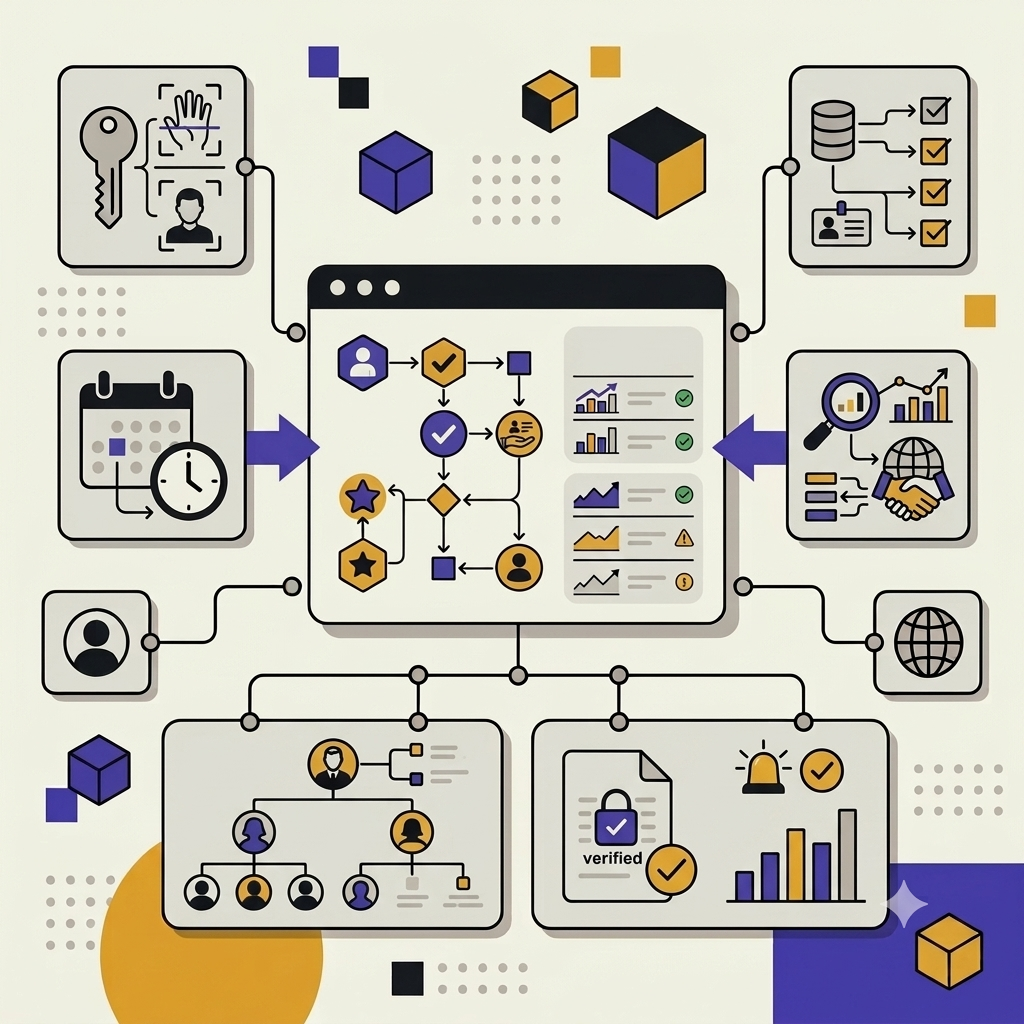
Governance should be evaluated before broad deployment, not added after a high-impact use case reaches production. The AI Risk Management Framework centers trustworthiness considerations across the design, development, use, and evaluation of AI systems, which aligns directly with compliance teams' need to define ownership and test controls.
Ask vendors how they segregate credentials, handle retention, support deletion, log changes to instructions, and export an investigation record. Grep supports custom agents for high-stakes research with traceable, citation-backed deliverables, plus scoped least-privilege credentials, configurable retention, and exportable decision trails for audit. For organizations requiring auditable AI solutions for board-level reporting, controls must remain visible at the case level, not buried in a platform assurance statement.
Conclusion
The strategic purchase in 2026 is not another chat interface. It is a system that turns recurring KYC, AML, onboarding, and diligence work into evidence-backed processes with clear ownership and continuous oversight. Start with a high-risk workflow, test the full audit record against difficult cases, and scale only after the operating model proves defensible. Grep is built for organizations that need custom agents and always-on monitoring for work that cannot depend on an untraceable answer.
Ready to assess an auditable research workflow? Explore Grep for high-stakes compliance work and evaluate the evidence trail alongside the output.
Frequently Asked Questions (FAQs)
What is the difference between generic AI and traceable research agents?
The difference between generic AI and traceable research agents is that traceable agents retain the sources, instructions, outputs, and review history needed to examine a conclusion, while generic tools often focus on producing a useful response without creating a complete investigation record.
Can AI agents provide defensible audit trails for financial regulators?
AI agents can provide defensible audit trails for financial regulators when they preserve cited evidence, decision context, reviewer actions, and changes to the case record, although the institution remains responsible for governance, escalation rules, and final decisions.
How do enterprises monitor for regulatory changes automatically?
Enterprises monitor for regulatory changes automatically by defining relevant jurisdictions, topics, entities, and alert thresholds, then routing detected changes into a review workflow that records whether the change affects policy, customers, or ongoing obligations.
Why choose dedicated AI agents over general-purpose copilot tools?
Dedicated AI agents provide value over general-purpose copilot tools when the work requires repeatable policy-driven research and an exportable evidence record, whereas a copilot generally assists with individual drafting and analysis within a prompt-based interaction.
How can fintechs scale KYC operations without increasing headcount?
Fintechs can scale KYC operations without increasing headcount by automating repeatable evidence gathering, screening, and change detection while assigning analysts to exceptions, ambiguous matches, enhanced due diligence, and approval decisions that require judgment.
About the Author
Marcus Hale is an AI Research & Compliance Strategist focused on due diligence, KYC/AML operations, sanctions screening, and agentic AI adoption. He writes for compliance officers and deal teams that need research processes capable of supporting regulated decisions and rigorous review.