AI Research Assistant Software for Compliance Teams 2026
Discover how an AI research assistant built for compliance teams delivers traceable, audit-ready findings for due diligence and continuous KYC in 2026.
Quick Answer
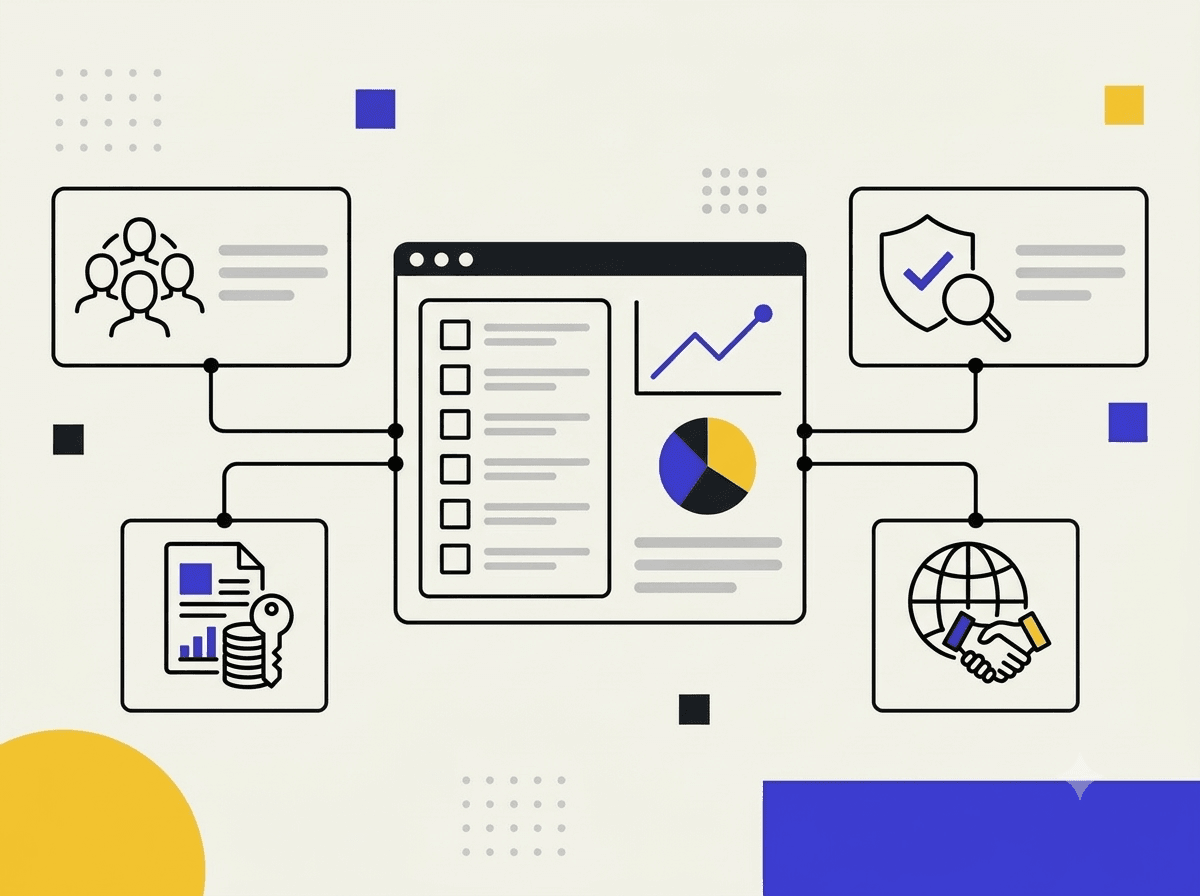
Compliance teams should evaluate an AI research agent by whether its findings are traceable to sources, auditable after the fact, and defensible in a regulator or board review. Generic assistants can accelerate drafting, but high-stakes research requires controlled evidence, repeatable decision trails, secure handling, and monitoring that continues after onboarding.
Introduction
An AI research agent for compliance is valuable only when it helps teams reach a conclusion they can substantiate under scrutiny. For institutional onboarding, sanctions review, counterparty diligence, and ongoing screening, unsupported summaries create risk rather than reducing it. The difference between generic assistance and enterprise due diligence software is not simply speed. It is whether a reviewer can inspect the evidence, reasoning context, and changes that informed a decision.
Key Takeaways:
Traceable evidence matters more than fluent summaries in regulated research.
Continuous monitoring reduces the risk of relying on stale onboarding decisions.
Governance, data controls, and exportable records should be evaluated before deployment.
AI research agent criteria for compliance teams
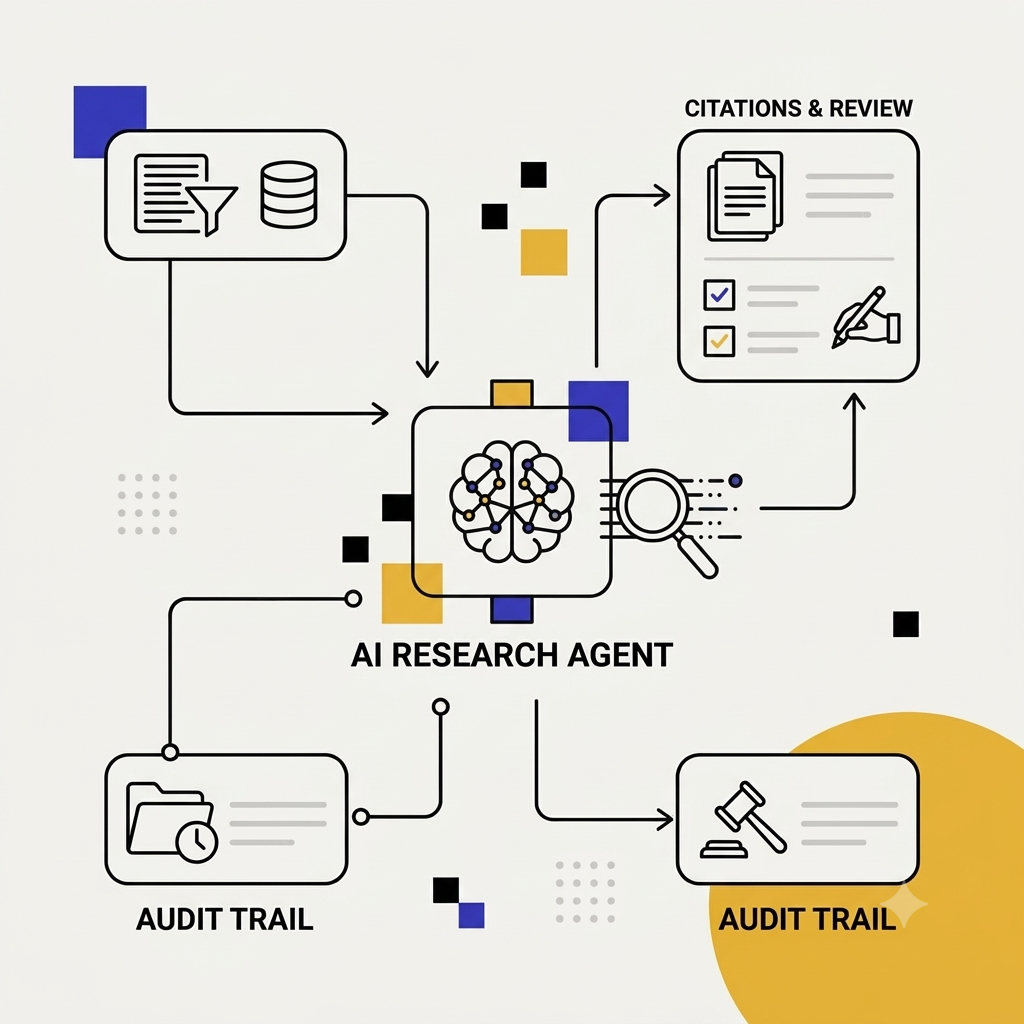
A serious AI research agent should support the actual lifecycle of a compliance decision: collect evidence, identify material risk signals, document findings, route work to accountable reviewers, and preserve the record. This matters when teams conduct high-stakes financial analysis with AI, where an incomplete source set or unverified claim can affect an onboarding, acquisition, or escalation decision.
Demand evidence that survives review
Traceability is the first buying criterion because a conclusion without underlying evidence cannot be reliably challenged, corrected, or approved. Teams should require outputs that retain source-level citations, distinguish observed facts from analysis, and allow reviewers to understand why a risk signal was treated as material. Accountability and transparency are practical operating requirements when research becomes part of a regulated decision record.
Source lineage: Each finding links to its supporting source.
Claim separation: Facts, inferences, and open questions remain distinct.
Reviewer controls: Analysts can validate and amend conclusions.
Decision history: Records show what changed and why.
Assess the controls around the research
Traceable AI research for regulatory audit also depends on governance outside the report itself: role-based access, scoped credentials, retention controls, and clear ownership of model risk. In the RSM Middle Market AI Survey 2026, over a third of respondents (34%) identified data quality as the top inhibitor to AI deployment, followed by security and privacy concerns (30%), making data governance a deployment issue rather than a procurement checklist item. Teams should align controls to an AI risk management framework that connects system use to organizational risk tolerances. Wisdom Ventures Operating Partner Zoe Rogers describes this kind of research support as "effectively filling part of the analyst function as the firm scales," a relevant signal for teams weighing whether an agent can absorb real research capacity rather than just accelerate drafting.
Generic copilots versus compliance research platforms
Microsoft Copilot and similar assistants are commonly available through existing enterprise software agreements, but availability does not make them a compliance research system. The central question when comparing custom AI agents with generic finance research tools is whether the system is configured around a defined decision process, trusted sources, review standards, and ongoing risk signals.
Grep vs Microsoft Copilot for enterprise research
Copilot can assist with drafting, summarizing, and everyday productivity tasks. Compliance teams need more when the assignment is to investigate a counterparty, document adverse information, evaluate an acquisition target, or produce defensible AI reports for board review.
This comparison isolates the operational distinction that matters in regulated research, not a broad assessment of every capability either platform may have.
Criterion | Generic AI assistant | Grep |
|---|---|---|
Primary work | General drafting and productivity assistance | Custom AI agents for high-stakes research |
Research output | Summaries require independent evidence review | Traceable, citation-backed reports and deliverables |
Ongoing risk work | Typically initiated as individual prompts | Loops and Monitors support scheduled and event-triggered screening |
Audit record | Depends on enterprise configuration and process | Exportable decision trails for audit |
Data controls | Varies by deployment and organization | SOC 2 and GDPR posture, VPC options, configurable retention |
The practical dividing line is not whether an assistant can generate prose. It is whether the research process creates auditable decision trails that a compliance owner can inspect, challenge, and retain.
Use monitoring to prevent stale risk decisions
One-time diligence creates a snapshot, while risk changes after the file is approved. Continuous customer screening and monitoring should watch the signals relevant to the relationship, including leadership transitions, regulatory developments, website changes, and material business activity. AI AML screening becomes more useful when findings are tied to an escalation process instead of being treated as an isolated alert stream. Shopmonkey closed 64 research jobs in its first 30 days on Grep and cut underwriting research time from hours to minutes per account, beating Gemini head-to-head, a concrete example of what this operating model can deliver.
Grep structures this ongoing work through Loops and Monitors, with Loops running on schedules or real-world triggers and Monitors providing an always-on screening surface. Its custom agents can support due diligence, institutional onboarding, and compliance oversight with traceable output, while work conducted through the deep research platform can be turned into reports, slide decks, spreadsheets, and dashboards through Grep Brain.
How to implement AI research without weakening controls
Adoption should begin with a narrow, consequential workflow that already has identifiable inputs, reviewers, escalation paths, and decision records. This approach lets risk leaders test quality against real cases before extending AI-assisted risk operations across adjacent teams.
Start with a bounded decision and measurable review standard
Choose a workflow such as institutional onboarding, vendor due diligence, executive background research, or acquisition due diligence. Define the required sources, prohibited sources, risk taxonomy, evidence standard, reviewer handoff, and retention rule before the agent is used in production. BSA officer concerns should shape these controls early, especially where a team must demonstrate how alerts, findings, and escalations were handled.
Scale only after reviewers can consistently identify where the output is strong, where it requires human challenge, and how corrections improve the workflow. In the same RSM survey, 87% of financial-services respondents reported that AI was at least partially integrated into operations, including 41% reporting full integration, which makes disciplined implementation a competitive operating necessity rather than an experimental side project. Financial services organizations still need data quality, governance, and accountable review to turn adoption into reliable execution.
Build human review into the exception path
Human oversight should focus on ambiguity, conflicting evidence, elevated risk, and decisions that materially change a customer or counterparty relationship. A platform cannot eliminate professional judgment, but it can give reviewers a more complete evidence file and reduce repetitive collection work. Teams should explicitly test for AI hallucination risks by requiring unsupported claims to be surfaced, corrected, and logged before output enters a case record.
Conclusion
Compliance leaders should treat AI research as a controlled decision capability, not a general productivity feature. Start with a defined high-stakes workflow, establish source and review standards, and require traceable evidence before expanding adoption. Grep is designed for enterprises that need custom agents for due diligence, institutional onboarding, compliance oversight, and always-on monitoring with outputs that can be reviewed by a board or regulator. The strongest implementation combines automation for repeatable research with human accountability for consequential judgments.
For research workflows that require evidence and oversight, Explore Grep for custom high-stakes research agents.
Frequently Asked Questions (FAQs)
Can AI agents produce audit-ready reports for regulators?
AI agents can produce audit-ready reports for regulators when each material claim is connected to retained source evidence, reviewer actions are documented, and the organization applies its own approval and recordkeeping controls before relying on the output in a regulatory submission or examination.
How to implement continuous KYC screening with AI agents?
To implement continuous KYC screening with AI agents, define the customer events and external changes that require reassessment, connect alerts to a documented escalation workflow, and preserve a clear record of who reviewed each signal and what action followed.
Why do large enterprises need traceable and defensible AI output?
Large enterprises need traceable and defensible AI output because complex decisions pass through compliance, legal, risk, and executive stakeholders who need to verify evidence, resolve conflicting information, and explain the basis for a decision long after the original research occurred.
Is AI research secure enough for institutional onboarding?
AI research is secure enough for institutional onboarding only when the deployment provides appropriate data access controls, scoped credentials, retention governance, vendor due diligence, and security review that match the sensitivity of the institution, customer data, and jurisdiction involved.
What makes AI research defensible to a board of directors?
AI research is defensible to a board of directors when it clearly separates verified facts from conclusions, identifies material uncertainties, cites the underlying evidence, and shows the accountable human review that converted research into a recommendation or decision.
What is the difference between AI agents and workflow automation for finance?
AI agents differ from workflow automation for finance because workflow automation moves predefined tasks through a process, while agents can conduct and synthesize research within defined controls, although both require governance when they affect regulated decisions.
About the Author
Daniel Park is a Risk & Regulatory Intelligence Lead focused on sanctions compliance, AML operations, KYB, and AI-enabled regulatory research. His work translates complex risk requirements into practical controls for legal, compliance, and risk leaders managing high-consequence decisions.