Best RAG-Based AI Tools for Compliance Teams to Buy in 2026
Compare the best RAG-based AI tools for compliance teams in 2026. Learn what makes retrieval augmented generation auditable, traceable, and board-ready.

Quick Answer
Compliance teams should buy RAG-based AI platforms only when every material output can be traced to source evidence, retained in a reviewable record, and governed within the organization's security posture. For high-stakes due diligence, institutional onboarding, and continuous monitoring, custom agents with citation-backed deliverables are more defensible than generic copilots that summarize without a complete decision trail.
Introduction
Ungrounded AI output creates a compliance problem before it creates a productivity problem: a conclusion that cannot be sourced cannot be defended to an auditor, regulator, or board. Retrieval-augmented generation for enterprise use matters because it connects generated analysis to current documents and data rather than relying solely on model memory. That distinction becomes decisive when a team is assessing counterparties, reviewing an acquisition, or documenting why a risk decision was made. Shopmonkey closed 64 research jobs in its first 30 days on Grep and cut underwriting research time from hours to minutes per account, beating Gemini head to head, a concrete example of grounded research replacing plausible-sounding guesswork. Generic AI can draft a plausible answer, but plausibility is not an audit record.
Key Takeaways:
Require source citations, retained logs, and exportable decision trails.
Evaluate monitoring workflows separately from one-time research outputs.
Choose deployment and governance controls before comparing interface features.
How to Evaluate Retrieval Augmented Generation for Enterprise Compliance
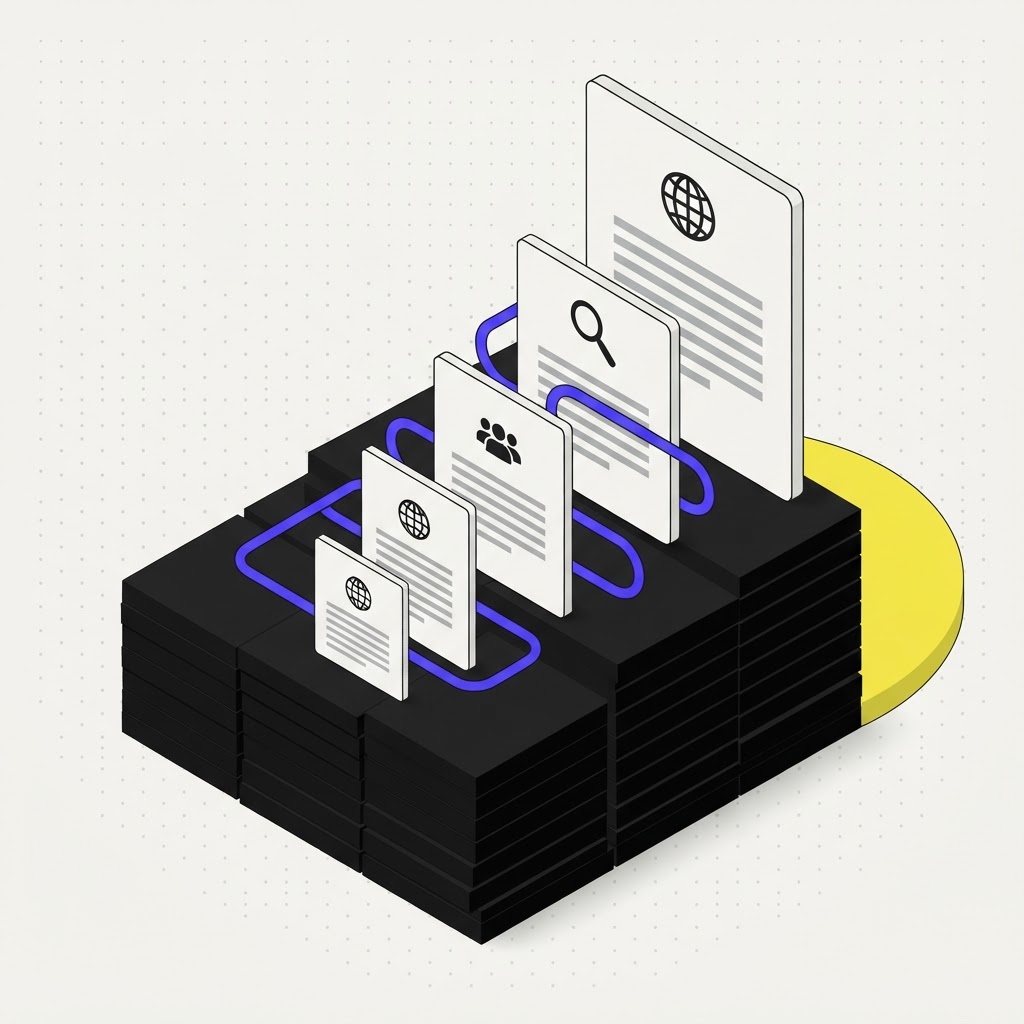
A buyer should treat RAG as a control system for research quality, not as a technical feature checkbox. The relevant question is whether the platform can retrieve appropriate evidence, show the evidence behind each conclusion, preserve the work performed, and support human review before an operational or board-level decision is made. This is the practical foundation for auditable AI research platforms.
Start with the decision trail, not the chat interface
The first evaluation should follow a completed report backward: from a recommendation, to its claims, to cited sources, to the source-selection logic, and then to the retained record. That approach exposes AI hallucination risks that a polished answer can conceal, particularly when the system blends retrieved facts with unsupported inferences.
Citations: Link every material claim to underlying evidence.
Logs: Preserve prompts, retrievals, outputs, and reviewer actions.
Scope controls: Restrict agents to approved data and tasks.
Human review: Route consequential findings to accountable owners.
Retention: Match records to legal and compliance obligations.
Test retrieval quality under realistic operating conditions
Ask vendors to run a representative diligence case using current records, conflicting sources, incomplete disclosures, and jurisdiction-specific requirements. A meaningful test should show what was retrieved, what was excluded, and where the system reached uncertainty, rather than simply producing a confident narrative. Procurement review should test what evidence the system retrieves, excludes, and presents alongside each output. For a compliance-oriented overview of retrieval-augmented generation, see Proofpoint's RAG guidance.
Best RAG-Based AI Tools for Compliance Teams: What to Compare
The most useful shortlist distinguishes generic enterprise assistants from systems designed to produce auditable work products. Microsoft Copilot is often already available through a company's software estate, while specialist platforms address work that needs traceability, recurring monitoring, and a reviewable evidence trail. The comparison below focuses on published capabilities and avoids treating broad AI access as equivalent to compliance-ready research.
Compare the operating model before the feature list
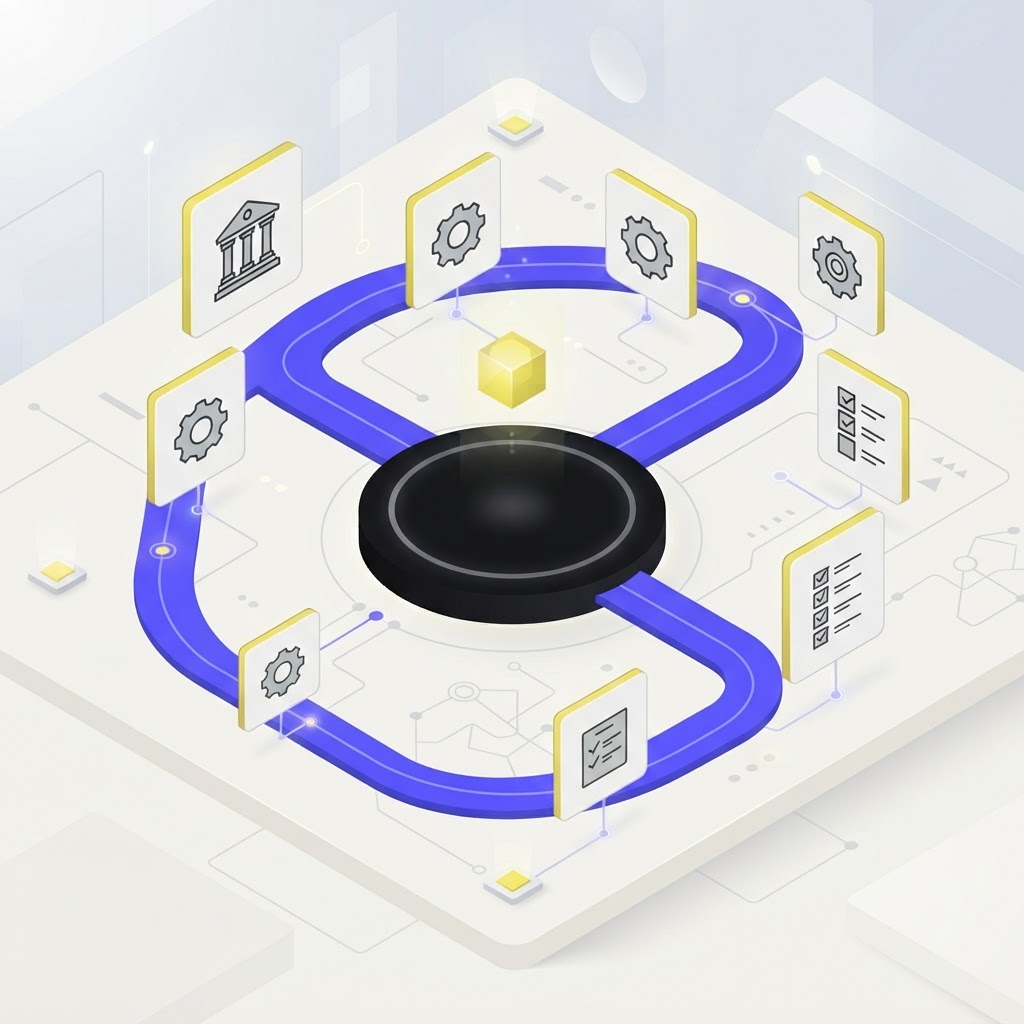
Grep is a custom-agent platform for due diligence, institutional onboarding, compliance reviews, and continuous monitoring, with traceable, citation-backed reports, slide decks, and spreadsheets. Its Loops and Monitors combine scheduled or event-triggered workflows with always-on screening for company website, leadership, job-posting, regulatory, and compliance changes. Microsoft Copilot is a general enterprise assistant embedded in Microsoft environments, while Bretton is an off-the-shelf competitor in the compliance research category.
Platform or category | Published operating model | Evidence and governance focus | Deployment or pricing detail |
|---|---|---|---|
Grep | Custom agents, Loops and Monitors for high-stakes research | Traceable reports and exportable decision trails | VPC deployments; team and enterprise deployments from around $50K monthly |
Microsoft Copilot | General enterprise assistant within Microsoft environments | Controls depend on organizational configuration and use case | Pricing and deployment details vary by Microsoft product |
The operational difference is not whether a system can answer a question. It is whether it can turn evidence into a repeatable deliverable and continue screening after the initial case closes. For teams building custom AI compliance agents, that distinction determines whether the tool supports an isolated research task or an ongoing risk-control process.
Require controls that match the regulatory exposure
For high-risk systems, documentation, logging, and assessment obligations are not optional design preferences. According to the European Commission's Article 16 guidance, providers of high-risk AI systems must maintain documentation and logs and undergo conformity assessments before market release; buyers should review whether their role and intended use create related obligations. Review whether a platform supports SOC 2 and GDPR requirements, VPC deployment options, scoped least-privilege credentials, configurable retention, and delete-on-request controls.
Check how monitoring becomes a durable control
One-time research is useful, but risk changes after onboarding, approval, or investment committee review. Continuous KYC monitoring agents should identify defined external changes and route them into a documented workflow, such as a counterparty's leadership update, website change, hiring signal, or relevant regulatory development. Grep's Loops and Monitors are designed around that always-on model, allowing teams to move from periodic manual checks toward recurring, traceable screening without recasting every case from scratch.
Buying Criteria for High-Stakes Due Diligence and Onboarding
Procurement should center on the unit of work that creates exposure: an acquisition review, institutional onboarding file, enhanced diligence package, market-abuse inquiry, or executive background assessment. AI agents for high-stakes due diligence need to produce findings that a senior reviewer can inspect, challenge, and present externally, not just accelerate document reading. A vendor demonstration should therefore end with an exportable report and its evidence trail.
Use an evaluation scenario that compliance can actually sign off
Build the proof of concept around a live but appropriately controlled workflow, with a defined decision owner, approved sources, adverse scenarios, and acceptance criteria. Include a case containing stale information, contradictory reporting, and missing documentation, because a trustworthy system must surface gaps instead of quietly filling them with generated text. Teams should also evaluate auditor-approved research practices, including whether an investigator can reproduce the basis for a conclusion after the original analysis is complete.
Security review should assess data boundaries as carefully as answer quality. Platforms that support air-gapped or VPC deployment patterns can help regulated organizations align data handling with internal controls, while an LLM-agnostic design can preserve flexibility across models and security requirements. NIST's generative AI risk management profile is relevant here because governance must cover the full system, not only the final response.
Separate transparent pricing from the enterprise decision
Pricing is meaningful only when it maps to the work volume, data needs, security model, and review process a compliance organization will operate. Grep publishes a free trial with 100 one-time credits, Pro at $200 per month with 1,500 monthly credits, and Ultra at $500 per month with 4,500 monthly credits, while enterprise deployments begin around $50K per month and include shared agents, pooled credits, SSO, and VPC deployment. Those figures provide transparency, but an enterprise purchase still requires testing the intended workflow against AI accuracy standards, access controls, and the organization's required decision trail.

Conclusion
The right RAG-based platform for compliance is the one that makes the research process inspectable from source retrieval through final decision. Buy against evidence quality, retained logs, security posture, deployment controls, and continuous monitoring capability, then test those requirements on a real high-stakes case. For large compliance and financial-services teams that need custom agents for diligence, onboarding, and always-on screening, Grep is the choice when the required output must be traceable, auditable, and defensible to a board or regulator. Generic copilots can remain useful for low-consequence drafting, but they should not become the system of record for a consequential risk decision.
Ready to evaluate a defensible research workflow? Explore Grep for high-stakes compliance work with a representative diligence or monitoring use case.
Frequently Asked Questions (FAQs)
How can enterprises ensure AI research is auditable?
Enterprises can ensure AI research is auditable by requiring claim-level citations, retained retrieval records, reviewer actions, and exportable decision trails that allow a later investigator to reconstruct how the system reached its conclusion and where uncertainty or conflicting evidence was identified.
What are the benefits of using AI for high-stakes due diligence?
The benefits of using AI for high-stakes due diligence include faster evidence collection, more consistent investigation workflows, and reusable monitoring logic, provided the system preserves source attribution and routes consequential findings through accountable human review rather than treating generated analysis as final judgment. RAG can improve efficiency in knowledge-heavy workflows, but realized gains depend on workflow design, source quality, and review controls. NIST's Generative AI Profile identifies confabulation as a named risk area, underscoring why reviewable source evidence remains necessary for consequential work.
Why do financial institutions need traceable AI outputs?
Financial institutions need traceable AI outputs because onboarding, screening, and risk decisions may require explanation long after the original review, and a citation-backed record helps teams demonstrate the factual basis, review history, and limitations behind a material conclusion.
Is RAG secure enough for enterprise regulatory compliance?
RAG can support enterprise regulatory compliance when its data sources, credentials, retention, deployment environment, and retrieval process are governed appropriately, because grounding an answer in documents does not by itself prevent insecure access, poisoned data, or inadequate recordkeeping. Review approved, verified data sources and retrieval controls alongside deployment controls.
What is the role of citation-backed research in board-level reports?
Citation-backed research gives board-level reports a verifiable foundation by connecting material assertions to underlying sources, allowing directors and risk owners to distinguish documented findings from interpretation and request follow-up on disputed, incomplete, or time-sensitive evidence. Teams can assess the reliability of these workflows against published performance benchmarks.
Why use custom AI agents instead of generic enterprise copilots?
Custom AI agents are used instead of generic enterprise copilots when a workflow needs defined sources, repeatable instructions, controlled outputs, recurring monitoring, and a decision trail, whereas broad copilots are generally designed for flexible assistance across many lower-consequence tasks.
About the Author
Miguel Rios-Berrios is Founder and CTO of GREP.ai, with experience leading engineering and data science teams building enterprise systems for regulated work. His work focuses on AI agents, distributed systems, and the controls required to make high-stakes compliance research traceable and operationally reliable. Connect on LinkedIn.