Buy AI for Vendor Risk Management Instead of Building It
Discover why enterprises are choosing to buy vendor risk management software over building it, with traceable, auditable AI agents for continuous oversight.
Quick Answer
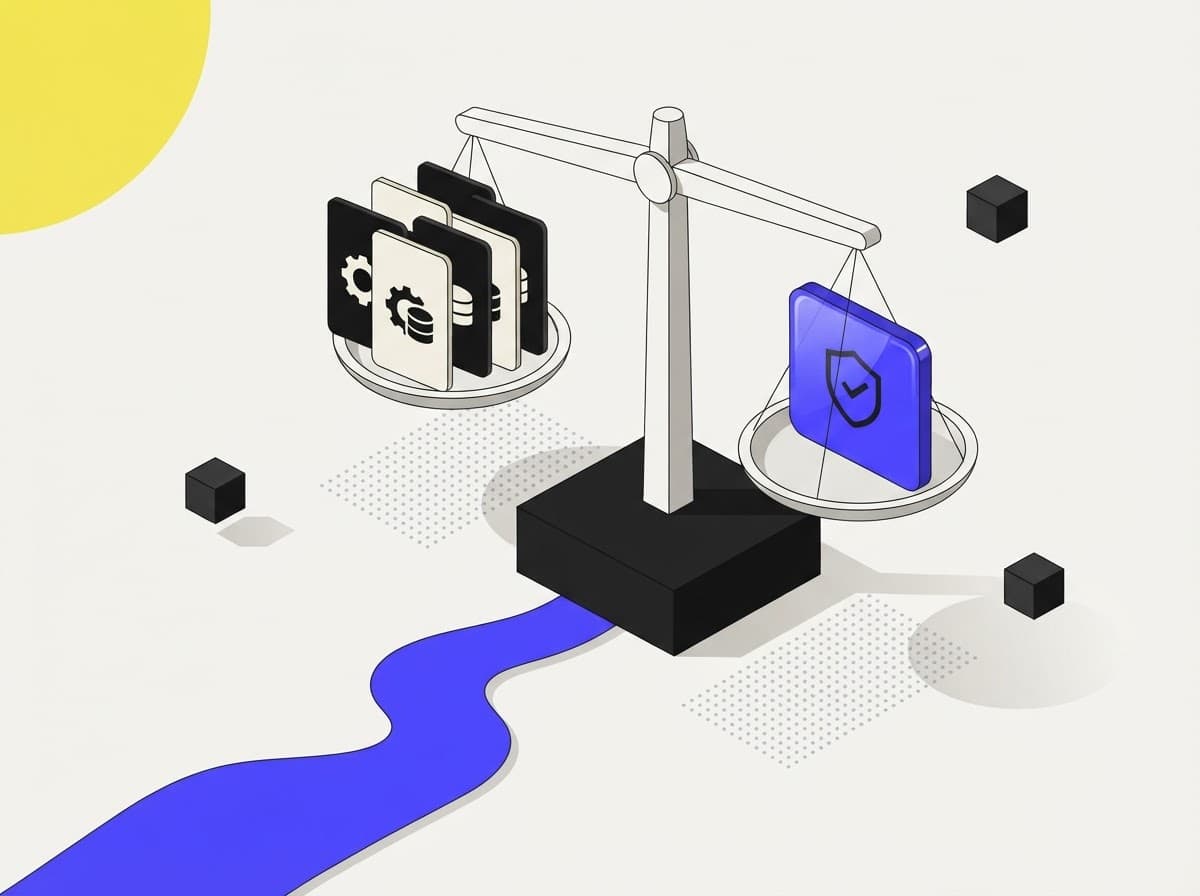
Buy a specialized platform when vendor risk work must be traceable, auditable, and defensible to a board or regulator. Building can make sense for a narrow proprietary workflow, but most enterprises underestimate the operating burden of validation, monitoring, integration, security review, and ongoing model governance.
Introduction
Vendor risk programs fail when teams treat AI as a research shortcut instead of a controlled decision process. Vendor risk management software should create a record that explains what was reviewed, which sources supported the conclusion, and how the decision changed over time. For regulated teams, the build-versus-buy decision is therefore a resource-allocation decision: internal engineers can create a custom layer, or the organization can adopt a platform designed for high-stakes compliance work. The hard part is not producing an answer, but proving why the answer was reasonable after the vendor relationship changes.
Key Takeaways:
Building requires long-term ownership of governance, reliability, and audit evidence.
Purchased platforms should provide source-backed outputs and continuous risk visibility.
Periodic reviews leave material gaps when vendor conditions change between assessments.

The hidden cost of building vendor risk management software
Building vendor risk management software requires more than a model and a workflow interface. Teams must define evidence standards, connect internal systems, establish approval paths, protect sensitive information, test outputs, monitor changes, and maintain the system as policies and vendor relationships evolve. Those responsibilities continue after launch, so the appropriate comparison is between ongoing operating models rather than initial implementation alone.
Custom AI agents for vendor due diligence can look economical when the initial comparison includes only engineering salaries and model access. A defensible enterprise AI decision requires a normalized total cost of ownership model covering build or license cost, implementation, data preparation, integrations, cloud or model usage, security review, governance, change management, support, and model operations. The organization also remains accountable for data governance, user adoption, configuration, integration, and vendor risk even when it buys technology.
Why a prototype is not an audit-ready system
A demonstration may show that a model can extract information, but it does not establish that the resulting process is controlled. An audit-ready workflow needs defined inputs, consistent review steps, role-based access, documented exceptions, and retained evidence. It must also make clear when a conclusion is based on available information, when human judgment was applied, and when a finding requires further investigation.
A prototype can summarize a questionnaire or flag a public news item, but an enterprise vendor risk assessment needs durable controls around evidence, review, exceptions, access, and repeatability. A vendor due diligence process becomes operationally useful only when its conclusions can be reconstructed after personnel, vendors, policies, or source material change.
Evidence retention: Preserve sources and citations behind each conclusion.
Review controls: Record approvals, escalations, and exception rationales.
Change detection: Reassess when relevant vendor conditions shift.
Access governance: Limit sensitive data through controlled credentials.
Model operations: Maintain testing, monitoring, and upgrades after launch.
Engineering effort concentrates in the last mile
The difficult work often begins after a prototype produces plausible results. Production use requires teams to determine how evidence enters the system, how conflicting signals are handled, who can approve exceptions, how data is retained, and how changes to prompts, models, integrations, or policies are tested before release. These are operational design decisions, not merely engineering tasks, and they require coordination among risk, security, legal, procurement, and business owners.
The visible workflow is usually the easiest component to build. Industry analysis of AI build-versus-buy decisions notes that the last 20% of an implementation, including security, governance, observability, reliability, data quality, and change management, can represent 80% of the effort; that is also where business value and operational risk concentrate. This is why vendor security diligence depends on a complete record identifying the source, reviewer, action, and rationale for each material conclusion.
Build teams also need to plan for a hiring and operating ramp rather than treating launch as the finish line. A qualified implementation partner can arrive with production experience already in hand, avoiding a lengthy hiring ramp before the team moves into a smaller maintenance footprint after launch. That distinction matters when the risk function is expected to scale without adding headcount.

What to require from enterprise vendor risk assessment technology
Buying does not remove accountability, but it can move foundational platform work out of the internal backlog. On September 11, 2026, the Federal Reserve, FDIC, OCC, and NCUA jointly proposed new third-party risk management guidance reinforcing that oversight should be proportionate to the risk a vendor relationship presents, replacing the agencies' 2023 interagency guidance. This proposed third-party risk management guidance still expects more comprehensive oversight for higher-risk or critical vendor relationships. The buying question is whether a platform helps the risk team meet that standard with evidence that survives scrutiny.
Evaluate traceability before automation claims
Evaluation should include realistic vendor scenarios rather than generic prompts. Teams can test whether the system distinguishes a source from an inference, preserves the timing and context of a signal, supports reviewer comments, and allows a later reviewer to understand why a decision was made. They can also test how the workflow handles missing evidence, contradictory information, policy exceptions, and findings that need escalation instead of an automated conclusion.
Start with the output, not the demo. Traceable vendor risk reporting should show the underlying sources, the reasoning behind material findings, the review record, and the decision trail that connects findings to an approval, remediation request, or escalation. Teams evaluating vendor risk management tools for board-level audits should test whether an executive can challenge a conclusion and receive a source-backed answer without asking an engineer to reconstruct the workflow.
AI governance also requires cross-functional ownership. IBM reports that 79% of senior IT leaders are concerned about security risks from these technologies, while 73% are concerned about biased outcomes; its guidance emphasizes bias testing, model validation, monitoring, audit logging, design reviews, and risk documentation from the beginning. A purchased platform should therefore be assessed as part of the risk-control environment, not as a standalone assistant.
Compare ownership models against the work that must be controlled
Both models require accountable ownership. With an internal build, the organization must maintain the software and the controls around it. With a purchased platform, the organization must still establish its risk policy, configure workflows, validate outputs, manage access, and oversee the provider relationship. The comparison should identify which responsibilities remain internal, which are supported by the provider, and how evidence is available when a reviewer needs to inspect a decision.
This comparison focuses on operational responsibility, because pricing alone cannot explain whether a system can support defensible compliance decisions. Grep publishes self-serve pricing and offers team and enterprise deployments; the decision should still compare what the internal team must own after the contract or launch plan is signed.
Decision criterion | Internal build | Specialized platform |
|---|---|---|
Initial scope | Internal team defines and implements workflows. | Buyer should verify the platform's evidence, review, and monitoring controls. |
Evidence trail | Internal team designs source capture and review history. | Evaluate exportable, citation-backed decision trails. |
Operational ownership | Internal team owns reliability, monitoring, governance, and upgrades. | Provider owns product roadmap; customer owns configuration and governance. |
Implementation planning | Requires internal security, data, and integration capacity. | Requires configuration, integration, adoption, and vendor oversight. |
Pricing visibility | Internal costs depend on staffing and infrastructure choices. | Grep publishes self-serve pricing and custom enterprise deployments. |
Source data verified as of September 23, 2026.
The practical distinction is who owns each compliance-heavy platform discipline over time. For compliance-heavy vendor-risk work, the practical boundary is often to adopt a controlled platform foundation while reserving internal development for integrations and organization-specific processes.
For teams that already have a broad productivity assistant, the relevant question is not whether generic AI can draft a summary. A comparison of vendor diligence and Copilot can help teams decide whether general assistance can provide an auditable record for a high-stakes decision.
How continuous third-party risk monitoring changes the decision
Periodic assessments are necessary, but they are not sufficient when a vendor's website, leadership, hiring, regulatory posture, or security position can change after approval. Continuous third-party risk monitoring turns vendor oversight into a living process that captures relevant changes between scheduled reviews. This shifts the economics of buying because the system must reliably run, preserve context, and route meaningful changes to the right reviewer.
Move from one-time reports to persistent oversight
Persistent oversight also needs a clear triage model. Not every change should produce the same response: some signals may be informational, some may require a reviewer to confirm relevance, and some may trigger a formal reassessment or escalation. Defining those paths in advance helps avoid both alert fatigue and missed material changes. It also creates a consistent record of how the organization evaluated signals over the life of the relationship.
A one-time report answers a historical question. Ongoing oversight must determine whether a new signal changes the existing risk view, whether the change is material, and which policy owner needs to respond. The newly proposed federal guidance continues to expect banking organizations to apply more comprehensive and rigorous oversight throughout the third-party relationship life cycle for higher-risk activities, including critical activities. This reinforces the need to treat oversight as an ongoing responsibility rather than an isolated assessment.
Grep's AI vendor due diligence approach can support this operating model through custom agents, while Loops and Monitors run scheduled or event-triggered workflows and watch for relevant company changes. The point is not automated alerts alone; teams should evaluate whether each signal can be reviewed, triaged, and retained within their governance process. Shopmonkey closed 64 research jobs in its first 30 days on Grep and cut underwriting research time from hours to minutes per account, beating Gemini head to head, a concrete example of what an operating model built for continuous review can deliver.
Use a buy-plus-build boundary instead of an all-or-nothing choice
The boundary should be documented in practical terms. Teams can identify the platform capabilities that need stable controls, such as evidence retention, access management, workflow history, and monitoring, then identify the organization-specific elements that belong in internal systems, such as approval routing, reporting, data connections, and policy logic. This makes the division of responsibility easier to review as the program changes.
Most enterprises do not need to choose between total customization and total standardization. A sensible boundary is to buy the compliance-focused base, then build the integrations, reporting views, policies, and approvals that reflect the organization's particular risk program. That approach retains control over institutional context without making internal teams responsible for every underlying platform discipline.
Execution risk should shape the boundary. MIT's NANDA initiative found that 95% of generative AI pilots produced no measurable P&L impact, while a documented insurance-industry AI training deployment delivered 95% accurate policy and procedure answers in a governed workflow example.
For vendor risk management for financial services, the useful test is whether the workflow can be governed in production, not whether it can generate an impressive first draft. Regulators continue to frame third-party oversight as a financial-institution and authority concern with implications beyond a single procurement event.
Conclusion
The decision depends on the operating responsibilities the organization is prepared to sustain. A narrow internal workflow may justify custom development when the organization can maintain its controls, integrations, monitoring, and governance over time. A specialized platform may provide the compliance-focused foundation while internal teams retain responsibility for policy, configuration, validation, and oversight. In either case, decision-makers should document the evidence, review process, and accountability model before relying on AI-generated findings.
Buy when your vendor risk program needs a compliance-ready foundation that can produce traceable, auditable, and defensible outputs without turning the risk team into a permanent AI platform owner. Build the organization-specific integrations and policy logic around that foundation, especially where internal systems and approval paths are unique. For enterprises that need custom AI agents for due diligence and ongoing screening, Grep provides exportable decision trails and has its strongest traction today among very large enterprises. Keep the standard simple: every important conclusion should be explainable to a board, regulator, or skeptical reviewer.
Ready to assess an auditable approach to vendor oversight? Explore Grep's approach to high-stakes compliance work, review its guidance on vendor risk assessment software, and evaluate the decision trail behind the output.
Frequently Asked Questions (FAQs)
How to automate vendor due diligence for high-stakes decisions?
Automating vendor due diligence for high-stakes decisions requires a workflow that gathers evidence, records source citations, routes findings for accountable review, and preserves the rationale behind each approval or escalation so the final result can be independently examined later.
What makes AI-generated risk reports audit-ready?
AI-generated risk reports are audit-ready when they preserve source-level support, document the reasoning behind material conclusions, identify reviewer actions and approvals, and retain a decision trail that allows a board, regulator, or internal auditor to reconstruct the assessment.
Why use AI agents for continuous vendor monitoring instead of point-in-time checks?
AI agents for continuous vendor monitoring are useful because they can detect relevant changes after an initial review, connect those changes to the existing risk record, and create a documented trigger for reassessment rather than waiting for the next scheduled cycle.
Can AI agents provide defensible documentation for regulatory boards?
AI agents can provide defensible documentation for regulatory boards when their outputs are citation-backed, their evidence and review history remain available, and the organization applies clear governance over how findings are validated, approved, escalated, and retained.
How to scale vendor risk assessments in large enterprises?
Scaling vendor risk assessments in large enterprises requires standardizing evidence requirements and review paths, automating repeatable research and monitoring tasks, and reserving specialist attention for material exceptions, escalations, and decisions that require institutional judgment.
Why move from Microsoft Copilot to specialized AI agents for risk?
Specialized AI agents for risk should be evaluated when general drafting and search assistance cannot provide the source-backed, retained, reviewable decision record required for vendor oversight that must withstand audit or regulatory scrutiny.
About the Author
David Aviles is Head of GTM at Grep, with experience across seed-to-scale startups including Optimizely, Amplitude, and Mintlify. His work focuses on practical B2B adoption strategies for complex products, helping teams connect operational problems to accountable buying and implementation decisions. Connect on LinkedIn.