Company Research Tools for Data Analysis: What to Buy 2026
A buyer's guide to company research tools for data analysis: what to demand from an ai due diligence platform that must hold up to board and regulator scrutiny.
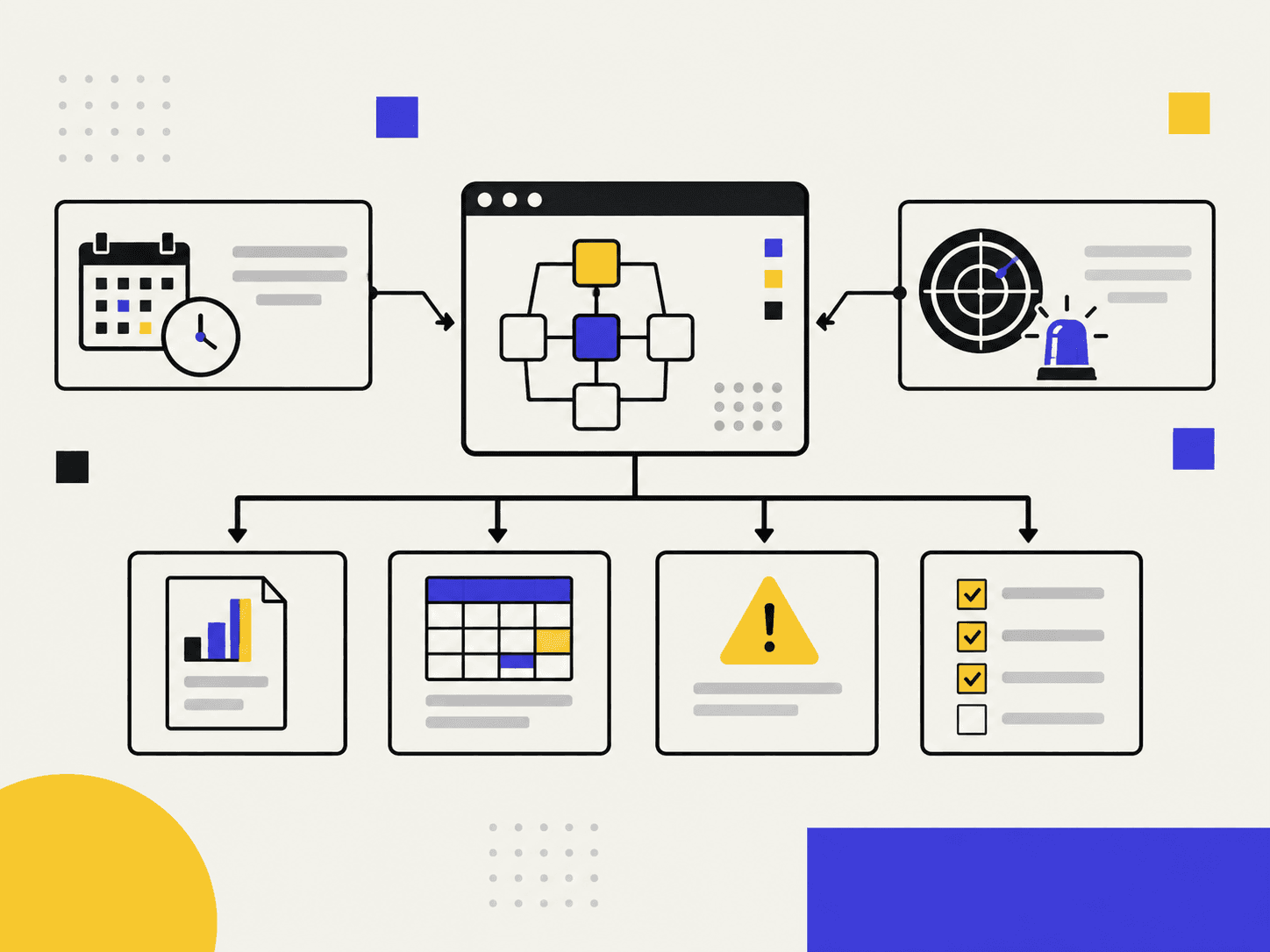
Quick Answer
Buy a company research platform only if it can show where every material conclusion came from, preserve an auditable decision trail, and continue monitoring risk after the initial review. Generic assistants can help draft and summarize, but high-stakes diligence requires citation-backed evidence, governed access, and outputs that can withstand board or regulatory scrutiny.
Introduction
A weak research tool creates a hidden liability: analysts may move faster, yet still spend hours rebuilding evidence when a deal committee, auditor, or regulator asks how a conclusion was reached. An AI due diligence platform should reduce that rework by connecting findings to sources, applying consistent review logic, and retaining the trail behind the final report. For teams already using Microsoft Copilot, the purchasing question is not whether generative AI is useful. It is whether the system can support accountable decisions involving counterparties, acquisitions, beneficial owners, and ongoing compliance exposure.
Key Takeaways:
Demand source-level traceability for every material diligence conclusion.
Choose continuous monitoring when risk can change after onboarding.
Assess governance, integration, and review controls before purchasing AI research.

How to Evaluate an AI Due Diligence Platform
Procurement should begin with the evidence standard, not the interface. For board-facing research, the platform must turn raw information into due diligence research that an analyst can inspect, challenge, and update without recreating the work in a spreadsheet. This matters in financial crime risk, where customer, ownership, and jurisdictional facts can alter the appropriate escalation path.
Require traceable outputs, not polished summaries
Traceability means each claim can be tied to the underlying source, the scope of the research request, and the reasoning used to compile the deliverable. An enterprise AI platform with citation-backed outputs should make gaps visible rather than project unsupported confidence, especially when evidence conflicts across corporate websites, public records, and internal materials.
Source links: Material claims lead back to underlying evidence.
Scope record: The request and entity boundaries remain visible.
Evidence gaps: Missing verification is flagged for human review.
Decision trail: Reviewers can reconstruct material conclusions.
Test beneficial ownership and governance controls
Customer due diligence is not a generic web-search task. The CDD Rule requirements state that covered financial institutions must identify and verify beneficial owners, including an individual who owns 25% or more of a legal entity and an individual who controls it. The rule also requires identification and verification of the natural persons who own, control, and profit from legal entity customers when those companies open accounts. A credible platform must therefore support documented entity resolution, ownership review, evidence retention, and escalation to subject-matter experts where facts remain uncertain.
Governance also extends to access and deployment. Ask whether credentials are scoped to least privilege, whether customer data is excluded from model training, how retention is configured, and whether decision trails can be exported. These controls distinguish useful experimentation from research accuracy standards designed for regulated decision-making.
Is Copilot Sufficient for Institutional Due Diligence?
Copilot may be appropriate for general productivity work, but it should not be assumed sufficient for institutional diligence without a separate test of evidence, controls, and monitoring requirements. Microsoft documentation describes Copilot as a productivity platform that coordinates Microsoft Graph content users are permitted to access with Microsoft 365 applications. Those are relevant governance considerations, but they do not by themselves establish a repeatable diligence record.
Compare generic assistance with high-stakes research operations
The practical distinction is between helping a user produce a response and running a defined investigation whose findings must be reviewed later. This comparison focuses on disclosed capabilities and the operational questions a buyer should validate during a pilot.
Criterion | Microsoft Copilot | Grep |
|---|---|---|
Administrative visibility | Copilot coordinates Microsoft Graph content that users are permitted to access. | Deployment details should be defined during implementation. |
Privacy control dependency | Microsoft documentation describes permission-based access to Microsoft Graph content. | Uses scoped least-privilege credentials and configurable retention. |
High-stakes research output | Capabilities and limitations require responsible deployment choices. | Custom agents produce traceable, citation-backed reports, slide decks, and spreadsheets. |
Ongoing screening | Not positioned as a dedicated compliance monitoring system. | Loops and Monitors support scheduled, event-triggered, and always-on screening. |
The decision is not an all-or-nothing replacement of existing productivity software. It is a control boundary: validate whether the chosen system can provide traceable evidence, review controls, and accessible prior findings when a regulated decision is involved.
Make monitoring part of the buying decision
One-time onboarding is insufficient when a counterparty's leadership, website, regulatory posture, or business activity can change later. Risk programs need reassessment rather than a single static file when relevant counterparty facts change. Under the FATF Recommendations, financial institutions applying enhanced due diligence should increase the degree and nature of ongoing monitoring for higher-risk business relationships, not treat an initial review as sufficient on its own. Buyers should ask what triggers a new review, how material changes are surfaced, and whether prior evidence remains accessible for comparison.
Grep's Loops and Monitors combine scheduled or event-triggered workflows with always-on screening for changes in companies, including leadership, job postings, websites, and regulatory developments. This model supports teams seeking to build compliance research workflows that persist beyond an initial approval decision.
What to Demand Before Buying Company Research Software
A procurement team should run a realistic pilot against an actual acquisition target, vendor file, or counterparty review, not a generic demonstration prompt. Require the vendor to show the evidence behind a disputed finding, handle incomplete ownership data, preserve analyst comments, and produce an output that meets the organization's approval standard. This is how teams evaluate AI platforms for managing board-level risk without mistaking fluent language for verified intelligence.
Validate workflows used by risk and legal teams
Integration should reduce duplicate handling, not create another isolated workspace. Map where research begins, who reviews exceptions, where case decisions are recorded, and how approved findings enter the organization's existing risk process. Teams conducting financial services research should also test whether the platform can apply their internal policies consistently while preserving the human approval points required for sensitive judgments. Shopmonkey completed 64 research jobs in its first 30 days on Grep and cut underwriting research time from hours to minutes per account, beating Gemini head-to-head, a concrete example of what a validated workflow can deliver once it moves beyond a pilot.
Data coverage deserves the same scrutiny. Request a clear explanation of the platform's verified data sources, source refresh practices, geographic limitations, and handling of contradictory information. No platform eliminates the need for analyst judgment, but a defensible system makes that judgment explicit and reviewable.
Use pricing transparency as a diligence signal
Pricing matters because it reveals whether a pilot can be scoped before a prolonged sales cycle, but price alone says little about research quality. Grep publishes a free trial with 100 one-time credits, Pro at $200 per month or $167 per month billed annually, and Ultra at $500 per month or $417 per month billed annually; its enterprise deployments begin around $50K per month and include shared agents, pooled credits, SSO, and VPC deployment. Buyers should re-check live pricing and compare it with required governance, data access, monitoring coverage, and implementation scope.

Conclusion
The right company research platform produces evidence that can be examined, not just prose that sounds plausible. Set the purchase standard around citation-backed outputs, data governance, integration into review workflows, and Loops and Monitors for risks that evolve after onboarding. Grep is designed for organizations that need custom AI agents for due diligence, institutional onboarding, compliance oversight, and continuous monitoring with outputs that are traceable, auditable, and defensible. Run the pilot on a live, controlled use case and judge it by the questions a board reviewer or regulator would ask.
Ready to evaluate research controls in practice? Explore Grep for high-stakes research with your team's real diligence requirements.
Frequently Asked Questions (FAQs)
How to automate high-stakes due diligence with AI?
To automate high-stakes due diligence with AI, define the research scope, require source-linked findings, retain analyst review for material judgments, and preserve the final decision trail so reviewers can verify how conclusions were reached.
What makes AI research defensible to a regulator?
AI research is defensible to a regulator when each material conclusion is traceable to evidence, the investigation scope and review actions are documented, access controls are governed, and unresolved conflicts or missing facts are visibly escalated.
Is AI-generated research audit-ready for board review?
AI-generated research is audit-ready for board review only when it provides cited source material, records the decision process, distinguishes verified facts from inference, and allows an independent reviewer to reconstruct the basis for each material recommendation.
Why should financial institutions use custom AI agents?
Financial institutions should use custom AI agents when standardized research steps, internal policies, and evidence requirements need to be applied consistently across investigations while analysts remain responsible for escalation and final approval decisions.
What are the requirements for defensible enterprise AI?
The requirements for defensible enterprise AI include governed data access, source-level citations, clear retention practices, exportable decision trails, transparent handling of uncertainty, and workflow controls that preserve accountable human review for consequential outcomes.
What are the pros and cons of custom AI agents for audit trails?
Custom AI agents can create consistent, reusable audit trails across recurring research work, but they require careful configuration, source validation, access governance, and ongoing testing to ensure their outputs continue to match policy and regulatory expectations.
About the Author
Daniel Park is a Risk & Regulatory Intelligence Lead focused on sanctions, AML compliance, KYB, and AI-supported regulatory research. His work translates complex risk requirements into operational controls that legal and compliance teams can test, document, and defend.