Compare AI Company Analysis Tools Before You Buy in 2026
Evaluating AI company analysis tools for compliance or diligence work? Compare auditability, monitoring, and defensibility before making your 2026 pick.
Quick Answer
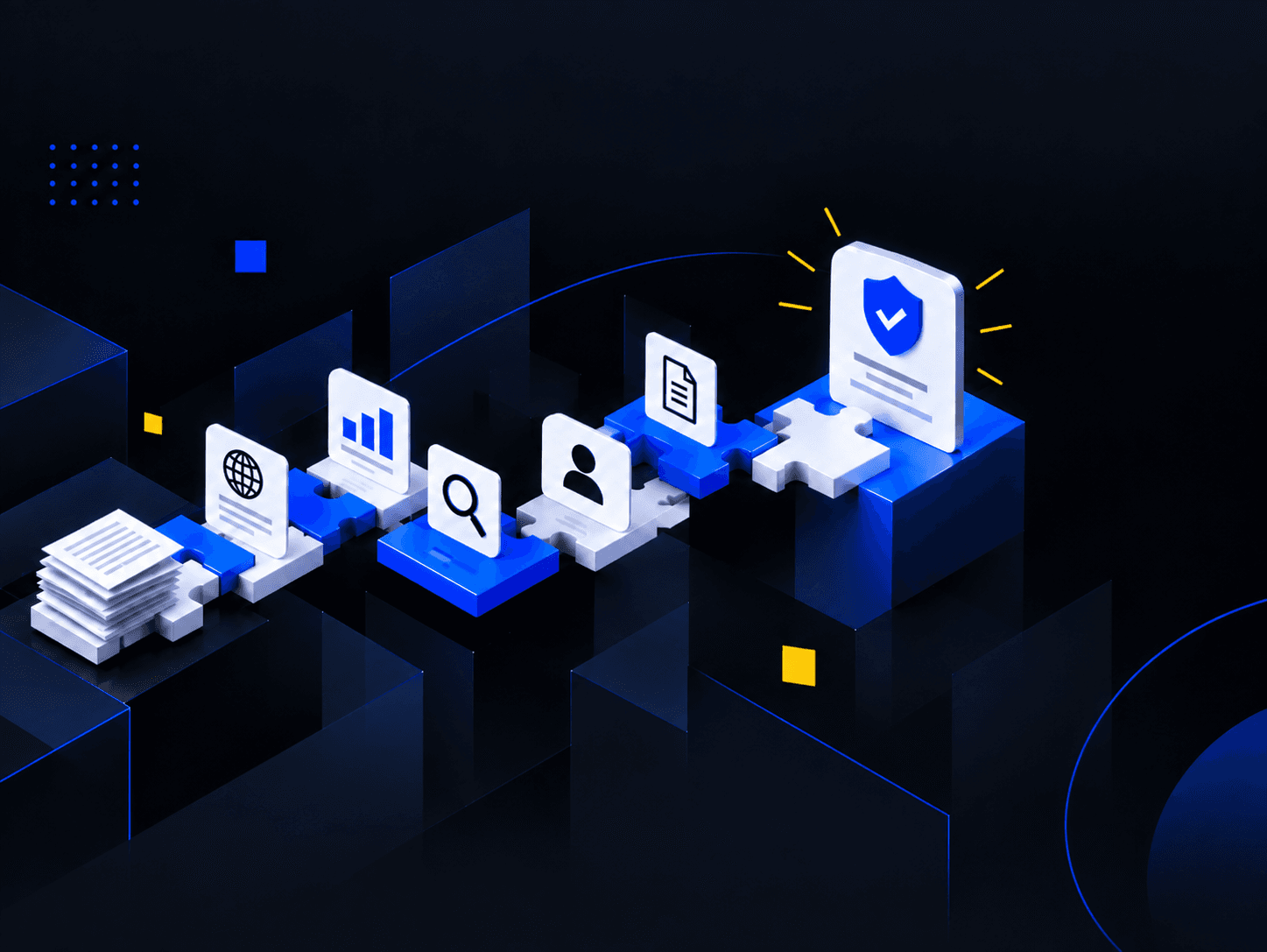
Buy an AI company analysis platform only if it can show where every material claim came from, preserve a reviewable decision trail, and continue watching the company after the initial report. Generic assistants can accelerate drafting, but enterprise company analysis requires traceable evidence, governed data access, and outputs that can withstand challenge from compliance, legal, boards, and regulators.
Introduction
Enterprise company analysis now determines how quickly teams can approve a counterparty, investigate a vendor, or prepare an acquisition recommendation without weakening controls. The relevant distinction is not whether a product uses AI but whether its research can be verified when an analyst, executive, or examiner asks why a conclusion was reached. Microsoft Copilot can help employees summarize and draft within a familiar productivity environment, yet high-stakes diligence requires source-level evidence, accountable review, and monitoring that continues after onboarding. Bad research does not only consume time; it can change decisions without leaving reviewers a defensible record of why.
Key Takeaways:
Require citations and exportable decision trails for every material diligence conclusion.
Separate one-time screening from continuous monitoring before comparing platforms.
Evaluate governance controls before testing research speed or polished outputs.

Enterprise Company Analysis: Set the Trust Standard First
A credible evaluation begins with the work product, not the chat interface. Ask what must be delivered, who must review it, what evidence supports it, and whether the record remains usable when the company changes months later. This framing exposes the difference between a generic response generator and an AI research platform for high-stakes work.
Test traceability before testing speed
Research speed matters only when a reviewer can inspect the chain from source to conclusion. Teams should treat unsupported assertions as exceptions that require remediation, not as acceptable draft language, because AI hallucination risks become operational risk when they enter approval files or board materials.
Source links: Open the evidence behind each material claim.
Claim context: Preserve the source passage, not only a URL.
Decision trail: Record reviewer actions and final disposition.
Export format: Produce reports, spreadsheets, or slides with citations.
Human review: Route exceptions to accountable analysts.
High-risk boundaries: Define prohibited uses; responsible-AI research identifies systems such as government social scoring and toys encouraging dangerous behavior as unacceptable-risk examples.
Distinguish generic assistance from custom agents
Generic AI tools answer broad prompts, while custom AI agents for high-stakes work can be designed around a defined diligence process, required sources, escalation rules, and output format. The practical question is whether the system follows the organization's approval standard every time, rather than producing a plausible answer that needs to be reconstructed manually. Grep builds agents for diligence, institutional onboarding, and compliance reviews with traceable, citation-backed deliverables, which is the standard a buyer should apply to any shortlisted platform. Buyers can also compare compliance platforms against these requirements. Wisdom Ventures Operating Partner Zoe Rogers describes this kind of agent-led research as "effectively filling part of the analyst function as the firm scales," a relevant signal for teams weighing whether a shortlisted platform can absorb real analytical load.
Compare AI Company Analysis Tools by Operating Model
One-time screening and continuous oversight solve different control problems. A static report captures a point in time, while always-on corporate monitoring tools detect relevant changes after a relationship, investment, or approval moves forward. Buyers should compare these operating models directly rather than accepting a broad claim that a platform "monitors" risk.
Use a practical evaluation matrix
The table below separates generic AI assistance, one-time research products, and an enterprise platform built for persistent high-stakes workflows. Pricing should also be tested for transparency: if a vendor does not publish pricing or provide a usable proposal structure, document that limitation rather than assuming the commercial model.
Evaluation criterion | Generic AI assistant | One-time screening product | Grep |
|---|---|---|---|
Research output | Prompt-based summaries and drafts | Static screening or research result | Citation-backed reports, slides, and spreadsheets |
Evidence review | Varies by prompt and connected data | Depends on report design | Traceable and auditable decision trails |
Ongoing change detection | Requires repeated user prompts | Usually tied to a screening event | Loops and Monitors for scheduled or event-triggered reviews |
Data governance | Depends on tenant configuration | Depends on provider controls | SOC 2 and GDPR posture, VPC options, configurable retention |
Published pricing | Varies by enterprise agreement | Often custom or undisclosed | Free trial, public plans, and enterprise deployments from around $50K monthly |
The deciding tradeoff is control after the first report. A generic assistant may reduce drafting time, but it does not by itself create a repeatable, auditable process for automated counterparty risk assessment.
Grep publishes transparent pricing with a free trial containing 100 one-time credits, Pro at $200 per month, or $167 per month billed annually, and Ultra at $500 per month, or $417 per month billed annually. Enterprise deployments begin at around $50K per month and include shared agents, pooled credits, SSO, and VPC deployment, while buyers should re-check live pricing before procurement approval.
Assess governance as a system requirement
Governance must cover data handling, permissions, oversight, and post-deployment review. The AI Risk Management Framework provides a useful lens because trustworthy AI requires organizations to manage risks throughout use, not merely test a model before launch. For a formal reference, teams can also consult the NIST AI RMF 1.0 publication. Grep states that it does not train models on customer data and uses scoped least-privilege credentials, configurable retention, delete-on-request controls, and exportable decision trails.
Make monitoring part of the approval design
Due diligence expires when the underlying company changes. Build alerts around website updates, leadership transitions, job postings, and regulatory or compliance developments, then assign ownership for reviewing each alert and recording a disposition. For teams scaling AI vendor due diligence, this approach turns a completed review into a maintained risk record rather than a forgotten PDF. Shopmonkey closed 64 research jobs in its first 30 days on Grep and cut underwriting research time from hours to minutes per account, beating Gemini head-to-head, a concrete example of what a maintained monitoring model can deliver over a static file.
Build a Procurement Test That Survives Scrutiny
Run a controlled proof of value on real, permissioned cases that include incomplete records, conflicting sources, and meaningful changes over time. This reveals whether a platform can manage due diligence bottlenecks without hiding uncertainty, forcing analysts to recreate evidence, or losing accountability when an escalation occurs.
Require an auditable pilot deliverable
Give each vendor the same company, research questions, source constraints, approval criteria, and deliverable format. Score the output for evidence coverage, citation accuracy, exception handling, reviewer effort, and whether the team can export defensible due diligence documentation without manual cleanup. A responsible AI framework also emphasizes accountability, explanations, governance, meaningful human oversight, post-deployment monitoring, and risk-based auditing, as described in responsible AI systems research. That research also identifies sector-specific adaptation and operationalization as challenges for certification, post-deployment monitoring, and risk-based auditing.
Do not reward fluent prose if it lacks provenance. Require the provider to show how an analyst can inspect a finding, challenge it, correct it, and preserve the reviewed result for future examination.
Design ownership around real operating teams
Compliance owns policy requirements, operations owns queue performance, legal owns escalation thresholds, and security validates data controls. The platform must support that shared model without making every analyst an AI configuration specialist. For recurring third-party reviews, a vendor due diligence program should define triggers, reviewers, evidence retention, and escalation paths before monitoring begins.
Conclusion
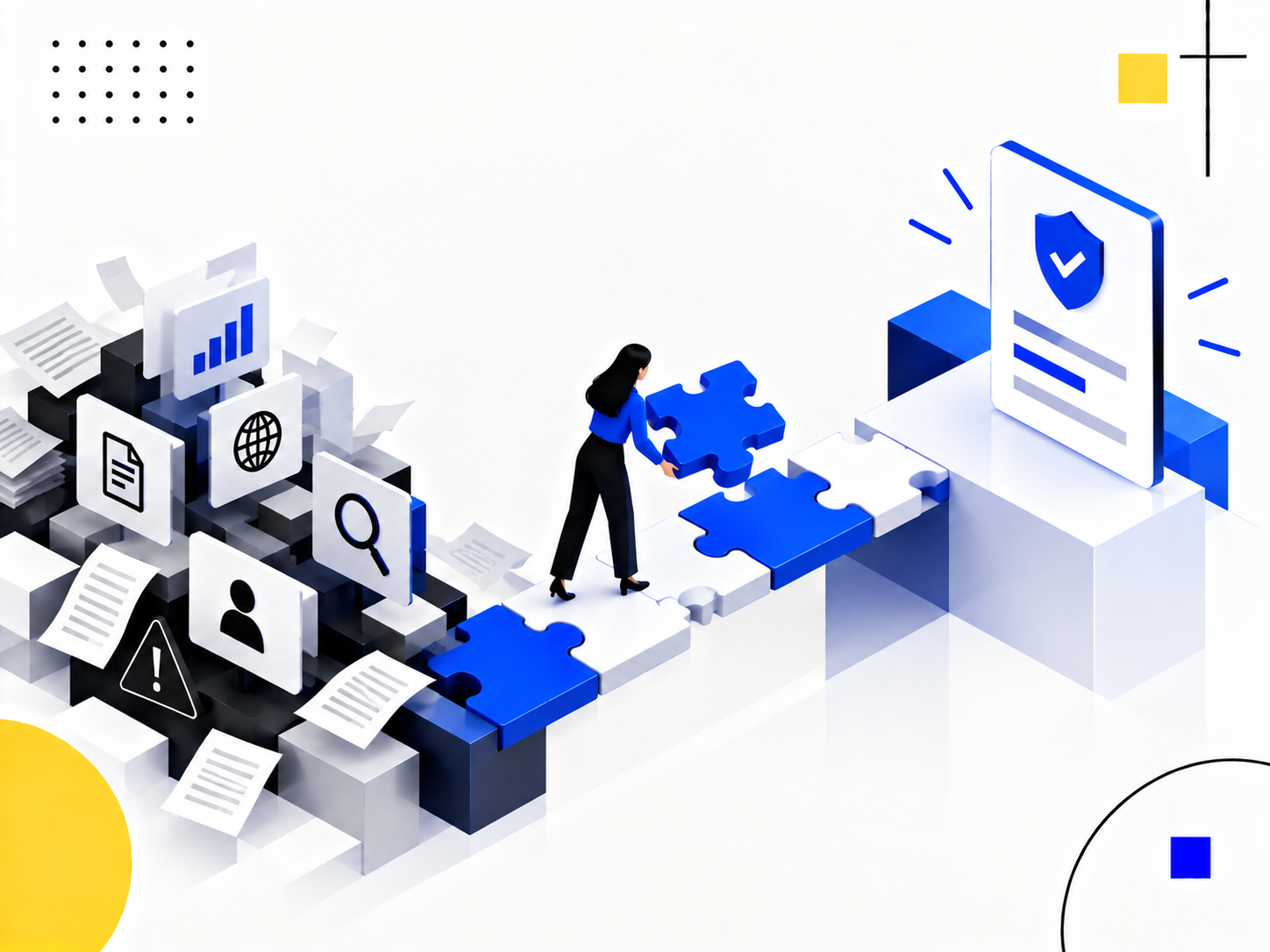
Choose AI company analysis software based on the quality of the evidence trail, not the fluency of the first answer. Require a pilot that tests citations, human review, governance, exports, and change detection against real diligence files. Teams that already use Copilot should move board- and regulator-facing work to a controlled research environment when generic assistance cannot preserve defensible evidence. Grep's approach centers on custom agents plus Loops and Monitors for organizations that need high-stakes work to remain traceable after the initial decision.
Ready to evaluate a more defensible diligence workflow? Explore Grep for high-stakes research and assess the evidence trail on a real use case.
Frequently Asked Questions (FAQs)
How to automate due diligence for institutional onboarding?
Automate due diligence for institutional onboarding by defining required evidence, source boundaries, risk rules, reviewer approvals, and escalation paths before deploying an agent, then retain the cited research and reviewer disposition as the onboarding record.
Why does high-stakes work require auditable AI?
High-stakes work requires auditable AI because compliance leaders and deal teams must explain how a conclusion was produced, identify the evidence behind it, correct errors, and demonstrate that a responsible human reviewed material exceptions.
What are the benefits of continuous monitoring for compliance teams?
Continuous monitoring benefits compliance teams by detecting meaningful changes after initial approval, including leadership, website, hiring, and regulatory developments, so the organization can reassess risk rather than relying indefinitely on an outdated screening result.
Can AI agents replace manual KYC analyst workflows?
AI agents can reduce repetitive KYC analyst work by gathering evidence, drafting research, and flagging exceptions, but accountable analysts should still review escalations, resolve conflicting information, and approve decisions that carry regulatory or relationship risk.
Is AI research for acquisitions defensible to regulators?
AI research for acquisitions is defensible to regulators when the organization can preserve cited sources, document review and challenge steps, control access to information, explain material conclusions, and show how it handled uncertainty or conflicting evidence.
What is the difference between AI monitoring and one-time screening?
AI monitoring continuously evaluates defined signals after an approval or onboarding event, while one-time screening produces a point-in-time assessment that requires a separate process or repeated request to identify later changes.
About the Author
Marcus Hale is an AI Research & Compliance Strategist who writes for compliance officers and deal teams adopting agentic AI for due diligence, KYC/AML, and M&A research. His work focuses on making AI outputs traceable, reviewable, and operationally defensible in regulated enterprise environments.