Cyber Threat Watch: Turn Attack Signals Into a Response Plan Now
See how an AI agent monitors cyber threat intelligence feeds, filters noise from real risk, and turns signals into a prioritized response plan for your team.

Quick Answer
Turn cyber threat signals into action by continuously matching them against your environment, then assigning a documented owner, priority, and response. The useful output is not a larger alert queue but a traceable plan that distinguishes relevant exploitation, indicators, and vendor exposure from background chatter.
Introduction
Cyber threat intelligence only matters when it changes what a security or compliance team does next. A Cyber Threat Watch agent can monitor emerging exploits, indicators of compromise, breach disclosures, and credible threat chatter, then connect those signals to systems, dependencies, vendors, and control owners. That approach supports continuous risk monitoring agents without forcing analysts to repeatedly search the same sources. The operational gap is usually not detection, but deciding which signal deserves action before a routine alert becomes an incident.
Key Takeaways:
Relevant threat signals need context before they become response work.
Prioritized findings should identify affected assets, owners, and next actions.
Auditable records make security decisions easier to defend later.

How Does Cyber Threat Intelligence Produce Operational Decisions?
Useful cyber threat intelligence starts with the organization’s exposure, not a generic feed. A team should define the software, cloud services, internet-facing assets, critical vendors, business processes, and threat scenarios that matter, then use those inputs to determine whether a new signal changes risk. This is the difference between collecting news and running a decision system.
Signals worth monitoring continuously
A practical watch combines external evidence with internal context. The aim is to capture early indicators without treating every mention, proof-of-concept, or vulnerability record as an emergency.
Exploit activity: Newly disclosed exploits and credible exploitation reports.
IOCs: Malicious domains, hashes, IP addresses, and phishing infrastructure. A threat technique digest can help teams review these indicators alongside relevant techniques.
Threat chatter: Relevant mentions of brands, vendors, sectors, or exposed services.
Vulnerability exposure: CVEs tied to deployed software and reachable assets.
Vendor events: Outages, breach disclosures, and security postmortems.
Why context beats keyword matching
A keyword alert cannot tell whether a CVE affects a production service, a retired dependency, or a component that is not deployed. Daily vulnerability monitoring becomes more useful when it is tied to an inventory, package ownership, asset criticality, compensating controls, and evidence of active exploitation. This context helps teams decide whether to act. A report about remote-service exploitation matters differently when the affected service is exposed to the internet, used internally, or absent from the environment.
incident response capabilities should be treated as part of broader cybersecurity risk management, not as a separate exercise triggered only after damage occurs; NIST states that these broader risk-management activities also support incident response.[1] That framing keeps monitoring connected to preparation, containment decisions, recovery planning, and governance.
How Does a Cyber Threat Watch Agent Filter Noise?
A Cyber Threat Watch agent should evaluate each signal against the organization’s known environment and risk priorities before presenting it as work. Cyber Threat Watch agent is designed for a weekly cyber threat intelligence brief, giving teams a recurring view of material developments rather than requiring one-off research whenever headlines accelerate. Grep's Loops and Monitors put high-stakes work on autopilot by running scheduled or event-triggered research and providing an always-on screening surface.
From raw signal to prioritized response plan
Prioritization should answer four questions: Is the signal credible? Is there a plausible connection to an asset, vendor, or business process? Is exploitation or abuse currently relevant? Which team can reduce exposure? The resulting record should state the evidence, affected scope, urgency rationale, recommended action, accountable owner, and follow-up condition.
For emerging exploits, this means separating a public proof-of-concept from evidence that the affected technology is actually present. MITRE ATT&CK describes a robust threat intelligence capability as a way to determine the types and levels of threat that may use software exploits and zero-days against an organization.[2] The guidance applies to exploitation for credential access, privilege escalation, stealth, and remote services. That is a context problem, not a search-volume problem.
Grep can preserve the research path behind each finding, including the source material, applicability assessment, and decision record. That produces auditable decision trails for risk teams, which matters when a security leader must explain why an alert was escalated, deferred, or closed.
What the team receives on day one
The first useful deliverable is a scoped briefing, not a blank dashboard. It should identify watched entities, known technology and vendor relationships, signal categories, prioritization rules, and the format for handoff into security operations, risk, or compliance review. cybersecurity advisories can inform that review when they identify exploitation indicators or response-relevant developments, helping reviewers determine whether the issue requires action.[3]
How Do You Choose Monitoring That Leaves a Defensible Record?
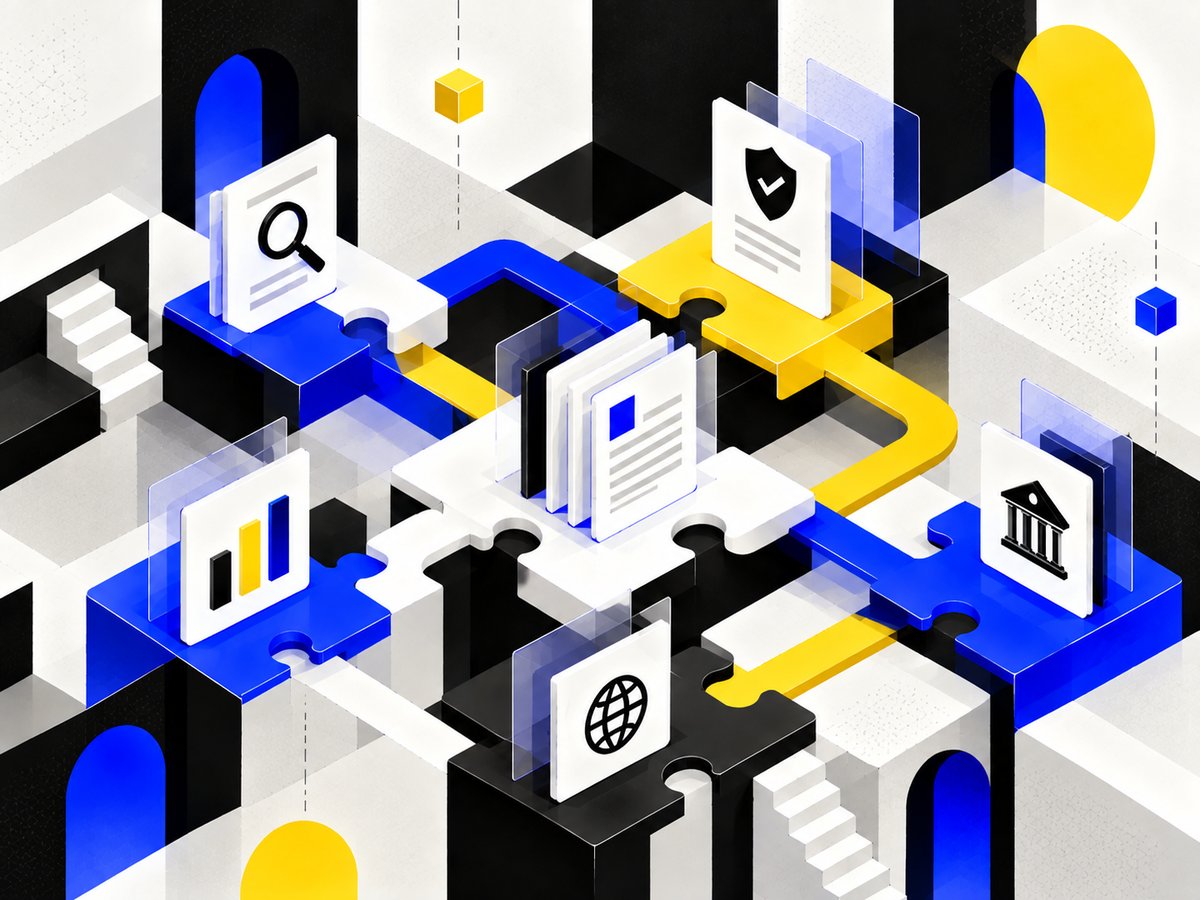
When comparing enterprise threat intelligence platforms, focus less on the volume of sources and more on whether findings can be connected to a real response process. A monitoring workflow is only useful when security, compliance, and technical owners can see why a signal matters and what decision it supported.
Manual triage versus contextual monitoring
The comparison below highlights the operating-model difference. Pricing for monitoring configurations is custom rather than published for this use case, so the decision should rest on workflow requirements, evidence quality, and deployment constraints.
Approach | Signal handling | Response output | Decision record |
|---|---|---|---|
Manual feed review | Analyst searches and assesses items individually | Variable notes and tickets | Depends on analyst documentation |
Generic alerting | Matches rules or keywords | High-volume notifications | Usually limited to alert history |
Grep monitoring | Connects signals to defined exposure and priorities | Prioritized research with assigned next steps | Traceable, exportable decision trails |
The practical advantage is consistency: each finding follows the same relevance test, while human reviewers retain authority over material response decisions.
Grep is built for high-stakes research where teams need outputs that are traceable, auditable, and defensible to a board or regulator. Its strongest traction is currently among very large enterprises, where monitoring often spans security operations, compliance oversight, vendors, and regional obligations.
Extend the watch beyond vulnerabilities
Threat exposure can emerge through suppliers and open-source components as well as direct infrastructure. Checks for dependency vulnerabilities can surface package-level concerns, while monitoring vendor status supports review of outages and postmortems that may change third-party risk assumptions. Together, they broaden the review beyond direct infrastructure. The same operating model can support enterprise-grade compliance monitoring when security developments affect control testing, disclosure obligations, or risk reporting.
Security teams also need a durable record when an issue is revisited months later. Grep supports persistent memory and domain expertise through Brain, while configurable retention, delete-on-request controls, scoped least-privilege credentials, and VPC deployment options help enterprises govern sensitive research workloads.

Conclusion
Cyber threat monitoring should produce decisions, not just awareness. Define the assets and relationships that matter, assess signals against that context, and route each material finding to an owner with a documented next step. Grep is the choice for security and compliance teams that need continuous monitoring paired with research records they can defend in governance reviews. Start with one focused watch, then expand the operating model across vulnerabilities, dependencies, and vendor exposure.
Ready to turn threat signals into accountable action? Try the Cyber Threat Watch agent for always-on, traceable monitoring.
Frequently Asked Questions (FAQs)
Is it possible to run continuous risk monitoring on autopilot?
Continuous risk monitoring can run on autopilot when scheduled or event-triggered research is scoped to defined assets, vendors, and risk conditions, while designated people remain responsible for reviewing material findings and approving response actions.
What makes an AI agent auditable for regulators?
An AI agent is auditable for regulators when it preserves the sources reviewed, the reasoning behind relevance and priority decisions, the resulting recommendation, and the accountable owner’s disposition in an exportable record.
How should teams prioritize a new exploit report?
Teams should prioritize a new exploit report by verifying the affected technology, checking whether it exists in their environment, assessing exposure and active-use evidence, and assigning remediation or compensating-control work to the responsible owner.
Why is persistent memory important for recurring risk reviews?
Persistent memory is important for recurring risk reviews because teams need to retain prior decisions, entity context, risk rationale, and changes over time rather than rebuilding assessments from disconnected searches.
What security measures are required for VPC deployment of AI?
VPC deployment of AI requires controls appropriate to the organization’s environment, commonly including network isolation, scoped least-privilege credentials, governed data retention, and clear access oversight for the research workload.
How can security research remain defensible during an audit?
Security research remains defensible during an audit when each conclusion can be traced to source evidence, applicability criteria, reviewer decisions, and a documented follow-up action instead of relying on an undocumented analyst judgment.
Sources
- Incident Response | NIST ↩
- Threat Intelligence Program, Mitigation M1019 | MITRE ATT&CK ↩
- Cybersecurity Alerts & Advisories | CISA ↩