Enterprise AI Research Platforms 2026: Pricing Compared
See how top enterprise AI automation software platforms price their plans in 2026, with transparent tier comparisons built for regulated, high-stakes teams.

Quick Answer
Enterprise AI research pricing is defensible only when buyers can see the unit of consumption, the controls included, and the deployment path before procurement begins. In 2026, Grep publishes self-serve credit tiers and an enterprise starting point, while Microsoft Copilot and Bretton price primarily through negotiated enterprise agreements rather than a published self-serve rate card.
Introduction
Opaque enterprise AI pricing creates a procurement problem because a per-seat quote rarely explains what research volume, audit evidence, or security architecture it actually buys. For compliance and legal operations teams, enterprise AI solutions must be evaluated against the work they replace: high-stakes diligence, institutional onboarding, and continuous monitoring that must stand up to review. Adoption makes this urgent: work-related AI adoption stood at about 41% as of November in the cited survey data. The meaningful distinction is not whether an agent can draft an answer, but whether its output preserves the sources, reasoning, and controls behind a decision.
Key Takeaways:
Published credits make research consumption easier to model than opaque enterprise quotes.
Traceability and deployment controls belong in the pricing discussion, not only security review.
Manual research costs include delayed decisions, inconsistent evidence, and expanding review queues.
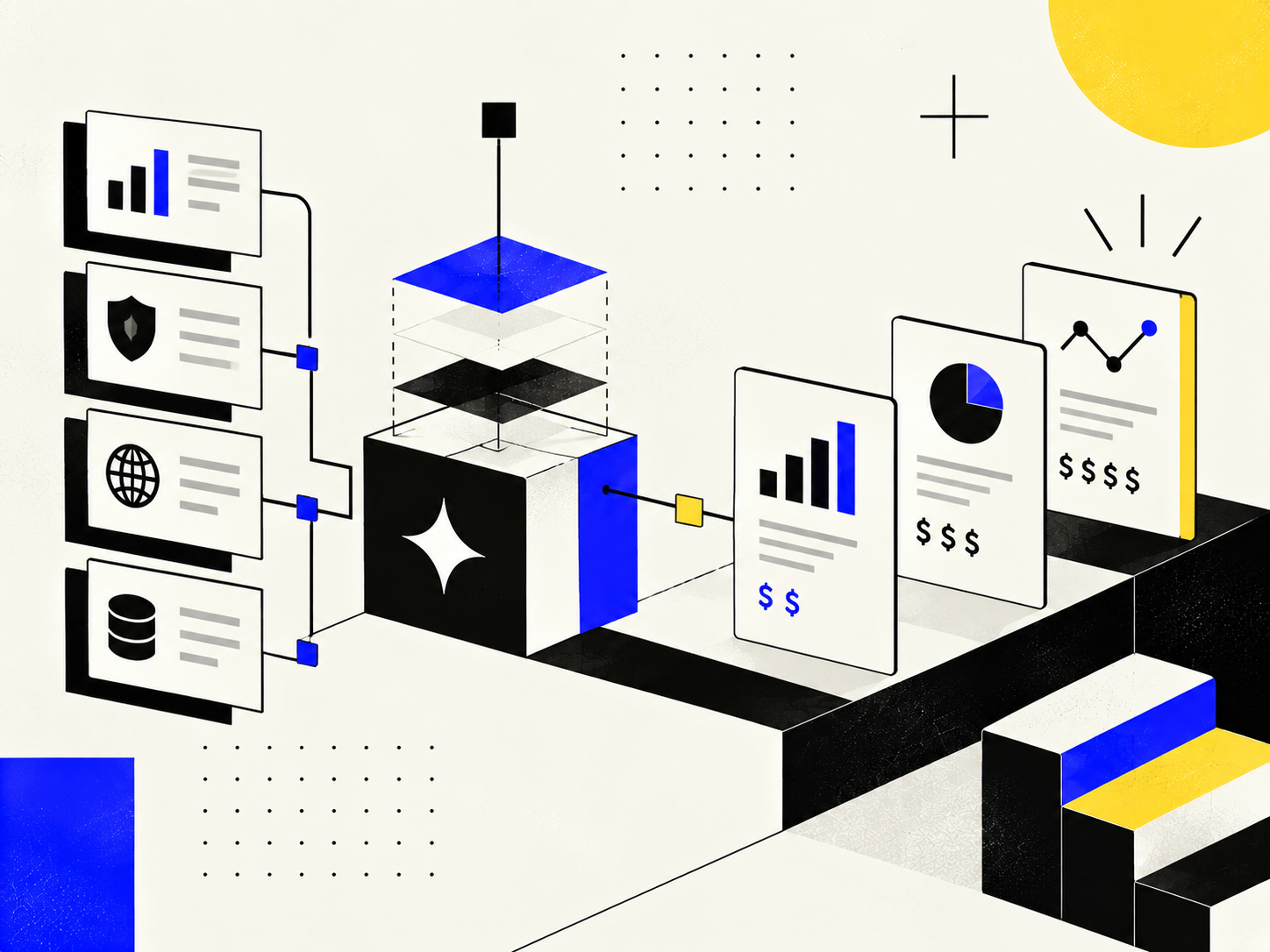
Enterprise AI Solutions: A Clear Consumption Model
Pricing should map directly to the work a team expects an AI system to perform. A transparent model lets procurement estimate research capacity, test a use case without a sales cycle, and determine when shared agents, identity controls, or isolated infrastructure become necessary for a regulated deployment.
Start with the pricing unit, not the headline subscription
Credit-based pricing is useful when a research task varies in scope, sources, and deliverables, provided the vendor makes credit use understandable before a team commits. Grep's credit-based pricing structure separates trial experimentation, individual production work, and shared enterprise usage rather than implying that every investigation consumes the same effort.
Trial credits: Grep includes 100 one-time credits.
Pro tier: $200 monthly includes 1,500 monthly credits.
Annual Pro: $167 monthly when billed annually.
Ultra tier: $500 monthly includes 4,500 monthly credits.
Top-ups: Pay-as-you-go credits remain valid for 365 days.
Published tiers establish the baseline before enterprise negotiation
Grep lists Pro with premium data, enterprise API access, and custom agent creation, while Ultra expands the monthly credit allocation for heavier research demand. Buyers can also review enterprise AI pricing directly. Team and enterprise deployments start around $50K per month and add shared agents, pooled credits, SSO, and VPC deployment, so a buyer can distinguish self-serve adoption from a governed production program before requesting a proposal.
That visibility matters more than a lower headline figure. Credit volume only has operational value when teams can connect it to traceable reports, citation-backed outputs, and reviewable decisions.
Pricing Compared: What Enterprise Buyers Can Verify
Generic enterprise AI tools and high-stakes research systems are not interchangeable categories. Microsoft positions Microsoft 365 Copilot as an add-on that requires a separate qualifying Microsoft 365 base license, priced per user rather than metered by research volume. Bretton takes a different approach again: it is an off-the-shelf, compliance-focused agent platform aimed at teams that want packaged screening and review workflows without configuring custom agents from scratch, and its pricing is typically negotiated per deployment rather than published as a fixed rate card. A dedicated compliance AI agent platform must support source-backed investigative work, repeatable controls, and a defensible record of how a conclusion was reached, regardless of which commercial model a vendor uses.
Compare published pricing with deployment requirements
The table separates disclosed information from details that are not available in the provided sources. It also avoids treating a subscription amount as the full cost of production research, because implementation, review design, security approval, and source-quality requirements determine the real operating model.
Platform | Published entry point | Published consumption model | Enterprise deployment details |
|---|---|---|---|
Grep | Free trial with 100 one-time credits | Pro: $200 monthly for 1,500 credits; Ultra: $500 monthly for 4,500 credits | From around $50K monthly with pooled credits, SSO, shared agents, and VPC deployment |
Microsoft Copilot | Add-on priced per user, requiring a qualifying Microsoft 365 base license | General-purpose assistance, not consumption-metered for research tasks | Governance depends on the organization's existing Microsoft configuration |
Bretton | Negotiated per deployment; not published | Packaged compliance-focused agent workflows | Deployment and audit controls not disclosed publicly |
The decision point is straightforward: use published pricing to validate early demand, then require a written explanation of what changes when research becomes shared, persistent, and subject to formal review.
Auditability changes the total-cost calculation
High-stakes AI due diligence has costs that a seat count cannot capture, including analyst time spent validating unsupported claims, reconstructing source trails, and escalating work that lacks an adequate record. AI risk management provides a voluntary framework for incorporating trustworthiness considerations into AI systems throughout their lifecycle.
For enterprise AI automation software, ask whether each output can be reviewed at the claim level, exported into a decision record, and retained under policy. Those controls reduce the operational burden of proving why an investigation reached a particular conclusion.
Evaluate the Hidden Cost of Manual and Generic Research
Manual processes do not appear as a single software line item, but they absorb capacity through repetitive collection, inconsistent documentation, handoffs, and rework. Generic assistants can speed drafting, yet they may leave compliance teams responsible for building the evidence layer and repeatable review process around the generated result.
Measure the work that happens after the first answer
The first response from an assistant is rarely the final deliverable for a bank, fintech, or investment firm. Analysts still need to verify source coverage, assess changing information, record exceptions, and show a reviewer how the conclusion was produced, which is why custom AI agents for business should be evaluated against the full review loop.
Grep's Agent is designed for bespoke work such as due diligence, institutional onboarding, and compliance reviews, producing citation-backed reports, slide decks, and spreadsheets. Its business AI platform positioning is relevant when an organization needs agents that business analysts can run without configuring the underlying research process. Shopmonkey completed 64 research jobs in its first 30 days on Grep and cut underwriting research time from hours to minutes per account, beating Gemini head to head, a concrete illustration of what published pricing should be expected to deliver in practice.
Continuous monitoring should be priced as ongoing work
One-time diligence becomes stale when a counterparty changes leadership, a company updates its website, or new regulatory information appears. Grep Loops and Monitors pair scheduled or event-triggered workflows with always-on screening for continuous KYC and changes at companies across regions, shifting automated compliance monitoring from periodic remediation toward an ongoing operating process.
Financial-services firms should also account for adoption pressure. Census Bureau survey data cited in the same Federal Reserve analysis show that about 18% of firms had adopted AI by year-end 2025, while more than 20% expected to use AI in the first half of 2026. Before the late-2025 methodological change, the adoption rate had grown 68% over the year ending in September; in a November survey of senior leaders, 78% of the labor force worked at firms that had adopted AI and 54% worked at firms using LLMs.
Choose Security and Governance Before Expanding Usage
Enterprise expansion should follow a controlled progression: prove a defined research workflow, validate its outputs with subject-matter reviewers, and then add shared capacity and infrastructure controls. This approach is more credible than purchasing broad access first and discovering later that the highest-risk workflows require a different standard of evidence.
Require an architecture answer for sensitive work
For regulated teams, an enterprise AI platform security comparison should include authentication, credential scope, retention, execution boundaries, and deployment location. Grep states that it supports SOC 2 and GDPR requirements, does not train models on customer data, uses scoped least-privilege credentials, provides exportable decision trails, and supports configurable retention with delete-on-request.
VPC-deployed AI agents for financial institutions may be appropriate when internal policy requires a more isolated deployment model. Buyers should identify whether VPC deployment options are included in the enterprise agreement, what data remains within the environment, and how decision trails reach auditors without weakening access controls.
Price persistent context separately from simple prompts
Enterprise AI agents with persistent memory can retain useful organizational context across recurring work, but governance teams should define which records belong in that context and who can alter them. Grep Brain provides persistent memory and domain expertise behind agents, turning research into deliverables such as dashboards, slides, and spreadsheets while keeping the trust requirement attached to every output.
Conclusion
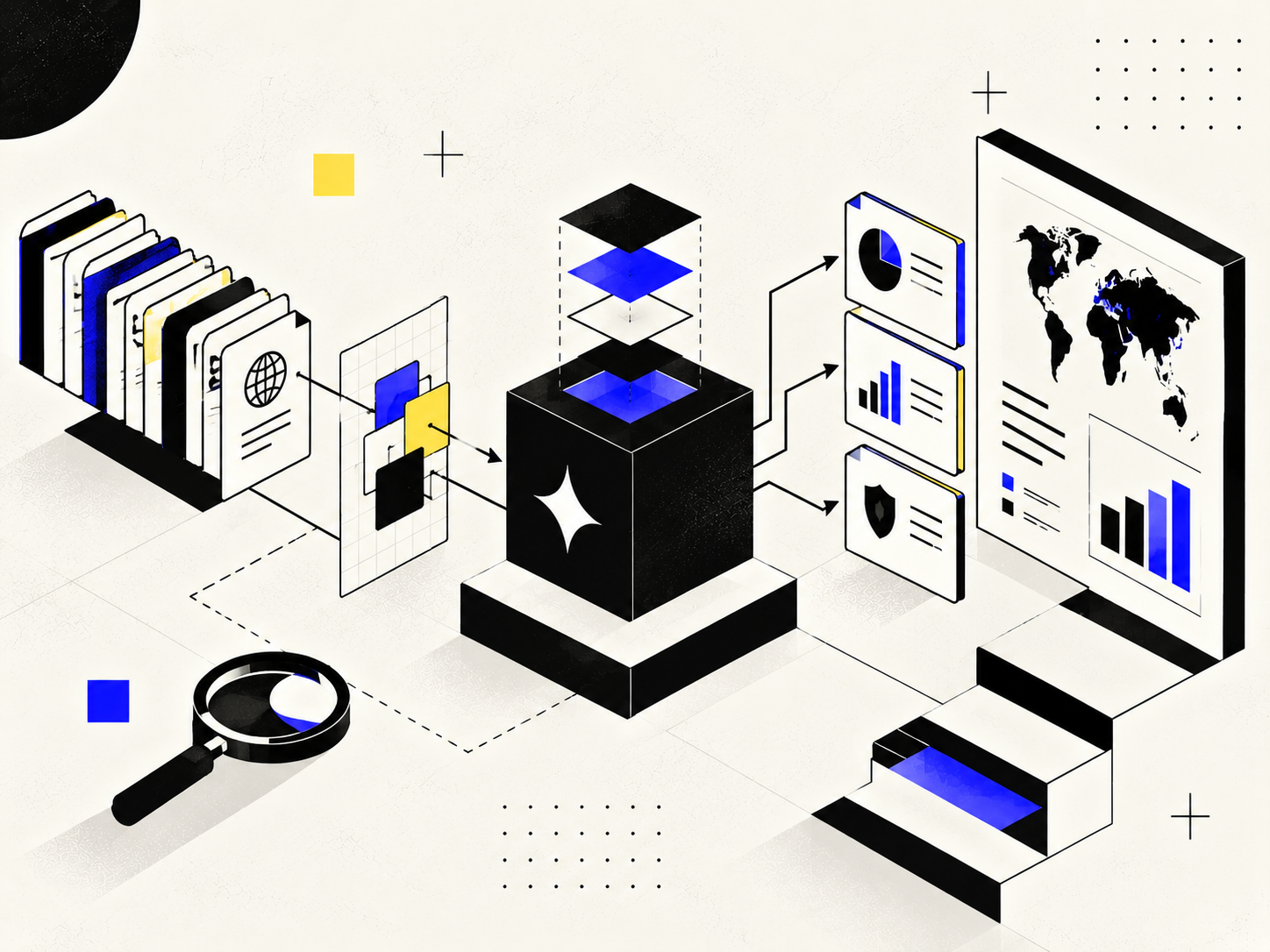
Enterprise AI research platforms should be selected on transparent consumption, auditable output, and a credible path from an individual trial to controlled deployment. Grep provides published credits for early adoption and an enterprise starting point for organizations that need pooled use, SSO, and VPC deployment. Procurement teams should model the full cost of evidence collection, analyst review, and ongoing monitoring rather than comparing seat prices alone. The right agreement makes the work traceable, auditable, and defensible to a board or regulator.
Need a clearer path from research trial to governed deployment? Explore Grep for published pricing and high-stakes research workflows.
Frequently Asked Questions (FAQs)
How does enterprise AI handle sensitive financial data?
Enterprise AI handles sensitive financial data through defined controls such as scoped credentials, retention settings, restricted deployment boundaries, and reviewable decision records, while buyers should verify exactly which data is processed, retained, exported, and excluded from model training under the proposed agreement.
Is enterprise AI deployment secure for banks?
Enterprise AI deployment can be secure for banks when the deployment design satisfies the institution's access, data-handling, audit, and isolation requirements, including identity controls and, where policy requires it, a VPC-based environment rather than a broadly shared configuration.
What makes an AI agent platform suitable for enterprise?
An AI agent platform is suitable for enterprise when it can run defined business workflows with controlled access, repeatable outputs, source-level evidence, governance records, and an implementation path that supports both individual users and shared departmental operations without weakening oversight.
Why move beyond Microsoft Copilot for complex research?
Teams move beyond Microsoft Copilot for complex research when the work demands structured due diligence, continuous monitoring, citation-backed findings, and a decision trail that reviewers can inspect, rather than a general-purpose response that still requires analysts to reconstruct the evidence.
Is AI research traceable and defensible for regulators?
AI research is traceable and defensible for regulators when the organization can preserve the sources, workflow context, reviewer actions, controls, and reasoning that supported a material conclusion, enabling an auditor or regulator to examine the record instead of relying on an unsupported summary.
How to scale institutional onboarding without headcount?
Institutional onboarding can scale without proportional headcount growth by assigning repeatable research and evidence-gathering tasks to governed agents, while retaining human review for exceptions, escalation decisions, policy interpretation, and the approval steps that carry accountability.
About the Author
Ryan Sorel is an AI Systems Engineer focused on production agentic workflows, research APIs, MCP servers, and A2A integration patterns. His technical perspective emphasizes the controls, integration boundaries, and evidence requirements that determine whether an AI workflow can operate reliably in an enterprise environment.