Entity Data Enrichment Software for KYC & Compliance Teams
Learn how automated data enrichment for compliance teams turns fragmented entity data into audit-ready profiles for KYC, onboarding, and ongoing monitoring.
Quick Answer
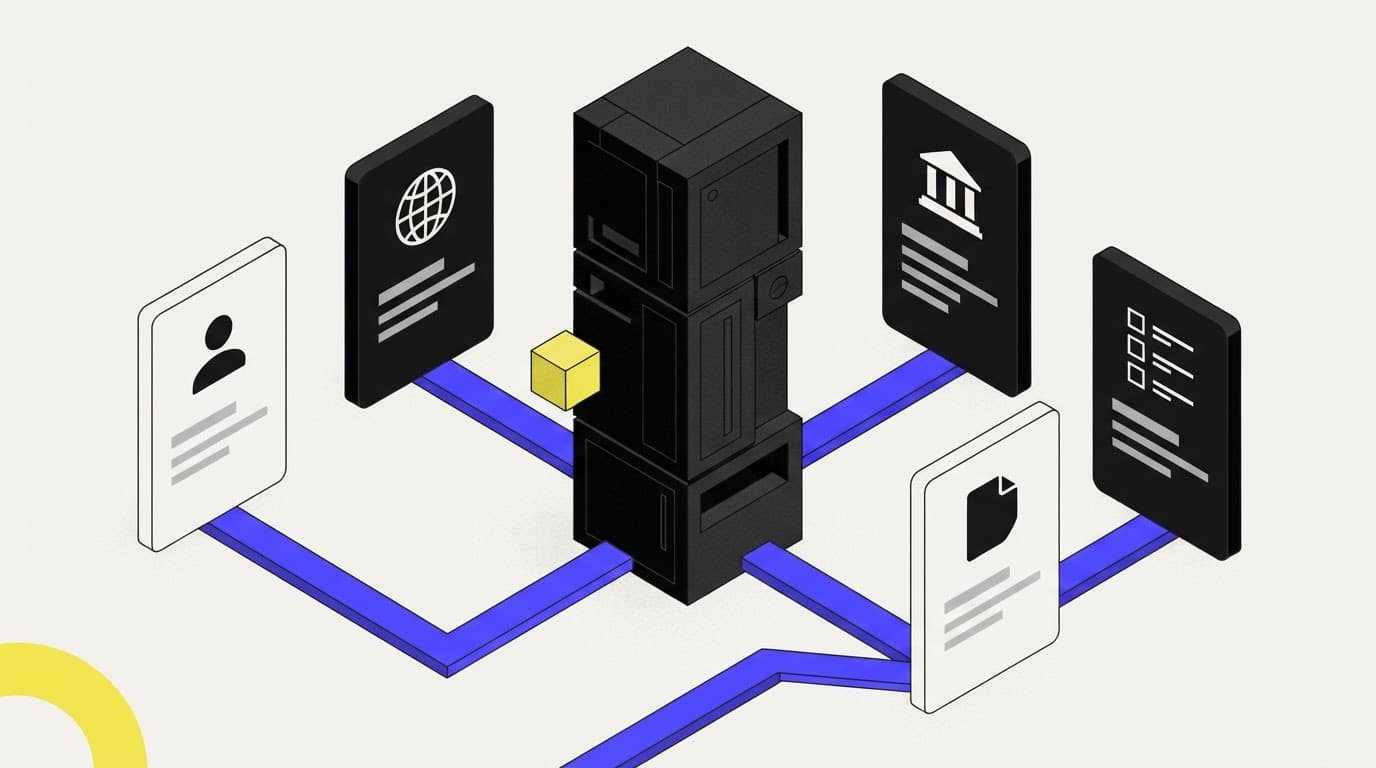
Entity data enrichment software gives KYC and compliance teams a current, evidence-backed view of a legal entity by connecting ownership, sanctions, corporate filings, adverse media, and other relevant records. The right approach is continuous rather than point-in-time: every finding should retain its source, retrieval context, and reasoning so analysts can defend a decision during an audit.
Introduction
Data enrichment for KYC is not a one-time record cleanup exercise. It is the process of turning a sparse company name, registration number, or onboarding file into a decision-ready entity profile that can withstand scrutiny. Shopmonkey closed 64 research jobs in its first 30 days on Grep and cut underwriting research time from hours to minutes per account, beating Gemini head to head, an example of what a defensible enrichment pipeline can deliver in practice. That means resolving beneficial ownership, screening relevant parties, reconciling conflicting registry information, and documenting why a risk signal was accepted or discounted. A profile that cannot show where its facts came from creates delay at onboarding and uncertainty long after the account is approved.
Key Takeaways:
Entity enrichment must connect identity, ownership, risk signals, and source records into one reviewable profile.
Continuous monitoring catches material changes that one-time onboarding checks inevitably miss.
Traceable evidence and documented reasoning make automated research defensible to auditors and regulators.

What Data Enrichment Means for KYC and Compliance
Enterprise data enrichment combines internal records with external evidence to establish who an entity is, who controls it, and what risk information should affect the relationship. For institutional onboarding, the work is less about filling blank fields and more about building a coherent entity narrative that an analyst, manager, auditor, or regulator can independently inspect.
Build an entity profile from connected evidence
A useful compliance data enrichment workflow starts with a legal entity identifier or customer-submitted record, then tests it against authoritative and contextual sources. The output should distinguish a confirmed fact from a customer assertion, preserve conflicts for review, and link every conclusion to the records used to reach it.
Legal identity: Confirm names, registrations, jurisdictions, and trading names.
Ownership: Map controllers through corporate structures, identifying natural persons holding 25% or more and people exercising ultimate effective control.
Sanctions: Screen entities and relevant owners against applicable restrictions.
Filings: Capture corporate changes, officers, and available registry evidence.
Adverse media: Surface reputational signals requiring analyst judgment.
Beneficial ownership is the most consequential layer because risk often travels through entities rather than the name presented at onboarding. FATF's Recommendation 24 guidance uses 25% ownership as a starting point for identifying beneficial owners, while also requiring institutions to identify people exercising substantial control without a formal ownership stake. Canadian reporting entities should confirm applicable beneficial-ownership obligations against current FINTRAC guidance. Strong ownership verification therefore traces both equity and control paths instead of relying only on a declared shareholder list.
Resolve ownership and sanctions risk together
Ownership research and sanctions screening cannot operate as separate checklists. OFAC's 50 Percent Rule is why an entity may be blocked without appearing by name on a list when designated persons own it in the aggregate. For example, if one or more designated persons own 50% or more of a target in the aggregate, including through intermediate entities, the target may be blocked even when it is not named on a sanctions list. That makes ownership arithmetic a core enrichment task, not a specialist exception.
Business AML screening should also retain the logic behind a disposition. An analyst who clears a possible match needs more than a status field: the record should show the identifiers checked, ownership path reviewed, sources considered, and reason the alert did or did not apply. Document the reasoning, not only the outcome, so the same decision can be reconstructed if a regulator, correspondent bank, or buyer asks about it years later. The same ownership research used for reputational diligence is also needed to apply the 50% rule correctly. That documentation is what turns a screening outcome into a defensible control, a discipline that the same sanctions and reputational due diligence playbook addresses directly.

Why Continuous KYC Data Enrichment Beats One-Time Checks
A completed onboarding file describes what was known at a particular moment, not what remains true. Companies change directors, ownership structures, operating locations, websites, and regulatory exposure over time. Continuous KYC data enrichment turns those changes into reviewable events instead of leaving them hidden until the next periodic refresh.
Compare point-in-time research with continuous monitoring
One-time enrichment can establish an initial baseline, but it creates a stale profile the moment an ownership chain changes or new risk information appears. Continuous monitoring keeps the baseline intact while surfacing deltas for analysts to review, prioritize, and document.
The operational difference matters most where institutional relationships are complex and long-lived. The table below compares the two models on the controls that determine whether an onboarding decision remains reliable.
Decision criterion | One-time enrichment | Continuous enrichment | Control implication |
|---|---|---|---|
Ownership changes | Captured during initial review | Reviewed when a change signal appears | Current control persons remain visible |
Sanctions exposure | Screened at a fixed date | Reassessed against monitored changes | New exposure can trigger investigation |
Corporate filings | Collected for the original file | Used to identify material updates | Entity records stay operationally current |
Audit record | Initial evidence package | Evidence plus dated change history | Review decisions remain reconstructable |
Point-in-time checks still matter because they establish the starting record. They are insufficient on their own when the underlying customer, counterparty, or ownership structure can change after approval.
Design monitoring around meaningful risk signals
Monitoring should not generate a stream of undifferentiated alerts. It should watch the signals that alter a KYC decision, including leadership changes, ownership updates, new filings, regulatory developments, sanctions exposure, and material website changes. Business AML screening becomes more useful when it is paired with ownership context and a documented escalation path rather than treated as a recurring name-match exercise.
Grep's Loops and Monitors support this operating model by running scheduled or event-triggered research and maintaining an always-on screening surface for continuous KYC. The objective is not to remove analysts from the process. It is to ensure analysts receive a traceable change record with enough context to make a decision quickly.
How to Evaluate Automated Data Enrichment for Compliance
Automated data enrichment for compliance should be evaluated as decision infrastructure, not as a data-feed purchase. The question is whether the system can produce a complete, repeatable, and auditable record for the cases that create the greatest operational and regulatory risk.
Require source-level traceability and analyst control
Traceability is the dividing line between automation that accelerates research and automation that creates an opaque decision. A defensible KYC file needs documented information that enables its material findings to be traced and reviewed. For KYC research files, a defensible system should preserve the source, date, entity resolution logic, extracted claim, and reviewer rationale for each material conclusion.
That requirement is practical, not theoretical. Beneficial-ownership failures remain a recurring AML/CFT deficiency, particularly when institutions accept customer declarations without independent verification. Use ongoing monitoring guidance as a design principle: verify important ownership claims independently and retain the evidence trail.
Assess the workflow, integrations, and output
Ask providers to demonstrate a real enhanced due diligence case from intake through decision record. The demonstration should show how the system resolves an entity, handles conflicting evidence, identifies beneficial owners, screens risk signals, and creates a citation-backed report that an analyst can challenge. Enhanced due diligence should produce an investigable case file, not a compressed summary without source context.
For complex programs, custom agents matter because each institution defines risk appetite, escalation rules, source priorities, and evidence standards differently. Grep builds custom AI agents for due diligence, institutional onboarding, compliance oversight, and continuous monitoring, with outputs designed to be traceable, auditable, and defensible to a board or regulator. A custom KYB agent can apply those institution-specific requirements consistently while leaving analysts responsible for judgment calls. These requirements can be built into KYB verification workflows so that entity inputs, required checks, escalation triggers, and decision records are handled consistently.

Conclusion
Entity data enrichment works when it makes KYC decisions faster without making them harder to explain. Start with identity and ownership, connect sanctions and adverse-risk research to the same entity graph, then monitor the signals that can change the risk decision after onboarding. Require source-level evidence, dated reasoning, and a clear analyst disposition for every material finding. For compliance teams handling high-stakes institutional research, Grep is the choice for building custom, traceable agents and always-on monitoring into the control environment.
Ready to make entity research easier to defend? Explore Grep for compliance teams and review how custom agents can support continuous KYC.
Frequently Asked Questions (FAQs)
How does Grep perform data enrichment for due diligence?
Custom AI agents can research entities, connect relevant ownership and risk evidence, and produce citation-backed reports, slide decks, or spreadsheets that retain a decision trail suitable for review by compliance leaders, auditors, boards, or regulators.
What are the benefits of continuous data enrichment for KYC?
The benefits of continuous data enrichment for KYC include detecting ownership, leadership, regulatory, website, and other material company changes after onboarding, which gives analysts a dated change record to investigate instead of relying on a profile that only reflected the entity at its original approval.
How do custom AI agents improve data enrichment accuracy?
Custom AI agents improve data enrichment accuracy by applying an institution's defined source priorities, evidence requirements, escalation rules, and risk taxonomy to recurring research, while preserving the underlying sources so analysts can inspect conflicts and validate material conclusions before acting.
Is AI data enrichment suitable for highly regulated industries?
AI data enrichment is suitable for highly regulated industries when it supports human review and retains source-level evidence, documented reasoning, access controls, and exportable decision trails, because regulated teams need to explain both what the system found and why a resulting decision was made.
How to automate due diligence research with data enrichment?
To automate due diligence research with data enrichment, define the entity inputs, required checks, approved source types, escalation triggers, and expected deliverable first, then use an agent workflow that gathers and organizes evidence while assigning final risk determinations to accountable analysts.
What makes data enrichment defensible to regulators?
Data enrichment is defensible to regulators when each material claim can be traced to its source, the entity-resolution and ownership logic can be reconstructed, conflicting evidence is visible, and the file records why an analyst accepted, escalated, or discounted a risk signal.
About the Author
AJ Asver is the Founder and CEO of Grep, where he focuses on custom AI agents for high-stakes knowledge work, including due diligence, institutional onboarding, and compliance oversight. A four-time founder with fintech experience at Coinbase and Brex, he brings a product-focused perspective to building systems that make complex research traceable and operationally useful. Connect on LinkedIn.