Market Map: Turn a Market Map Into Leaders, Gaps, and Threats Now
Learn how to build a market map that reveals leaders, gaps, and threats fast, with an AI-powered market mapping process built for high-stakes decisions.

Quick Answer
A defensible market map converts fragmented research into named leaders, measurable gaps, and monitored threats. It needs defined segments, consistent evidence standards, and a refresh process because a static chart loses decision value as competitors, customers, and regulations change.
Introduction
A market map is useful only when a deal, risk, or strategy team can explain why every company sits where it does. AI-powered market mapping can accelerate collection, but it must preserve sources, assumptions, and decision logic for review. Start with the decision at stake, then define the market boundaries before adding companies. The most damaging failure is false precision: a clean-looking landscape built from inconsistent categories and stale evidence.
Key Takeaways
Define segments and evidence rules before collecting company data.
Separate observed facts from analyst judgments and unresolved questions.
Use continuous monitoring to update material changes after publication.
Build a Market Map That Holds Up Under Review
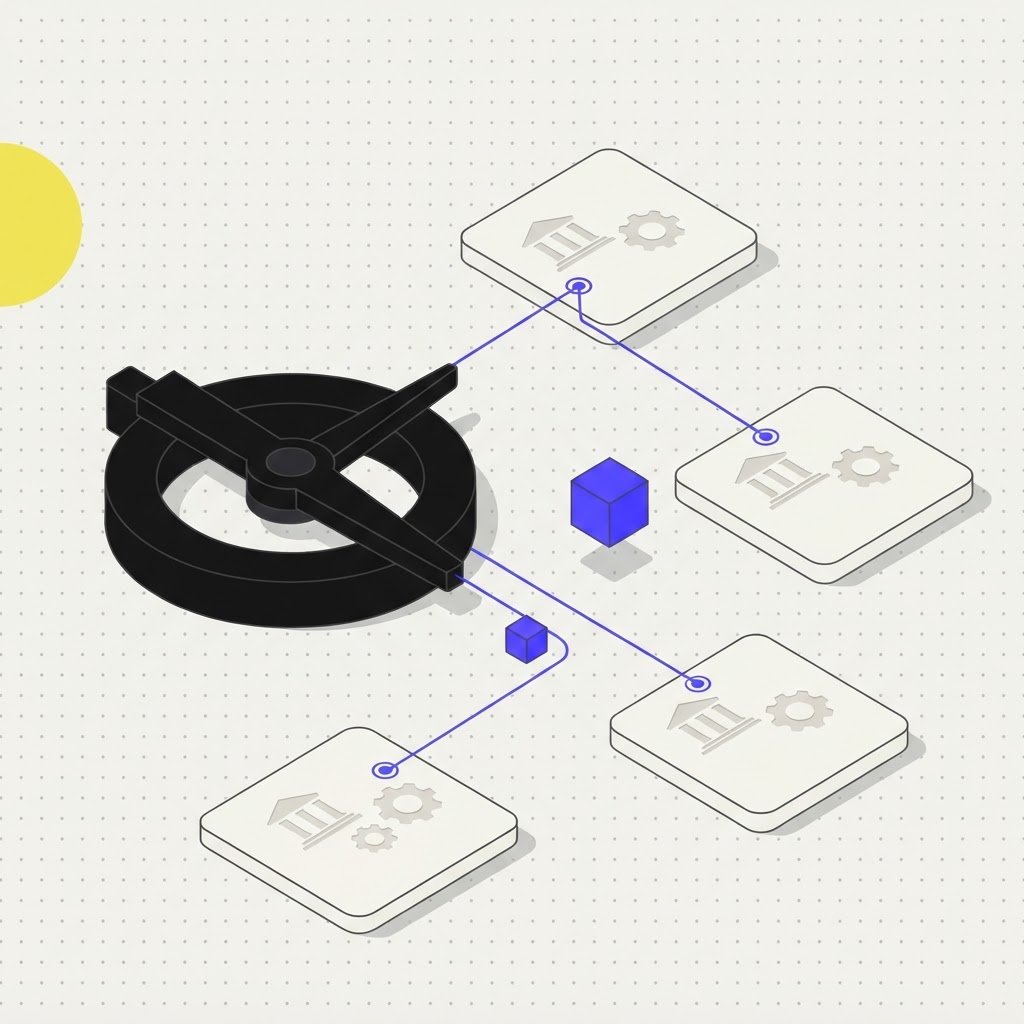
A market map should answer a specific operating question, not merely display logos. For corporate research and market analysis, that means documenting the market definition, segment logic, companies reviewed, source dates, confidence level, and open issues. A reusable market mapping workflow makes these fields part of the deliverable rather than analyst notes scattered across files.
Set the scope before you collect evidence
Define geography, customer type, product boundary, and decision criteria first. Public-company annual reports and SEC filings can be useful research inputs because they may identify competitors and other relevant company relationships. Guidance on company research highlights these filings as a source for competitor and customer analysis.[1]
Decision: State the acquisition, entry, vendor, or investment question.
Segments: Use mutually exclusive categories where possible.
Evidence: Record source, date, claim, and confidence.
Inclusion: Explain why each company belongs on the map.
Classify companies with repeatable tests
Classify leadership using observable signals, such as disclosed customers, product coverage, geographic reach, partnerships, funding, or regulatory posture. Use market size analysis separately from competitive position: a large segment does not establish that an individual company leads it. Library research tools can filter companies by industry, location, growth rate, size, employee count, and ownership characteristics; their supply-chain features can identify suppliers. One library guide focuses on private companies with at least $1 million in annual revenue or $1 million in VC/PE funding.[2]

Turn the Market Map Into Leaders, Gaps, and Threats
Leaders, gaps, and threats are different conclusions and need different proof. A leader has evidence of relevance within a defined segment. A gap is an unmet requirement or an unserved segment-geography intersection. A threat is a change that could alter economics, access, compliance exposure, or customer behavior.
Use a decision table, not a logo wall
This table forces the team to distinguish what is known from what must be monitored. It also prevents a broad competitor list from being mistaken for due diligence intelligence.
Map output | Evidence required | Decision use | Refresh trigger |
|---|---|---|---|
Leader | Segment-specific proof | Benchmark or target list | Material company change |
Gap | Unmet buyer requirement | Entry or build hypothesis | New entrant or customer signal |
Threat | Change with plausible impact | Mitigation or escalation | Regulatory or market event |
Do not force a ranking when the evidence only supports a watchlist. This approach follows the same discipline as a standard market mapping framework, and makes competitive intelligence research more credible by making uncertainty visible instead of hiding it behind a quadrant.[3]
Keep the map current after the committee meeting
Manual research breaks when the same analyst must revisit sources, compare changes, and rebuild conclusions across every company. Teams weighing AI market research software against expanding analyst headcount face this tradeoff directly. An enterprise research platform can preserve the research trail while Loops and Monitors rerun scheduled or event-triggered work and watch for company website, leadership, job-posting, and regulatory changes.
Make Market Intelligence Operational
Assign an owner for every segment and define what change requires review, escalation, or a new version of the map. For international acquisitions, keep jurisdiction-specific requirements separate from commercial signals so cross-border differences do not disappear inside a global category. Use market entry planning to incorporate the map as an input rather than treating it as the final decision.
Use traceability as the acceptance test
A map is ready when a reviewer can trace every meaningful claim back to a source and understand the reasoning that converted that fact into a label. A high-stakes research process should preserve citation-backed outputs and exportable decision trails for board or regulatory review. That standard matters more than visual polish because a map with unsupported conclusions creates risk precisely when it is used to reduce risk.

Conclusion
Start with the decision, establish segment definitions, and make each leader, gap, or threat answerable to evidence. Separate facts from judgments, show uncertainty, and define refresh triggers before presenting the map. For teams that need repeatable due diligence, Grep provides custom agents and continuous monitoring designed to keep research traceable, auditable, and defensible. A market map becomes operational when it can change with the market without losing its reasoning trail.
Need a durable research process? Get started with Grep and continuous high-stakes research.
Frequently Asked Questions (FAQs)
A traceable AI research agent produces an output linked to the sources, evidence, and reasoning used to create it, allowing a reviewer to test a claim rather than accept an unsupported summary.
Defensible AI-driven due diligence starts with a documented scope and evidence standard, then retains dated sources, explicit assumptions, reviewer decisions, and unresolved issues alongside each conclusion.
High-stakes AI research informs decisions with material regulatory, financial, reputational, or governance consequences, so accuracy alone is insufficient without traceability and an auditable decision record.
Persistent memory improves AI research outputs by retaining prior findings, definitions, and judgments, which helps teams compare new evidence against an established baseline instead of rebuilding context each time.
For regulatory review, AI research should retain citation-backed evidence and exportable decision trails so reviewers can inspect the basis for each conclusion.
Sources
- Companies & Finance: Competitors & Customers | Marquette.edu ↩
- Business Cluster Research Guide | Library.Ohio.edu ↩
- Market Mapping / Landscape Mapping Framework | Umbrex.com ↩