Should Your Team Switch to Compliance Automation in 2026
Explore whether compliance automation is right for your enterprise in 2026, with a practical framework for evaluating traceable, auditable platforms.
Quick Answer
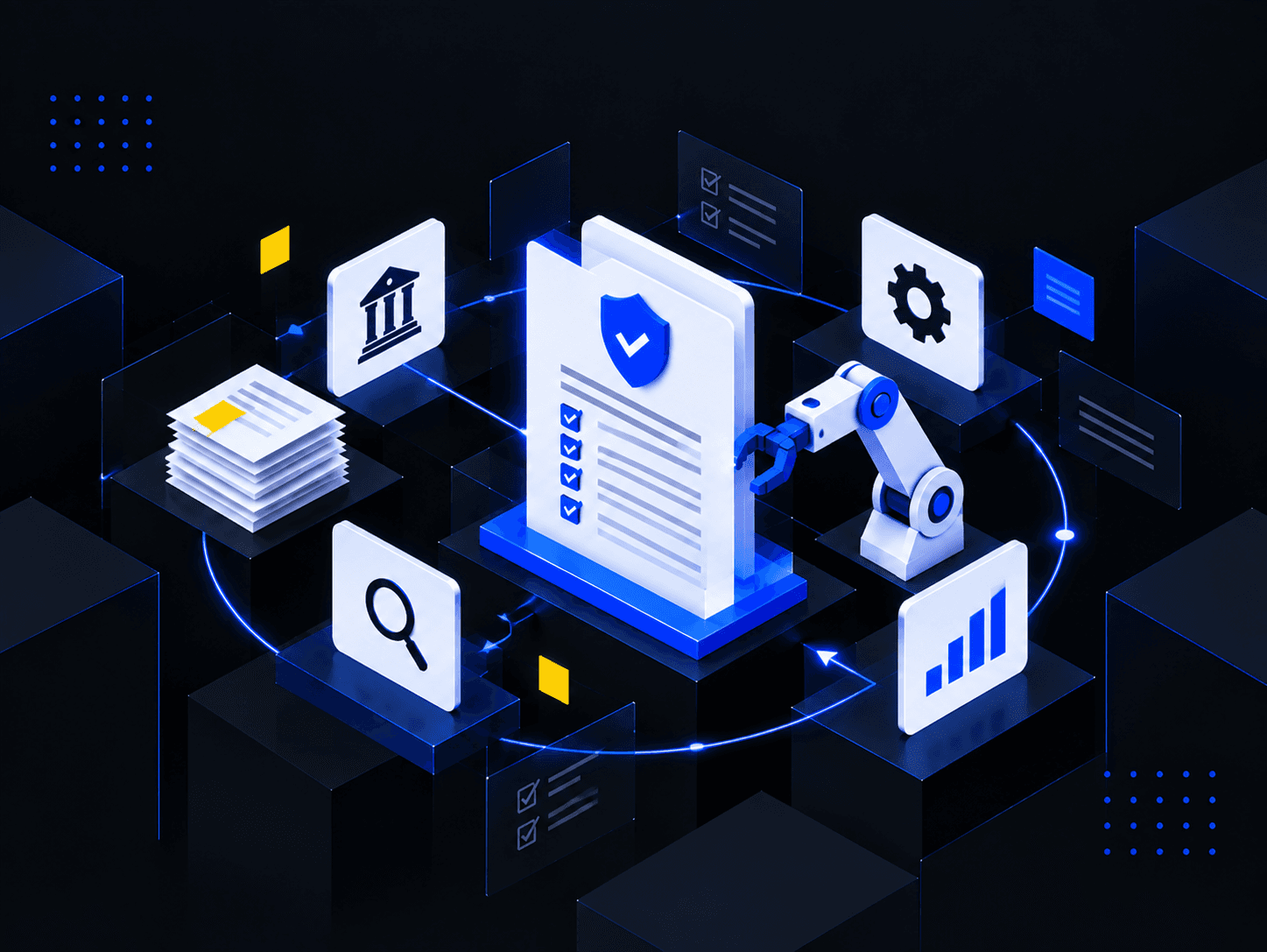
Yes, teams facing growing review queues, fragmented regulatory change tracking, and overloaded analysts should evaluate compliance automation in 2026. The switch is justified when automation can produce traceable, auditable outputs that a compliance leader can defend to a board, examiner, or regulator.
Introduction
Manual compliance work creates exposure long before a control fails: analysts miss changes, onboarding slows, and experienced staff spend too much time rebuilding the same evidence. Between 2016 and 2023, employee hours devoted to financial regulations and examiner mandates rose 61%, while aggregate employee hours increased 20%, according to the Bank Policy Institute. Over the same period, the portion of bank IT budgets devoted to compliance grew 40%, from 9.6% in 2016 to 13.4% in 2023, and BPI's data separately show C-suite compliance time rising 75% and board time devoted to compliance rising 63% over the same period. Compliance workload pressures make a compliance automation platform less speculative when continuous KYC, due diligence, and regulatory monitoring compete for the same team. The real decision is whether the platform makes every conclusion easier to inspect, reproduce, and challenge.
Key Takeaways:
Switch when manual review creates recurring delays, blind spots, or untraceable decisions.
Require evidence trails, clear escalation paths, and human ownership before automating high-stakes work.
Evaluate platforms through a controlled pilot tied to one measurable compliance workflow.
When a Compliance Automation Platform Becomes Necessary
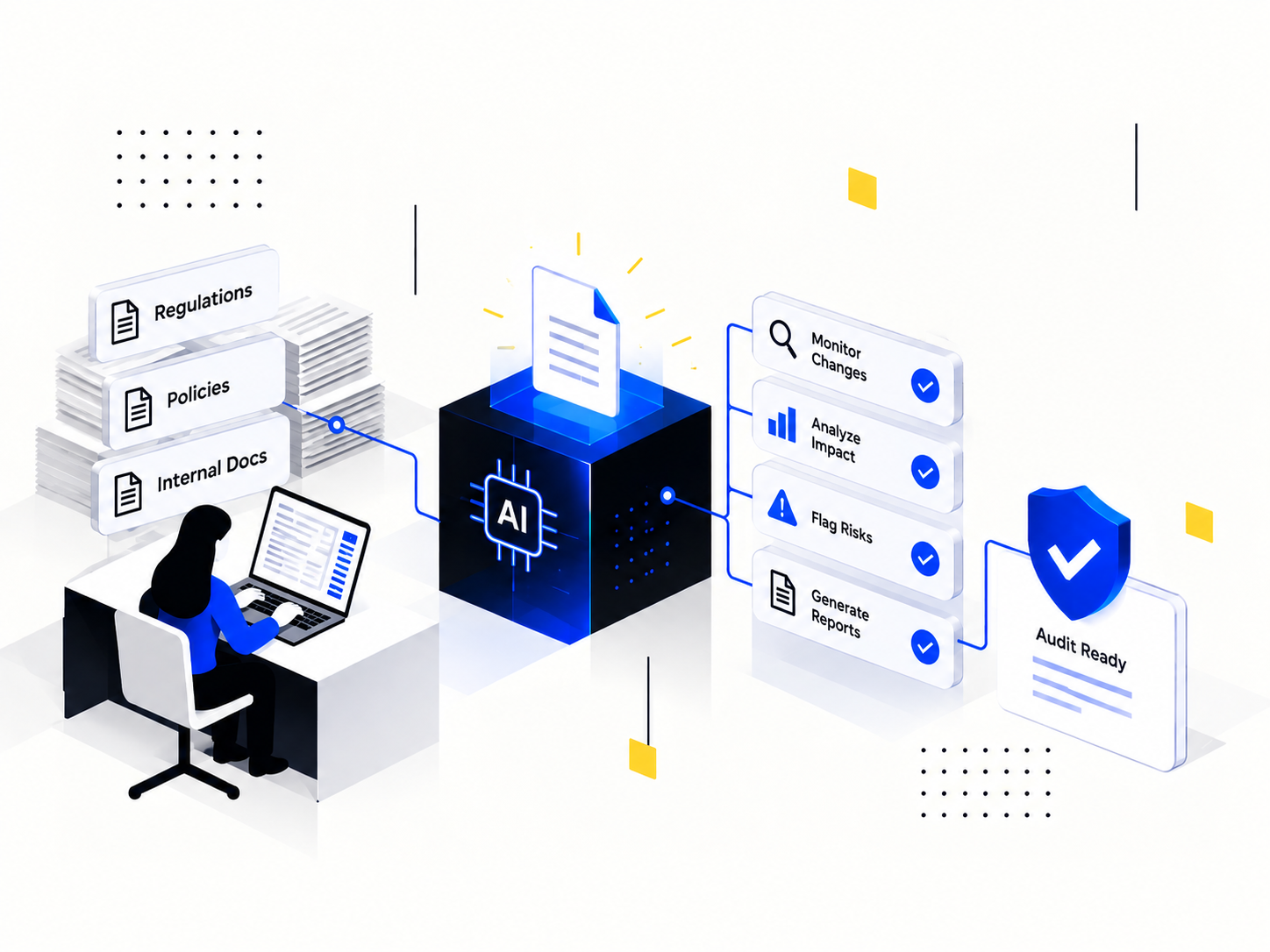
A switch becomes necessary when compliance demand rises faster than the team can document decisions consistently. The warning signs are operational, not theoretical: due diligence is repeated across analysts, alerts remain unresolved, policy changes are found late, and leaders cannot quickly show how a conclusion was reached. Those gaps make it harder to scale compliance teams without adding headcount because more volume simply creates more manual coordination.
Readiness Signals That Justify Investment
Automation should start with work that is recurring, evidence-heavy, and governed by clear escalation rules. That keeps accountability with the compliance team while removing repetitive research, triage, and monitoring tasks that consume attention without requiring a fresh judgment every time.
Repeated reviews: Analysts rebuild the same counterparty or vendor research.
Monitoring gaps: Regulatory changes are discovered after internal deadlines tighten.
Slow onboarding: Institutional onboarding waits on dispersed evidence collection.
Weak audit trails: Teams cannot reconstruct sources behind a recommendation.
Queue growth: Review backlogs grow despite steady staffing.
Why Manual Processes Fail Under Continuous Obligations
Manual controls are designed around point-in-time checks, but many financial compliance obligations require ongoing attention. Financial institutions must continuously track regulatory updates, enforce watchlist matches, and escalate red flags. Teams should assess compliance monitoring software by whether it preserves that escalation discipline rather than merely generating summaries. The cost of incomplete monitoring is material: according to Fenergo, global sanctions-related fines reached $228.8 million in the first half of 2025, compared with $3.7 million in the same period of 2024. Fenergo also reports that Binance was fined $4.3 billion in 2023 for AML failures, illustrating why watchlist matches and red-flag escalation require documented follow-through.
An automated compliance workflow should therefore begin with named events, owners, and evidence requirements. A system that sends alerts without explaining the source, reasoning, and next action only moves the manual burden downstream. Teams also need documented review intervals, clear exception categories, and a process for testing whether alerts reach the right owner. Before expanding the workflow, they should sample completed cases, compare them with the prior process, and record where automation reduced research effort without reducing evidentiary quality. The sample should include routine cases, escalations, and exceptions so reviewers can determine whether the workflow applies its rules consistently. Each case record should identify the triggering event, the sources reviewed, the analyst's disposition, and the reason for any override or closure. Teams can use those records in calibration sessions to distinguish poorly configured alerts from legitimate changes in risk. This operational record gives compliance leaders a practical basis for refining thresholds, training reviewers, and demonstrating that the control remains effective as volumes change.
How to Evaluate Automated Compliance Software for Enterprise Use
The right evaluation asks whether a platform improves control quality, not whether it produces fluent answers. For banks, fintechs, and other regulated organizations, automated compliance software for enterprise use must fit existing review procedures, protect sensitive information, and leave a decision trail that withstands independent scrutiny.
Compare Generic AI Against Auditable Compliance Workflows
Generic AI can help draft or summarize, but it is not automatically suitable for high-stakes compliance decisions. A defensible platform connects conclusions to sources, separates automated findings from human approval, and supports documented exception handling. This is the practical distinction between AI agents for high-stakes compliance and a general-purpose assistant.
The comparison below focuses on decision criteria that matter when the output affects onboarding, ongoing screening, or regulatory oversight.
Evaluation criterion | Generic AI assistant | Compliance automation platform |
|---|---|---|
Primary output | Drafts and summaries | Evidence-backed compliance deliverables |
Source traceability | Varies by prompt and configuration | Decision trail linked to underlying evidence |
Ongoing monitoring | Usually requires manual re-prompting | Scheduled or event-triggered review workflows |
Human review | Informal, user-managed | Defined escalation and approval points |
Audit readiness | Requires separate documentation | Designed around exportable records and reviewability |
The key tradeoff is not speed versus control. A sound implementation uses automation to accelerate evidence gathering and change detection while reserving accountable judgment for the people responsible for the outcome. Teams comparing compliance software features should test whether each workflow preserves source links, approvals, exceptions, and exportable records. Shopmonkey saw its research time drop from hours to minutes per account after moving this kind of workflow onto Grep, closing 64 research jobs in its first 30 days and beating Gemini head-to-head.
Ask for Traceability Before You Ask for Automation
Traceability should be a non-negotiable requirement because a polished answer is not evidence. Financial-services AI governance guidance emphasizes agent decision auditability and explainability, including the ability to review what informed an action through decision audit trails. That requirement becomes especially important for enterprise due diligence automation, where analysts need to test the reasoning, identify missing context, and record overrides.
Teams should also evaluate compliance software against access controls, retention practices, reporting exports, and the process for correcting inaccurate findings. Audit-ready output is not a report format alone. It is a chain from source to analysis to reviewer decision. Wisdom Ventures Operating Partner Zoe Rogers describes this kind of research support as "effectively filling part of the analyst function as the firm scales," a relevant signal for teams weighing whether an agent can absorb real analytical load rather than just accelerate drafting.
Use a Narrow Pilot With Real Ownership
Run a pilot around one high-friction workflow, such as recurring counterparty research, institutional onboarding reviews, or a defined regulatory change queue. Set the human owner, escalation triggers, source standards, and acceptance criteria before the pilot begins, then compare its output against the team's current process for completeness and review effort.
Where Always-On Monitoring Changes the Operating Model
Always-on compliance monitoring systems change compliance from a calendar-driven process into an event-aware operating model. Instead of rerunning research after a periodic review date, teams can watch for material changes in customer, company, leadership, website, job-posting, and regulatory signals, then route the resulting findings to accountable reviewers.
Design Monitoring Around Material Events
Monitoring only works when it distinguishes meaningful change from background noise. A useful configuration specifies what event matters, which entity it affects, what evidence is needed, and which team owns the response. This makes automated regulatory monitoring a governed process rather than a high-volume alert feed.
For example, a compliance team may define a change in a counterparty's leadership or a regional regulatory update as a trigger for review, while routine website edits do not require action. The threshold should come from the institution's risk policy, not from a generic template.
Use Automation to Extend, Not Replace, Accountability
For organizations with significant model risk exposure, governance remains central. Revised interagency model risk management guidance is expected to be most relevant to banking organizations with more than $30 billion in total assets, according to the FDIC. The guidance generally does not apply to banking organizations with $30 billion or less in total assets unless they have significant exposure to model risk. These thresholds reinforce why control owners must understand how automated conclusions are generated and reviewed.
This is where compliance workflow automation must be paired with documented sign-off. Automation can collect evidence and surface changes, but a responsible owner must decide whether a finding changes the institution's risk position.
What a Defensible Platform Looks Like in Practice
A defensible platform is built around the work product, not a chat interface. It should help teams produce a reviewable report, spreadsheet, or briefing that shows what was researched, which sources informed the conclusion, what changed over time, and where a human made the final call.
Build for Board-Level Questions
Board members and regulators tend to ask practical questions: What did the team know, when did it know it, which sources supported the conclusion, and who approved the response? An AI-powered risk operations platform needs to answer those questions without forcing analysts to reconstruct their process from browser tabs, emails, and copied notes.
Grep is built for this type of high-stakes research work, with custom agents for due diligence, institutional onboarding, compliance reviews, and ongoing monitoring. Its Loops and Monitors support scheduled or event-triggered workflows and continuous screening, while its output is designed to be traceable, auditable, and defensible to a board or regulator.
Watch for the Wrong Kind of Automation
The wrong system produces faster text while making validation harder. Treat unsupported conclusions, unclear sources, absent approval records, and unrestricted access to sensitive data as implementation risks, especially where teams are using AI to influence risk decisions. Strong risk mitigation strategies connect technology adoption to governance, accountability, and practical control testing.
Pricing also deserves a direct conversation. Enterprise deployment costs, implementation effort, and internal review time vary by scope, so teams should judge value through the control problem solved and the evidence quality retained, not through a feature checklist alone. Teams can also compare AI compliance software options against the workflow, governance, and evidence requirements identified during a pilot. Procurement discussions should include the internal work required to configure sources, establish permissions, train reviewers, and maintain workflows as policies change. A lower initial software cost may not reflect the effort needed to make outputs reviewable in practice. Conversely, a platform evaluation should not assume that automation eliminates oversight; ongoing quality checks, access reviews, and control testing remain part of the operating model. Documenting these responsibilities before deployment gives budget owners a clearer view of what implementation requires.
Conclusion
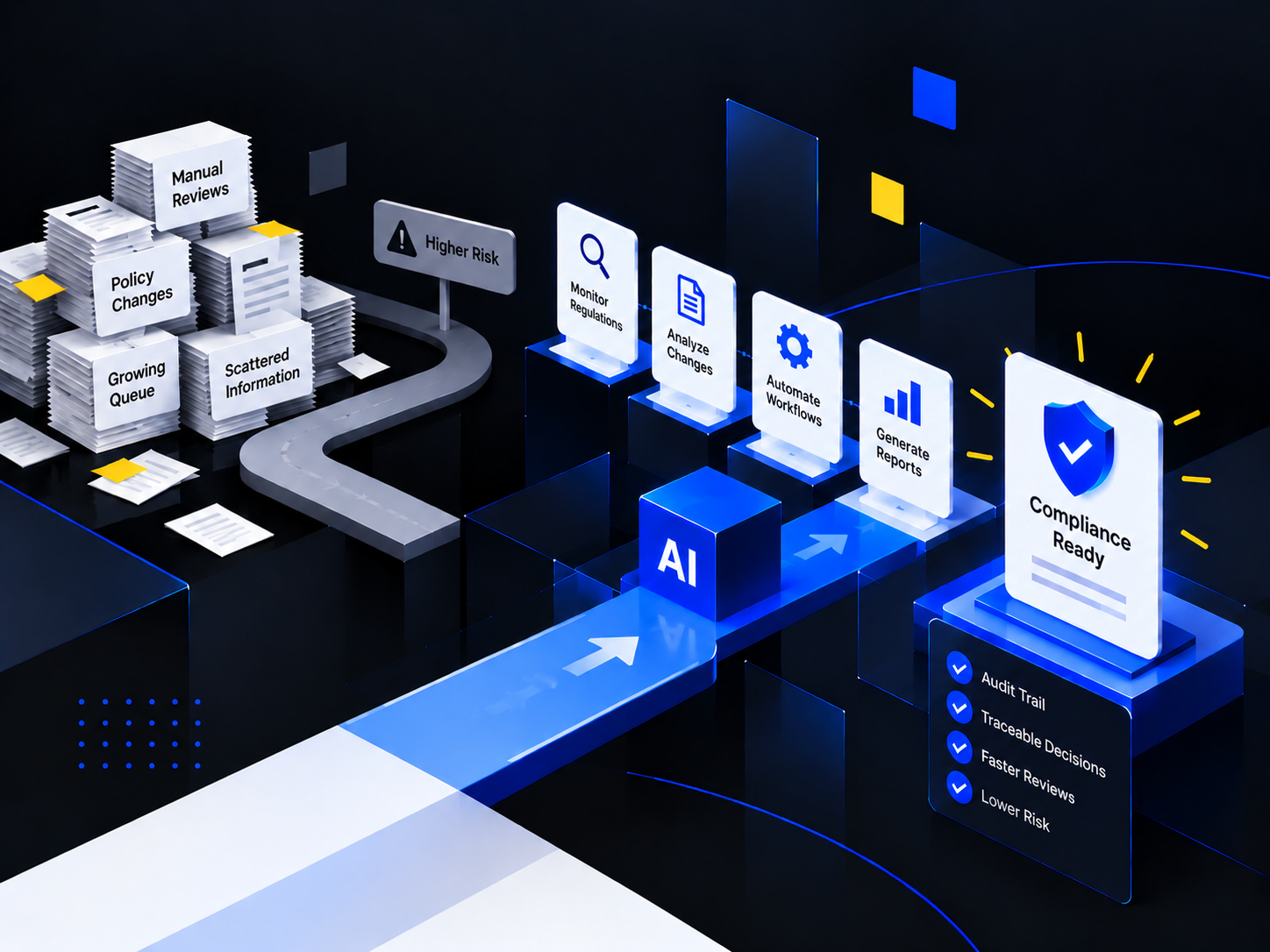
Compliance automation is worth pursuing in 2026 when manual processes are creating repeatable delays, incomplete monitoring, or weak evidence trails. Start with a narrow, high-stakes workflow and demand traceability, clear escalation paths, and accountable human review from day one. For large enterprises building continuous KYC and defensible compliance oversight, Grep can support custom agents and always-on monitoring that produce reviewable outputs. The objective is not to automate judgment away, but to give qualified teams better evidence and more capacity for the decisions that require them.
Ready to assess a higher-trust operating model? Explore Grep for high-stakes compliance work and map a focused pilot.
Frequently Asked Questions (FAQs)
How do you automate compliance for a large enterprise?
Automating compliance for a large enterprise starts by selecting a recurring, evidence-heavy process, defining required sources and escalation rules, assigning a human owner, and testing automated output against existing review standards before expanding into additional workflows.
Is AI-generated due diligence defensible to regulators?
AI-generated due diligence is defensible to regulators only when the organization can show the underlying sources, documented reasoning, reviewer actions, approvals, and exceptions, rather than presenting an unsupported conclusion generated by a system.
What are the benefits of always-on compliance monitoring?
The benefits of always-on compliance monitoring include earlier detection of material entity or regulatory changes, more consistent follow-up, and less reliance on periodic reviews that can leave important developments undiscovered between scheduled checks.
Is AI compliance software safe for financial institutions?
AI compliance software can be safe for financial institutions when deployment includes appropriate access controls, scoped credentials, retention rules, source traceability, human review, and testing procedures that reflect the institution's own risk governance requirements.
Can AI agents provide traceable audit trails for compliance?
AI agents can provide traceable audit trails for compliance when they retain links between source material, findings, generated deliverables, reviewer decisions, and changes made during the workflow, allowing an independent party to inspect the reasoning path.
Is it possible to achieve audit-ready AI compliance reports?
It is possible to achieve audit-ready AI compliance reports when reports identify their sources, preserve review and approval records, disclose exceptions or uncertainty, and fit the organization's documented procedures for evidence retention and control testing.
About the Author
David Aviles is Head of GTM at Grep, with nearly nine years of experience helping seed-to-scale B2B software companies build repeatable customer acquisition and growth programs. His background includes GTM roles at Optimizely, Amplitude, and Mintlify, with a practical focus on how enterprise teams evaluate and adopt new operational systems. Connect on LinkedIn.