AI Agent Data Residency Costs: What Enterprise Buyers Should Budget
Planning for AI agent data residency? See the real cost drivers enterprise buyers should budget for, from VPC deployment to compliance overhead.
Quick Answer
Enterprise AI agent data residency costs are usually custom because isolation, regional infrastructure, and audit controls change the deployment scope. Budget for dedicated environment setup, cloud consumption, security reviews, legal assessment, and recurring evidence collection, rather than treating residency as a SaaS checkbox.
Introduction
AI agent data residency becomes expensive when a regulated organization needs to control where data is processed, stored, logged, and accessed. Standard SaaS AI may have a simpler commercial structure, but it can leave unresolved questions about cross-border transfers, shared infrastructure, and audit evidence. VPC-deployed AI agents add operational control, but they also shift more infrastructure and governance responsibility to the buyer. For compliance teams, the real issue is whether the operating model can withstand scrutiny after a high-stakes decision has been made.
Key Takeaways:
Residency spending includes deployment, cloud infrastructure, controls, and recurring audit work.
VPC deployments provide greater environment control but require more buyer involvement.
Procurement should price evidence collection and change management alongside the platform agreement.
AI Agent Data Residency Cost Categories
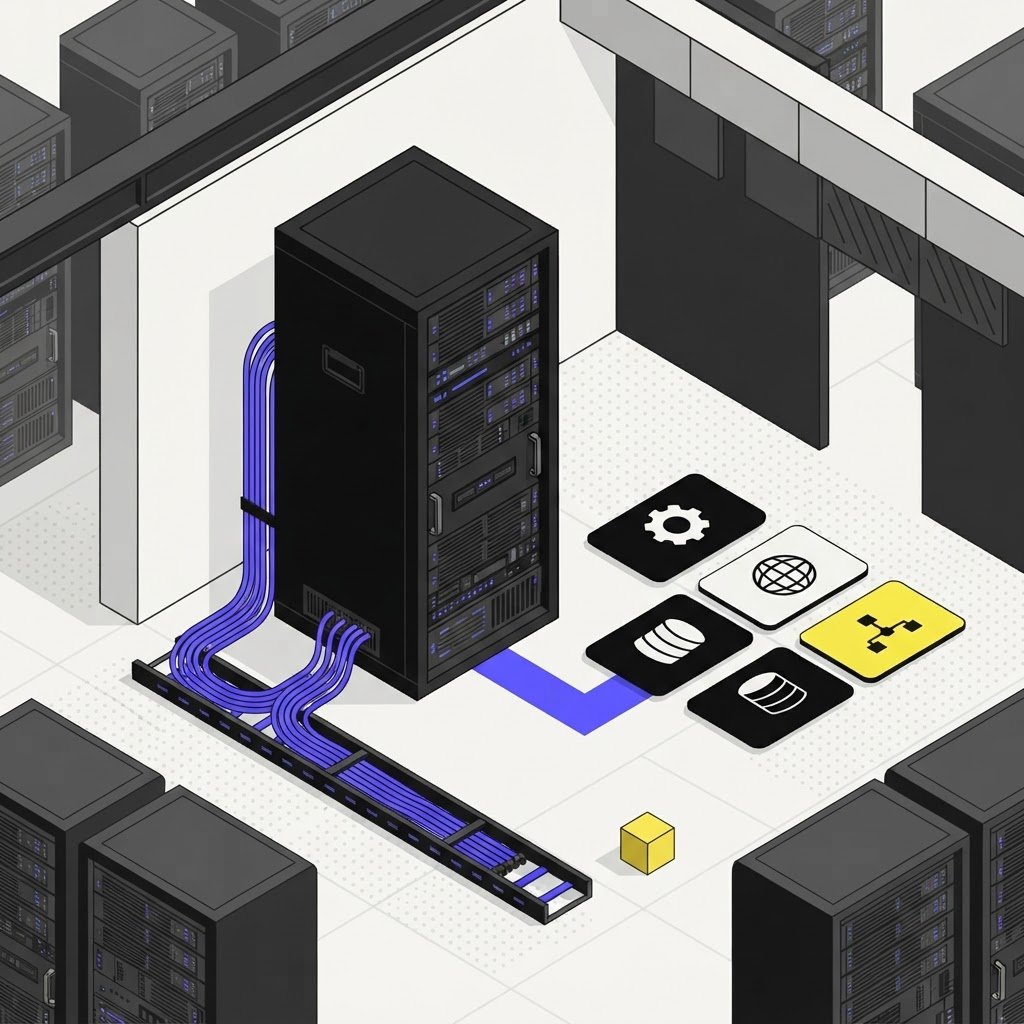
AI agent data residency is not one feature or one fee. It is a set of design choices that determine where enterprise data travels, which systems can access it, how outputs are retained, and what evidence the organization can produce during a security review. Buyers should separate platform pricing from the operating costs created by a dedicated regional or private deployment.
What belongs in the initial budget
The first-year estimate should account for the work required to establish a controlled environment, connect approved data sources, document access boundaries, and validate the agent’s handling of in-scope information. Teams that buy only for software access often discover these costs after security, legal, or cloud engineering enters the approval process.
Deployment design: Architecture, tenant boundaries, and regional processing decisions.
Cloud infrastructure: Compute, storage, networking, and logging in the chosen environment.
Security integration: Identity controls, credential scoping, and approved data connections.
Compliance review: Privacy, legal, procurement, and risk-team assessment.
Implementation testing: Validation of retention, access, and incident-response procedures.
Ongoing costs are usually governance costs
Recurring spend often comes from monitoring, access reviews, evidence retention, vendor reassessments, and changes to data flows. A sandboxed execution controls design can limit how agents interact with data and systems, but it still requires policies that define who may use the environment and how exceptions are handled. For cloud services, audit expectations can include a current inventory, a documented exit approach, and evidence of a recent cloud security review, typically conducted within the last twelve months.[1]
Deployment Models and VPC-Deployed AI Agents
The deployment model drives the budget because it determines who operates the environment and how much isolation the organization requires. Standard SaaS, regional hosting, and a private cloud deployment are not interchangeable versions of the same service. They assign infrastructure, control, and evidence responsibilities differently.
Compare operating responsibility before comparing subscription prices
A meaningful vendor security comparison for fintech should start with data boundaries and operating responsibility, not a headline platform fee. When vendors do not publish a residency surcharge or implementation fee, procurement should treat pricing as custom and request a written scope that separates platform access from infrastructure, deployment, and managed-service work.
Deployment model | Data boundary | Buyer responsibilities | Cost visibility |
|---|---|---|---|
Standard SaaS AI | Vendor-managed shared service | Review terms, access, and transfer controls | Subscription may be published; residency terms may be custom |
Regional hosted AI | Specified processing or storage region | Validate region scope and cross-border data flows | Regional pricing is often custom or undisclosed |
VPC deployment | Dedicated customer-controlled cloud environment | Cloud account, network, identity, logging, and change controls | Infrastructure and implementation costs are custom |
Consider SOC 2 security review requirements when comparing operating responsibility across deployment models. VPC deployment costs are broader because the organization is paying for a governed operating model, not simply a regional endpoint. The trade-off is clearer control over network paths, credentials, and environment-level records, which matters when a compliance team must explain how an agent reached a conclusion.
Grep offers VPC deployment options for enterprises using custom agents for high-stakes work. Its platform focuses on traceable, citation-backed outputs and can support workflows such as due diligence, institutional onboarding, and compliance oversight where decision trails matter alongside regional data controls.
Budget the hidden work around private environments
Private deployments can require cloud engineering capacity for network design, approved egress paths, secrets management, observability, and release coordination. Those requirements should appear in the internal business case as labor and opportunity cost, even when the vendor’s commercial proposal describes the deployment fee separately. A review of VPC deployment costs should also identify which party owns incident coordination, backups, configuration changes, and decommissioning.
Regional Rules Change the Cost of Data Sovereignty
Enterprise AI data sovereignty is not solved by selecting a cloud region alone. The organization must assess where prompts, source materials, agent outputs, support records, telemetry, and backups are handled, then determine whether those flows fit its contractual and regulatory obligations. That assessment becomes more demanding when data crosses legal jurisdictions or relies on multiple service providers.
European transfer requirements require operational evidence
For enterprise AI research that complies with GDPR, teams should document international transfers rather than rely on broad statements that data is “hosted in Europe.” The international transfer tools available under GDPR are relevant when personal data moves beyond the expected jurisdiction, including transfers created by support access or downstream processing.[2] A 2026 industry benchmark found that 85% of organizations say data localization requirements add cost, complexity, and risk to cross-border service delivery.[3]
That added cost and complexity is not a universal AI-agent surcharge. It shows why procurement should distinguish a regional commitment from full localization, then identify which components create additional hosting, control, and assurance costs. Teams should document whether localization commitments cover prompts, outputs, logs, backups, telemetry, support access, and subprocessor activity, because an apparent regional deployment can still involve separate operational data flows.
Turn regulatory questions into contractual questions
Data residency requirements for AI agents should be written into the vendor review as testable commitments. Ask where each data category is processed, whether support personnel can access it from another jurisdiction, what subprocessors participate, which logs are retained, and how the provider notifies customers when the data-flow architecture changes.
Compliance language also needs to separate SOC 2 from privacy obligations. A SOC 2 security review can provide useful assurance about controls, but it does not by itself answer whether a specific international transfer is lawful or whether retention settings meet an organization’s privacy policy. Organizations evaluating GDPR and SOC 2 requirements should request artifacts that address both security operations and the actual geography of data handling.
Build a Vendor Budget That Survives Procurement
A defensible budget groups costs by owner: vendor charges, internal cloud consumption, implementation labor, legal and privacy review, and recurring control operation. This structure helps finance teams avoid comparing a managed SaaS price with a VPC proposal as though both include the same responsibilities. It also makes the approval request easier to revise when a business unit adds new geographies or data classes.
Questions that expose incomplete pricing
Ask vendors to identify every component that can change the commercial scope after signature: environment provisioning, region changes, private connectivity, identity integration, audit-log retention, premium data connections, support access, and custom security reporting. Use these data residency questions to turn broad assurances into written answers that procurement can attach to the contract record.
Also ask whether pricing covers deployment only or the ongoing control work that follows go-live. An organization may need additional funding when new agents, source systems, or regulated business lines enter the environment, because each change can trigger a fresh privacy assessment, access review, or architecture decision.
Set a governance baseline before launch
Define approved use cases, data classifications, access roles, retention settings, escalation paths, and evidence owners before production use. A cloud services inventory helps teams identify every SaaS, PaaS, and IaaS service touching in-scope data, which prevents an AI agent’s surrounding services from escaping the residency review. The inventory should be paired with a documented exit strategy and evidence of a provider security review from the last twelve months. This discipline is particularly important for sandboxed execution in enterprise AI, where the technical boundary is only as reliable as the permissions and processes around it.
Grep offers VPC deployment options, scoped least-privilege credentials, configurable retention with delete-on-request, no model training on customer data, and exportable decision trails for audit. Those capabilities should still be mapped to the buyer’s own regional policies, approved cloud architecture, and data classification scheme.

Conclusion
Budgeting for AI agent data residency means funding a controlled operating model, not simply paying for a region label. Separate vendor fees from internal cloud costs, security integration, legal review, and recurring audit evidence before presenting the investment. VPC deployment can create more direct control over the environment, but it requires clear ownership for the controls that maintain that boundary. For regulated enterprises that need custom agents for defensible research and ongoing oversight, Grep is a practical option to evaluate against those requirements.
For a clearer view of deployment controls, see how Grep handles enterprise security for high-stakes AI work.
Frequently Asked Questions (FAQs)
How to maintain data residency with AI agents?
Maintaining data residency with AI agents requires mapping every data flow, restricting processing and storage to approved locations, controlling support access, and documenting how prompts, outputs, logs, backups, and subprocessors remain within the organization’s permitted jurisdictional boundaries.
Can custom AI agents be deployed in a VPC?
Custom AI agents can be deployed in a VPC when the provider and buyer support a private-cloud operating model, with the buyer typically responsible for agreed cloud-account, network, identity, logging, and change-management controls.
Why is data residency critical for enterprise AI?
Data residency is critical for enterprise AI because regulated organizations must understand where sensitive information is processed and accessed, particularly when agent prompts, research inputs, outputs, telemetry, or support activities could create cross-border transfer obligations.
How does data residency affect AI agent pricing for enterprises?
Data residency affects AI agent pricing by adding custom deployment work, regional infrastructure, private connectivity, security integration, compliance review, and recurring governance activities that are usually outside a standard shared-SaaS subscription structure.
What does data residency cost compared to standard SaaS AI deployment?
Data residency costs more than standard SaaS AI deployment when it requires dedicated regional or VPC infrastructure and additional controls, although the exact difference depends on cloud architecture, data scope, integrations, retention, support access, and contractual commitments.
How do US and EU data residency requirements differ for AI vendors?
US and EU data residency requirements differ because organizations must apply their relevant sector, state, contractual, and privacy obligations, while EU deployments also need careful analysis of GDPR international transfer mechanisms when personal data moves outside expected jurisdictions.
Sources
- ISO 27001 Cloud Security Controls for Cloud and SaaS Environments — Global AI Certification Council ↩
- Tools for transfers and derogations | European Data Protection Board — edpb.europa.eu ↩
- AI Is Forcing a Fundamental Shift in Data Privacy and Governance — ITPro ↩