AI Agent Tools for Deep Research: Which One Should You Really Buy
Not all AI agent tools are built for high-stakes research. See how custom AI agents compare on traceability, auditability, and compliance readiness.
Quick Answer
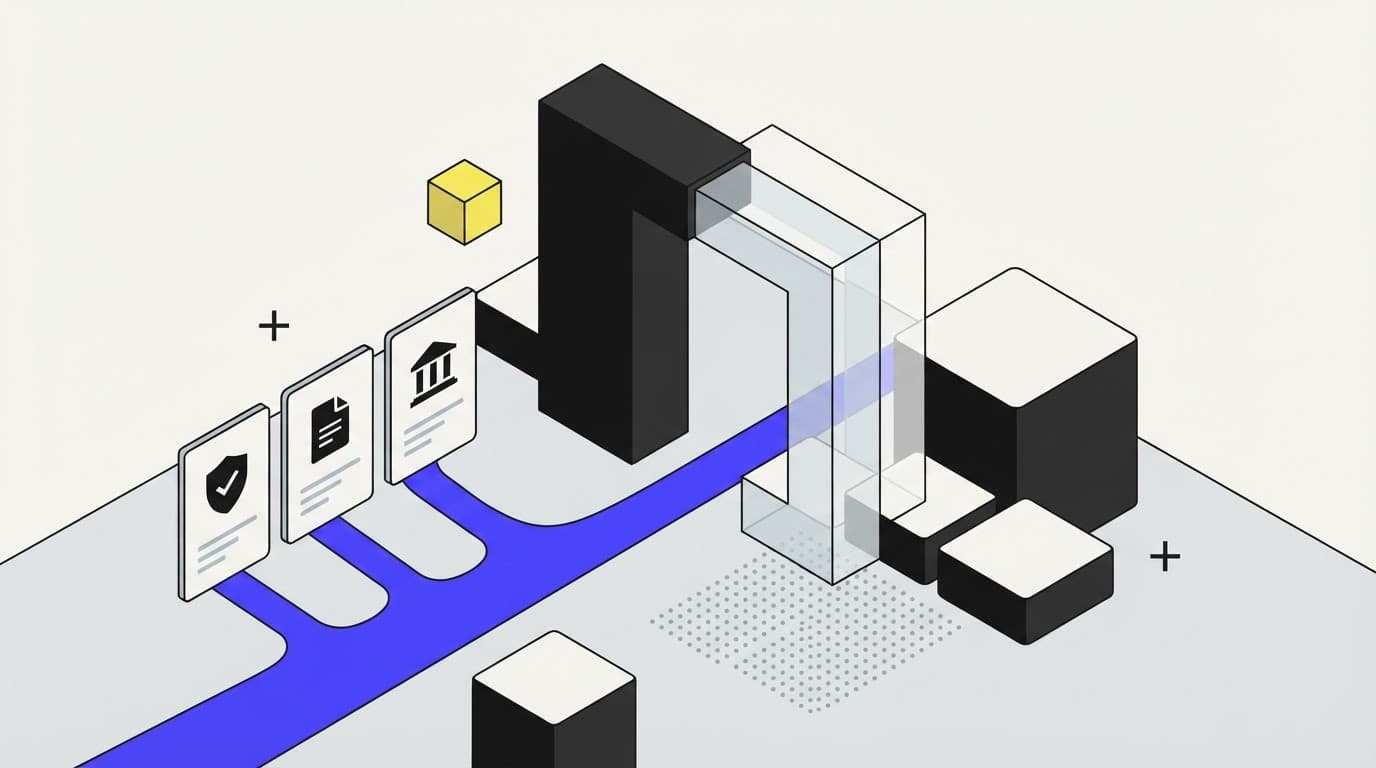
For regulated research, buy a custom agent platform that produces traceable evidence and deploys within your governance model. Generic copilots can accelerate drafting, but they do not automatically create an exportable decision trail, persistent institutional context, or always-on monitoring for an audit-ready workflow.
Introduction
Compliance, risk, and investment teams should evaluate research AI by whether its output can survive review, not by how quickly it produces a polished answer. Custom AI agents for enterprise work are designed around evidence, permissions, retention, and repeatable processes, while general-purpose tools are designed for broad productivity. That distinction matters when a board member, examiner, or investment committee asks where a conclusion came from. For teams already using Microsoft tools, the real decision is which research work should remain in a productivity environment and which must move into a controlled system.
Key Takeaways
Defensible research requires verifiable sources, clear reasoning, and retained decision history.
Persistent memory makes recurring diligence more consistent across teams and time.
Deployment controls matter when research includes sensitive customer, deal, or compliance information.

How to evaluate custom AI agents for enterprise research
A high-stakes AI research platform should be evaluated as part of an operating process, not as a chat interface. The buying question is whether the system can repeatedly gather evidence, apply your policies, preserve the basis for its conclusions, and produce a deliverable that a reviewer can interrogate. That standard applies to acquisition diligence, institutional onboarding, continuous KYC, and regulatory oversight.
Start with the trust requirements of the decision
Research becomes high stakes when an error changes a customer decision, investment view, control assessment, or escalation path. A useful procurement checklist tests the work product rather than the model name, beginning with whether every material conclusion can be traced back to a usable source. NIST's AI risk framework sets the same baseline for high-stakes systems: traceable evidence and documented reasoning before a conclusion informs a decision.[1]
Evidence chain: Preserve sources behind each material conclusion.
Decision trail: Record inputs, findings, review, and final disposition.
Policy fit: Apply internal rules consistently across recurring investigations.
Data boundaries: Restrict credentials and sensitive research access.
Operational continuity: Monitor changes after the initial review.
Verify citations before treating a report as evidence
Source links alone do not make a report defensible. Research on reference hallucinations found, in a 2023 benchmark, that 3% to 13% of citation URLs were likely hallucinated and 5% to 18% did not resolve.[2] The same 2023 research found non-resolving rates ranging from 5.4% in Business to 11.4% in Theology; in self-correction experiments, models equipped with URLHealth reduced non-resolving URLs to under 1%, with results depending on tool-use competence. Buyers should require agents to retain their source path, identify the claim each source supports, and flag inaccessible or changed material before a reviewer relies on it.
That is why sources and citations must be treated as an operational control rather than a formatting feature. Grep produces traceable, citation-backed reports, slide decks, and spreadsheets for due diligence, institutional onboarding, and compliance reviews, so a team can examine the evidence behind the conclusion instead of accepting a fluent summary.
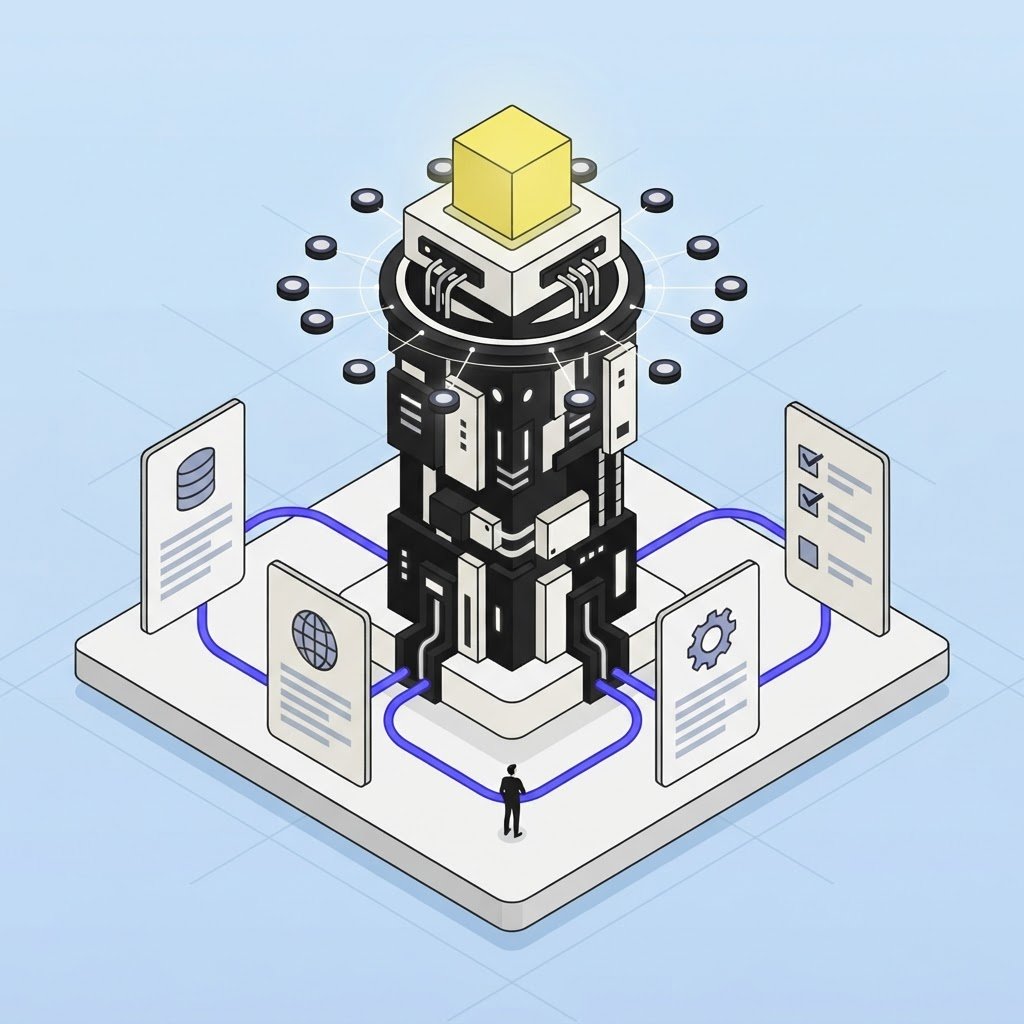
Grep versus Copilot for compliance and deep research
Microsoft describes its Copilot portfolio alongside Copilot Studio, Power Platform, Dynamics 365, SharePoint, and OneDrive. Buyers should evaluate the configured services, integrations, governance settings, and work-product requirements for their own research process.
Compare the work product, governance, and continuity
The table below isolates the practical buying criteria for high-stakes research. It does not assume that a general productivity assistant is inadequate for every task, but it shows why a polished response is not enough for regulated decisions.
Criterion | Grep | Microsoft Copilot | Why it matters |
|---|---|---|---|
Core research output | Traceable reports, slides, and spreadsheets | Microsoft productivity assistance and integrations | Reviewers need evidence behind conclusions |
Continuous work | Loops and Monitors for scheduled or event-triggered screening | Copilot platform capabilities vary by configured service | Risk changes after initial approval |
Persistent context | Brain stores persistent memory and domain expertise | Context depends on configured Microsoft environment | Repeated work should not restart from zero |
Deployment posture | SOC 2 and GDPR posture, VPC deployment options | Deployment controls depend on Microsoft configuration | Sensitive data requires defined boundaries |
Pricing visibility | Public trial, subscription, and enterprise pricing | Pricing varies by Microsoft licensing arrangement | Procurement needs a clear commercial path |
The meaningful divide is not whether either product can summarize information. It is whether the research process can be configured around internal policies, retained for review, and extended from a one-time finding into continuous oversight.
Microsoft describes Copilot as part of a portfolio that includes Copilot Studio, Power Platform, Dynamics 365, SharePoint, and OneDrive. Buyers can use this Grep vs Copilot comparison to assess configured services, integrations, governance settings, and research-workflow requirements. Copilot governance gaps are a documented pattern: independent analysis finds many enterprise rollouts stall when permissions and sensitivity labeling are treated as a one-time setup rather than an ongoing practice.[3] Grep has been in regulated production since 2023 and supports scoped least-privilege credentials, configurable retention, delete-on-request, and no model training on customer data.
Use persistent memory to improve recurring diligence
Persistent memory for deal preparation is valuable when a team repeatedly reviews related entities, executives, policies, and prior findings. Grep Brain, introduced with Grep 2.0 in April 2026, provides persistent memory and domain expertise behind every agent, allowing prior research to inform later deliverables without turning an analyst's informal notes into the only institutional record. That continuity matters when ownership changes, a counterparty re-enters review, or an investment team revisits a thesis months later.
Buying criteria for compliance, risk, and investment teams
The right platform should match the control surface of the work. Automated due diligence software is useful only when it can use the approved data, document its reasoning, and route findings into a review process that people can own. A faster research cycle without those safeguards simply moves uncertainty downstream. Before procurement, teams can consult this compliance research buying guide to structure evaluation around the workflow, evidence requirements, and review process.
Demand controls that work beyond a single prompt
Ask vendors to demonstrate a complete investigation, not a scripted chat exchange. The demonstration should show how users set scope, how the agent accesses sources, how conclusions connect to evidence, how reviewers export records, and how the system handles changed facts after a report is approved. AI audit trails are especially important when an examiner needs to reconstruct why a decision was made.
Security review should also cover data isolation and deployment options. SOC 2 compliance is a practical evaluation criterion, but buyers should distinguish an active security posture from a completed SOC 2 Type II claim. Grep supports SOC 2 and GDPR requirements, VPC deployment options, sandboxed execution, scoped credentials, and exportable decision trails, which are relevant controls for sensitive research environments.
Price transparency is useful, but it is not the decision
Research-agent cost depends on scope, data access, monitoring frequency, integration requirements, and deployment needs. Procurement teams should confirm current pricing and commercial terms directly with vendors before final approval.
Transparent pricing helps a team pilot a focused use case without waiting for a sales process, but the stronger commercial test is whether the pilot can produce a reviewable artifact. Grep's custom AI agents for risk operations can begin with one high-stakes process and expand across departments when the evidence standard, access model, and reviewer workflow are proven.
How to choose the operating model for ongoing research
One-time research is often the wrong endpoint for compliance and investment work. A vendor may change leadership, publish a new policy, alter its website, add job postings that signal a strategic shift, or face a regulatory development after onboarding. A defensible program needs a way to detect those changes and decide which ones require human review.
Move from periodic review to triggered monitoring
Grep's Loops and Monitors combine scheduled or real-world-event workflows with always-on screening. Teams can use them for continuous KYC, website and leadership changes, job postings, and regulatory or compliance changes across regions, rather than relying only on the first research run. This is a material distinction for AI agents for regulatory compliance monitoring because the risk record must remain current after the initial approval.
For investment teams, the same pattern supports research on ongoing company, market, and executive signals before an investment committee meeting. For compliance leaders, it supports a clearer escalation path when the monitored entity changes in ways that affect an existing risk assessment.
Keep general web research inside its governance boundary
The choice between Perplexity and Grep for data governance is fundamentally a question of whether broad web answers are enough for institutional work. General research tools can be useful for discovery, but a regulated team should separately assess source reliability, retention, access permissions, customer-data treatment, and the ability to export the decision record. Grep provides custom agents and monitoring for high-stakes workflows, while its strongest traction today is among very large enterprises with roughly 5,000 to 10,000 or more employees.
Buyers comparing categories can use this Grep versus Perplexity framing to avoid treating a web research answer as an approved diligence report. The critical question is whether the tool produces an accountable research process, not whether it returns an answer quickly.

Conclusion
Compliance, risk, and investment buyers should purchase research AI based on defensibility: evidence must be traceable, decisions must be reviewable, and sensitive data must remain within defined controls. Microsoft's Copilot portfolio includes Copilot Studio, Power Platform, Dynamics 365, SharePoint, and OneDrive. Buyers should define the diligence, ongoing-screening, and audit-review process their work requires. For teams that need custom agents, persistent memory, and always-on Loops and Monitors, Grep is suited to work that must stand up to scrutiny from a board or regulator. Start with one consequential workflow, test the evidence trail under real review conditions, and expand only after the control model is proven.
Ready to operationalize defensible research? Explore Grep's platform and evaluate a focused workflow.
Frequently Asked Questions (FAQs)
How to build custom AI agents for high-stakes work?
Custom AI agents for high-stakes work should be built around a defined decision, approved data access, policy logic, source-level evidence, reviewer checkpoints, and an exportable record, because a conversational interface alone does not provide accountable research.
Why does enterprise AI need auditability and traceability?
Enterprise AI needs auditability and traceability because compliance teams, boards, and examiners must be able to determine what information supported a conclusion, what process produced it, and whether the decision followed the organization's stated controls.
Why choose custom AI agents over generic Microsoft Copilot?
Custom AI agents are appropriate over generic Microsoft Copilot when the work requires a repeatable evidence chain, tailored policy application, controlled data access, persistent context, and continuous monitoring rather than broad productivity support within an existing office environment.
What defines a defensible AI report for board review?
A defensible AI report for board review states the scope, links material conclusions to usable sources, distinguishes findings from assumptions, preserves the review history, and enables directors or their delegates to test the basis of the recommendation.
How do AI agents help scale compliance operations?
AI agents help scale compliance operations by performing repeatable research, monitoring changes between formal reviews, organizing evidence for analysts, and escalating relevant changes so experienced staff can focus on judgment and disposition decisions.
What is the role of persistent memory in AI research agents?
Persistent memory in AI research agents retains relevant prior context, decisions, and domain knowledge so recurring diligence can build on institutional history while still requiring current evidence and human oversight for material conclusions.
How do enterprise AI agents maintain data privacy?
Enterprise AI agents maintain data privacy through controls such as scoped least-privilege credentials, configurable retention, delete-on-request processes, restricted execution environments, deployment choices, and policies that prevent customer data from being used for model training.
Sources
- NIST AI Risk Management Framework Resources (airc.nist.gov) ↩
- Detecting and Correcting Reference Hallucinations in Commercial LLMs and Deep Research Agents (arxiv.org) ↩
- Copilot Governance Gap in 2026: Why Deployments Stall and How to Close It (2tolead.com) ↩