How AI Agents Are Reshaping Customer Intelligence in 2026
Learn how AI research and monitoring agents give compliance teams defensible, continuous customer intelligence without adding headcount. Explore the 2026 shift.

Quick Answer
AI agents are reshaping customer intelligence by turning periodic reviews into persistent, evidence-backed monitoring. For compliance and risk teams, the practical change is not simply faster research: it is a continuous process that detects material changes, preserves decision context, and produces outputs that can be reviewed by humans, boards, and regulators.
Introduction
A modern customer intelligence platform must keep customer risk information current after onboarding, not merely capture a profile at a single point in time. Static files become unreliable when ownership, leadership, regulatory exposure, or transaction behavior changes between scheduled reviews. AI agents can investigate those signals, connect them to a known customer record, and surface documented findings for analyst judgment. The real implementation constraint is traceability, because an alert without its underlying evidence adds another queue rather than reducing operational risk.
Key Takeaways:
Continuous monitoring reduces dependence on manual re-checks and stale customer files.
Persistent memory lets agents retain relevant research context across recurring reviews.
Audit-ready outputs require citations, source records, and accountable human review.
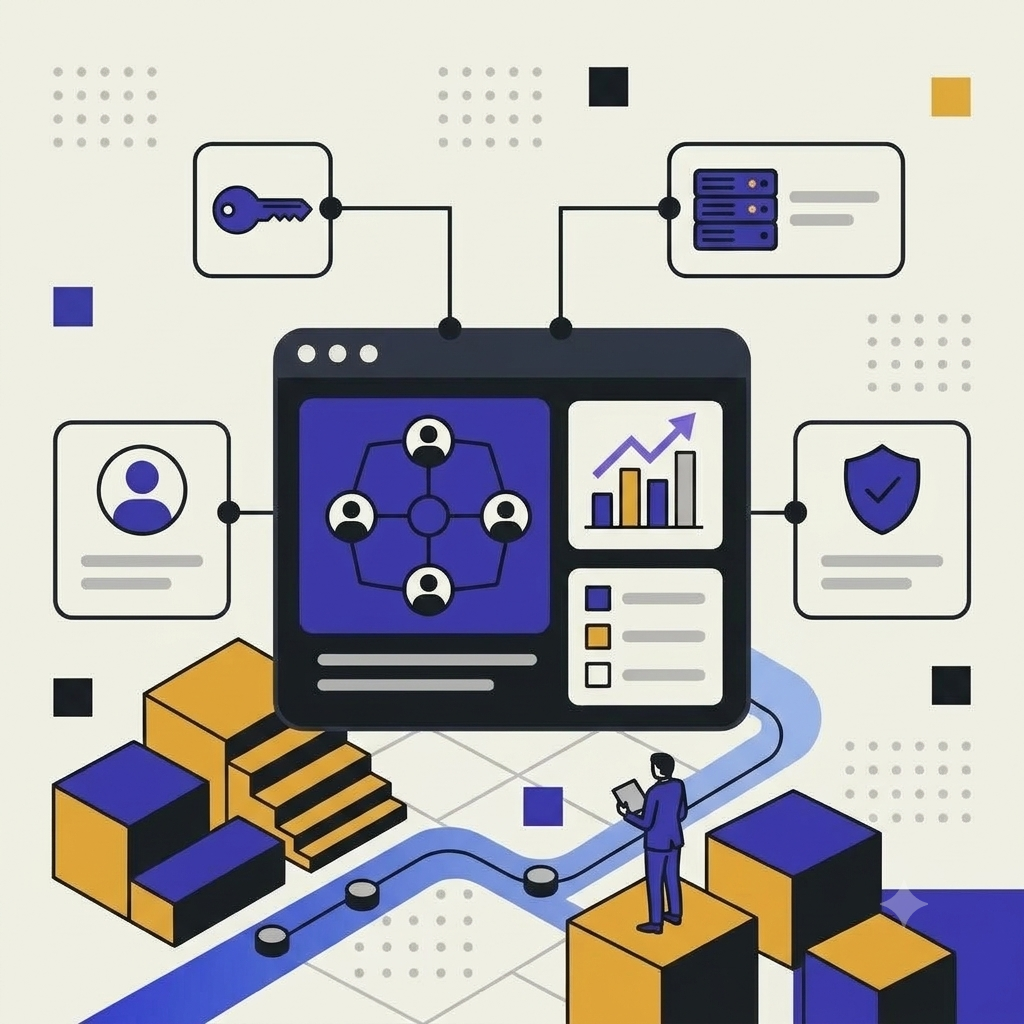
From static customer intelligence to continuous KYC and AML automation
Traditional customer intelligence often starts with onboarding research, risk classification, and a periodic refresh cycle. That model creates gaps when an entity changes faster than the review calendar. Ongoing customer monitoring depends on maintaining customer information and risk profiles as new facts emerge, which makes event detection an operational requirement rather than an optional enhancement.
What an always-on monitoring model watches
Always-on business screening starts with a defined entity, a risk hypothesis, and a clear escalation policy. The agent should collect signals only when they can change a review decision, create a research task, or justify a documented no-action outcome. That design prevents teams from substituting a high-volume alert feed for actual risk intelligence.
Leadership changes: Identify new executives, directors, or beneficial owners.
Regulatory shifts: Flag enforcement actions, restrictions, or licensing developments.
Website changes: Detect altered products, markets, disclosures, or operating claims.
Job postings: Surface expansion into regulated functions or regions.
Transaction anomalies: Route unusual activity into an investigator's review queue.
Why scheduled reviews alone leave blind spots
Scheduled reviews still matter, but they should validate a continuously updated record instead of restarting research from zero. Scheduled agent workflows can run recurring checks while event-driven logic handles material developments between cycles. The distinction matters: a schedule asks whether a file remains complete, while an event trigger asks whether a change requires attention now.
How AI research and monitoring agents change the operating model
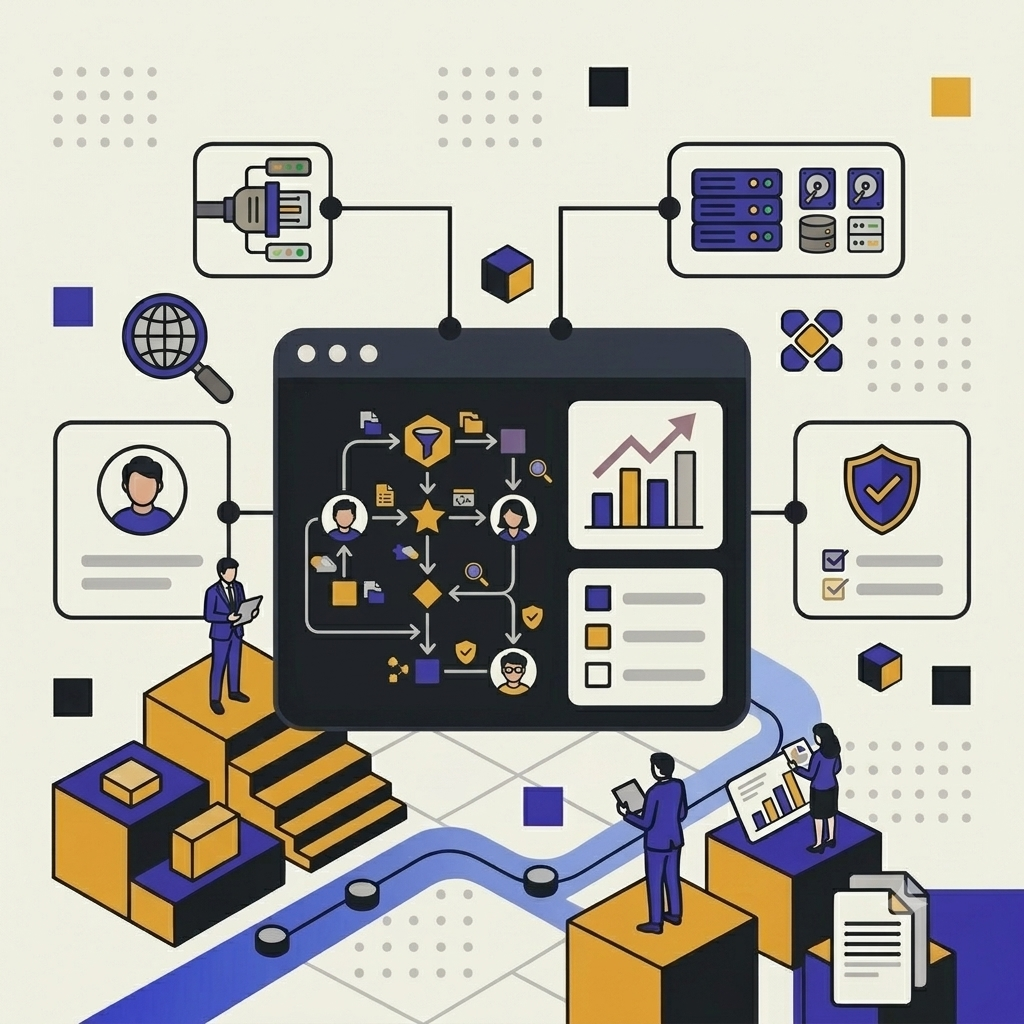
AI research and monitoring agents replace fragmented handoffs with a repeatable cycle: observe a signal, retrieve relevant customer context, research the change, create a cited finding, and assign a human decision. This is not unattended compliance. It is a way to reserve analyst attention for assessing materiality, resolving ambiguity, and documenting disposition rather than repeatedly gathering the same public facts.
Persistent memory turns research into reusable institutional context
Persistent memory improves research output by retaining approved entity identifiers, prior findings, decision rationale, and the source trail associated with a customer relationship. It reduces duplicate work while making the next review more coherent, because the agent can distinguish a genuinely new issue from a fact already investigated and resolved. Grep's Brain is designed as persistent memory and domain expertise behind agents, allowing research to become deliverables such as dashboards, spreadsheets, and slide decks.
That memory must remain bounded by governance. Teams should define what records an agent can access, which facts may persist, how long they are retained, and when a prior conclusion must be reconsidered. Risk management functions should participate in AI system oversight so that legal, compliance, and operational concerns are built into the workflow rather than reviewed after deployment.
Compare static review, generic copilots, and custom agents
The useful comparison is not human work versus AI. It is between workflows that merely generate text and workflows that preserve evidence, context, and accountability for high-stakes decisions.
Approach | Operating pattern | Context handling | Decision record |
|---|---|---|---|
Static review process | Periodic file refreshes | Analyst reconstructs prior work | Stored across case systems and notes |
Generic AI copilot | User-prompted research | Usually session-dependent | Requires separate evidence capture |
Custom AI agents | Scheduled and event-driven research | Persistent, governed customer context | Citation-backed findings and review trail |
Generic copilots can assist with drafting and summarization, but they are not designed by default around recurring entity surveillance or audit-ready case construction. Custom AI agents are appropriate when the output must connect a monitored signal to specific sources, prior context, and an accountable reviewer.
Building auditable AI for regulatory compliance
Auditable AI for regulatory compliance requires a workflow that records what triggered the investigation, what sources were reviewed, what evidence supported the finding, and who approved the resulting action. A polished narrative is insufficient when an examiner asks how the organization concluded. The record must let an independent reviewer retrace the decision without relying on an analyst's memory.
Design controls before deploying agents
Start with a controlled use case, such as business AML screening for a defined population or monitoring leadership and regulatory changes for institutional customers. Specify source boundaries, escalation rules, retention requirements, approval roles, and exception handling before the agent begins recurring work. This creates an operating contract that technical teams can implement and compliance teams can test.
Security architecture also determines whether an agent can be used in a regulated environment. Controls should include scoped least-privilege credentials, configurable retention, delete-on-request processes, and exportable decision trails. Grep states that customer data is not used for model training and provides VPC deployment options, which addresses a different question from research quality: whether the workflow can operate within an enterprise's data-governance requirements.
Use monitoring loops to control false-positive volume
False positives are reduced by defining relevance before collection, not by asking an agent to summarize every available signal. Loops and Monitors combine scheduled or event-triggered workflows with an always-on screening surface for company changes, enabling teams to set conditions that map to a genuine risk decision. An alert should identify the observed change, explain why it may matter for the customer profile, cite evidence, and route to a named review path. Shopmonkey saw its research time drop from hours to minutes per account after adopting this kind of monitored workflow, closing 64 research jobs in its first 30 days and beating Gemini head-to-head, an example of what defined relevance criteria can produce in practice.
Conclusion
Customer intelligence in 2026 is moving from a static customer file toward a continuously maintained record of risk-relevant change. The effective model combines agents that research and monitor with human reviewers who own escalation and final disposition. Teams should begin with a narrow, measurable monitoring use case, design evidence and governance controls first, then extend the workflow across adjacent oversight tasks. Grep supports this approach through custom agents and Loops and Monitors for traceable, auditable work that must remain defensible to a board or regulator.
For a practical view of continuous, defensible research workflows, explore Grep and its approach to high-stakes operations.
Frequently Asked Questions (FAQs)
Can AI agents handle continuous KYC and monitoring?
AI agents can handle continuous KYC and monitoring by detecting defined changes, researching the affected entity, and routing evidence-backed findings to human reviewers, but escalation criteria and final decisions should remain governed by the organization's compliance process.
How does persistent memory improve AI research output?
Persistent memory improves AI research output by retaining entity identifiers, prior findings, source history, and earlier decisions, which helps the agent avoid duplicating resolved work and makes recurring investigations easier for reviewers to interpret.
Can enterprise AI agents replace manual research teams?
Enterprise AI agents cannot replace manual research teams outright because analysts still assess materiality, resolve conflicting evidence, and approve actions, but agents can reduce repetitive collection and synthesis work that consumes investigator capacity.
What are the benefits of using AI for high-stakes risk work?
AI agents for high-stakes work can make risk operations more consistent by applying defined monitoring criteria repeatedly, preserving source-backed findings, and directing human attention toward exceptions that may alter a customer or counterparty risk decision.
How do AI monitoring loops work for risk management?
AI monitoring loops work for risk management by running on schedules or responding to real-world events, checking defined signals against an entity's known context, then producing a documented alert only when the configured conditions are met.
Why choose custom AI agents over generic Copilot solutions?
Custom AI agents differ from generic Copilot solutions because they can be designed around a specific monitoring policy, source set, evidence format, and approval workflow, whereas a general-purpose chat interaction does not inherently create an auditable operational record.
About the Author
Ryan Sorel is an AI Systems Engineer focused on production agentic workflows, API integration, and governed research systems. His work emphasizes practical controls for teams implementing MCP, A2A, and AI agents in operational environments where traceability and reliable handoffs matter.