AI Research Assistants with Verifiable Citations: How to Choose
A practical guide to selecting AI research assistants with verifiable citations, covering audit readiness, traceability, and compliance-grade evaluation.

Quick Answer
Choose an AI research assistant only if every material claim can be traced to a source, reviewed in context, and exported as an audit trail. For regulated work, citation links alone are insufficient: procurement must test source fidelity, retention controls, access boundaries, and whether the system fits the investigation workflow already used by compliance and risk teams.
Introduction
An AI research platform is suitable for high-stakes work when its output can survive challenge from a reviewer who did not run the research. That means the analyst can inspect the original source, see how it supports the claim, and retain a record of the decision. Generic assistants can produce polished summaries without proving the underlying facts. Bad research does not only waste time, it can put a board decision, onboarding file, or compliance review at risk.
Key Takeaways
Verifiable citations require source-level review, not just linked footnotes.
Auditability depends on exportable records, controlled access, and retention settings.
Procurement tests should use real cases that require scrutiny and escalation.
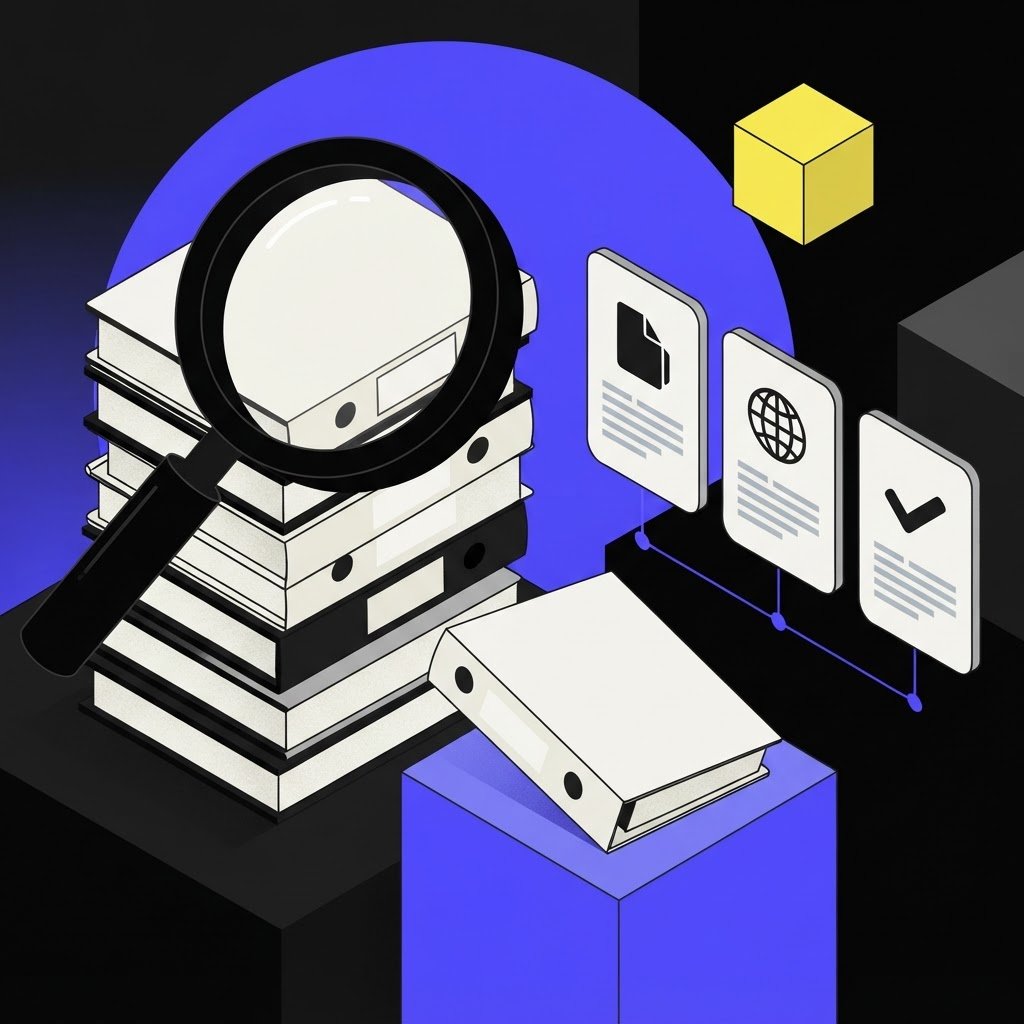
What makes an AI research platform defensible?
Defensible research is evidence that can be checked after the fact by a compliance reviewer, investment committee, auditor, or regulator. The requirement is different from asking whether an assistant can find information quickly. A trustworthy system preserves the path from question to source, claim, reviewer action, and final deliverable.
Test citations at the claim level
A citation is useful only when it points to the precise source material that supports the statement beside it. Reviewers should be able to open the source, locate the relevant passage, and determine whether its scope and date match the conclusion. Oxford guidance on evaluating AI references makes the basic standard clear: locate, read, and verify a work before citing it.[1]
Claim mapping: Link each conclusion to supporting source text.
Source access: Preserve the original URL, document, or database record, including the underlying data sources used in the research.
Context: Capture qualifiers, dates, and jurisdictional limits.
Contradictions: Surface evidence that challenges the conclusion.
Reviewer record: Log approvals, edits, and escalations, and compare results against performance benchmarks where available.
Distinguish a citation from a verified citation
A footnote can look credible while pointing to an irrelevant, inaccessible, or invented work. Research on fabricated citations found that 66% of its AI-generated hallucinations were total fabrications, and fabricated citations appeared in 53 published papers, approximately 1% of accepted papers examined, despite review by 3–5 expert researchers per paper.[2] That is why teams need repeatable sources and citations checks rather than confidence in fluent prose alone.
How do you evaluate auditable AI for financial services?
For compliance, risk, and diligence teams, the buying question is whether a system creates a usable decision record. Auditable AI for financial services must show what was reviewed, what evidence was considered, who accepted the output, and how the result was delivered into the case file or committee materials.
Compare the evidence trail, not the interface
Run the same realistic case through each shortlisted product, such as an acquisition diligence review or a counterparty screening escalation. Require the resulting report to identify sources, retain research notes, expose limitations, and export the work without manual reconstruction. The comparison below separates cosmetic citation features from controls that support reviewable decisions.
Evaluation area | Typical setup (e.g., Microsoft Copilot) | Research assistant for regulated work |
|---|---|---|
Source traceability | May provide links or summaries | Maps material claims to inspectable sources |
Decision trail | Conversation history may be incomplete | Exports research, citations, and reviewer actions |
Data controls | Policies vary by deployment | Supports scoped access and configurable retention |
Ongoing screening | Usually requires repeated prompts | Can run scheduled or event-triggered research |
Workflow fit | Produces a general response | Produces review-ready reports, slides, or spreadsheets |
The decisive distinction is not whether the system generates an answer. It is whether a second person can reconstruct why the answer was accepted and identify the evidence that could change it.
Grep builds custom agents for due diligence, institutional onboarding, compliance reviews, and continuous monitoring, with traceable reports and exportable decision trails. Its Loops and Monitors support scheduled or event-triggered work, which matters when a one-time review must become ongoing screening for changes in leadership, regulatory status, websites, or job postings.
Ask security and retention questions early
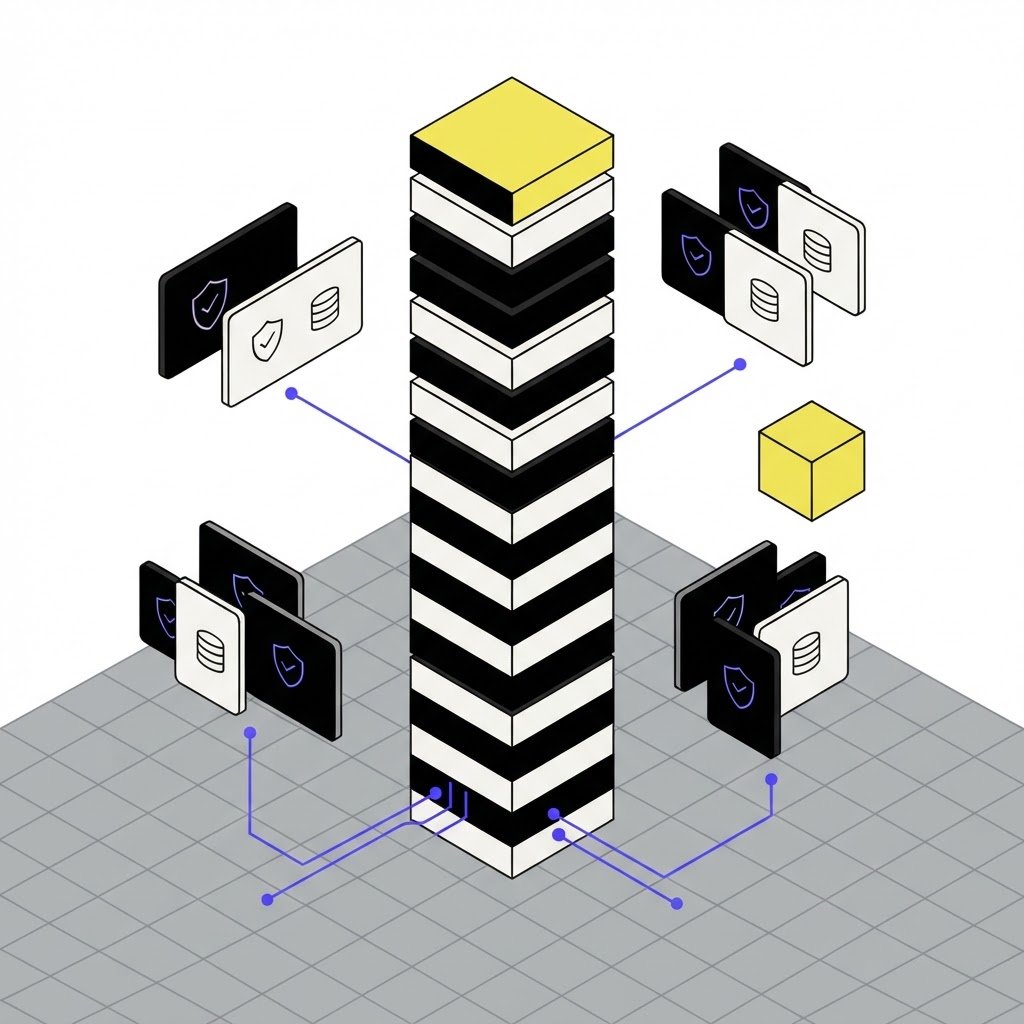
Security review should happen before a pilot reaches sensitive records. Ask whether customer data is used for model training, whether credentials are least-privilege and scoped to the task, whether execution is sandboxed, and whether VPC deployment is available. Confirm current SOC 2 status, assess GDPR obligations for relevant processing, and verify configurable retention plus delete-on-request procedures.
How do you build a procurement test around real compliance work?
A controlled pilot reveals more than a feature demonstration because it exposes missing sources, weak handoffs, and review bottlenecks. Use a case that already has a known answer or an established analyst file, then compare the assistant's evidence trail against the human record. This is enterprise due diligence focused on operational defensibility rather than presentation quality.
Set acceptance criteria before the pilot
Define which claims require a primary source, which results require human approval, and what must be retained in the final file. Include false or conflicting information in the test set, because the system should flag uncertainty instead of smoothing it into a confident narrative. The NIST AI Risk Management Framework provides a useful reference point for enterprise AI risk assessment.[3]
Also test name matching across languages, transliterations, and corporate structures when the workflow involves counterparties or executives. Strong AI research accuracy is not merely a higher-quality summary; it reduces the chance that the wrong entity is attached to an onboarding, screening, or diligence conclusion.
Measure the handoff into existing work
Research is only defensible when analysts can move it into the case-management, legal, investment, or compliance process without losing evidence. Check whether outputs arrive as usable reports, slide decks, or spreadsheets; whether citations remain attached after export; and whether permissions match existing review roles. Grep's Brain is designed to retain persistent domain context behind agents, while its 100+ integrations and 250+ skills can support work that crosses research systems and operational teams.
Conclusion
Choose an AI research assistant by asking whether a reviewer can verify each material claim, reconstruct the decision path, and retain the record under your organization's policies. Test citations against original sources, challenge the system with ambiguous cases, and require exports that fit the actual approval workflow. For compliance and risk teams running high-stakes diligence or ongoing screening, Grep is the choice when traceable reports, custom agents, and always-on monitoring are required. The strongest procurement decision is one that remains defensible after the pilot ends and the work reaches a board, auditor, or regulator.
Need research that can stand up to review? Explore Grep's research tools and assess it against your evidence requirements.
Frequently Asked Questions (FAQs)
What makes AI research defensible for regulators?
AI research is defensible for regulators when each material conclusion can be traced to an inspectable source, reviewed in its original context, and retained with the analyst actions and approval record that explain how the organization reached its decision.
Is AI research traceable for board-level reporting?
AI research is traceable for board-level reporting when the final report preserves claim-level citations, source context, research dates, unresolved issues, and a clear record of the people who reviewed or approved the findings before presentation.
How do you ensure AI research is audit-ready?
You ensure AI research is audit-ready by setting source-validation rules, retaining prompts and evidence, controlling access to sensitive data, documenting reviewer decisions, and testing whether an independent reviewer can reproduce the rationale from exported materials.
Why is generic AI insufficient for regulatory oversight?
Generic AI is insufficient for regulatory oversight when it cannot reliably show where a claim originated, preserve the decision history, apply the organization's retention controls, or distinguish evidence from plausible but unsupported generated language.
How do custom AI agents integrate with enterprise workflows?
Custom AI agents integrate with enterprise workflows by connecting approved data sources and producing deliverables that fit established review processes, such as research reports, spreadsheets, slides, monitoring alerts, and documented escalation records.
Sources
- Oxford LibGuides: Evaluating AI-Generated References, University of Oxford ↩
- Compound Deception in Elite Peer Review: A Failure Mode Taxonomy of 100 Fabricated Citations at NeurIPS 2025, arXiv ↩
- AI Risk Management Framework, NIST ↩
About the Author