Best AI Agent Platform to Deploy Across Your Whole Team Right Now
Discover how an enterprise AI agent platform can replace generic tools like Copilot for compliance, risk, and due diligence work across your whole team.
Quick Answer
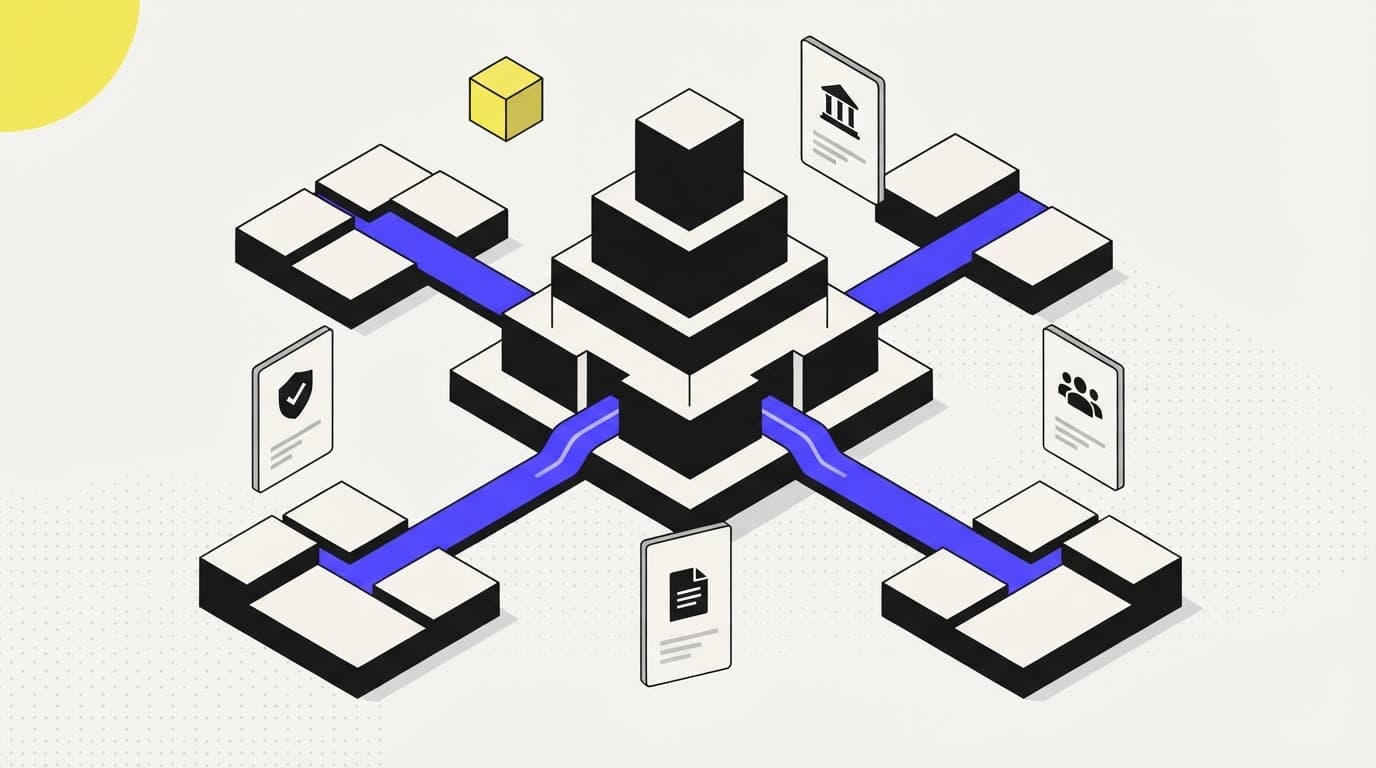
Grep is built for team-wide deployment on high-stakes work: traceable due diligence, institutional onboarding, compliance oversight, and continuous monitoring, with team and enterprise deployments starting around $50,000 per month. The platform is designed so compliance, risk, legal, finance, and operations teams can reuse one evidence standard instead of rebuilding trust for every new workflow.
Introduction
Deploying the wrong platform across a whole team creates a costly split: employees use generic AI for drafts, then revert to manual processes when a decision needs evidence. An enterprise AI agent platform should let compliance, risk, legal, finance, and operations teams reuse trusted research standards without turning every new workflow into a custom software project. The real test is whether the platform can produce a decision trail, enforce data boundaries, and keep watching after the initial review is complete. One-time research is useful, but missed changes in counterparties, leadership, or regulatory conditions create the more serious operational exposure.
Key Takeaways
High-stakes deployment requires traceable outputs, governance controls, and defensible evidence.
Always-on monitoring matters more than a one-time answer for regulated operational work.
Start with one critical workflow, then expand shared agent standards across departments.

How to Choose an AI Agent Platform for Financial Services
Choose a platform based on the work that creates the highest consequence when it is incomplete, unsupported, or stale. For financial services and other regulated enterprises, that usually means due diligence, continuous KYC, institutional onboarding, compliance reviews, and risk research. Generic chat interfaces can accelerate individual tasks, but the platform decision must address how evidence is collected, retained, reviewed, and reused across teams.
Use the trust bar, not a feature checklist
An AI agent platform becomes enterprise-ready when the output can be inspected by the person accountable for the decision. The right evaluation asks whether agents can work within approved data boundaries, cite their findings, preserve decision context, and follow repeatable instructions as the work moves from a pilot into day-to-day operations.
Traceability: Every conclusion should connect to supporting evidence.
Auditability: Reviewers need exportable decision trails for scrutiny.
Access control: Credentials should follow least-privilege access rules.
Persistence: Teams need retained context across recurring assignments.
Monitoring: Material changes require ongoing screening, not periodic memory.
Assess operating model before expanding deployment
Most failed rollouts begin with impressive demonstrations and unclear ownership. A compliance leader needs defined review points, a legal team needs approved output standards, and operations needs a process that does not require analysts to configure every workflow. Teams evaluating enterprise AI agents should also ask who can change instructions, approve access, investigate an output, and decide when human escalation is mandatory.
Grep is designed around custom AI agents for high-stakes work, with traceable, citation-backed reports, slide decks, and spreadsheets. Its strongest traction today is among very large enterprises, where a single defensible use case can establish shared standards before expansion across compliance, risk, legal, finance, and operations.
Microsoft Copilot vs Enterprise AI Platforms for Compliance
Microsoft states that organizations need a centralized, enforceable governance and security baseline to secure AI agents as adoption grows. Teams should separately define the research standards, deliverables, and ongoing monitoring required for each compliance workflow.
Compare the work model, not the chatbot interface
The table below separates broad enterprise agent governance from work-specific agents designed to carry a research assignment through to a defensible deliverable. The useful comparison is the operating model and the evidence expected from the work.
Criterion | Microsoft Copilot ecosystem | Grep |
|---|---|---|
Primary scope | Agents across Microsoft business environments | Custom agents for high-stakes knowledge work |
Governance approach | Purview, Agent 365, observability, and security services | Scoped credentials, decision trails, configurable retention |
Core deliverables | Agent experiences across connected business systems | Citation-backed reports, slides, spreadsheets, and dashboards |
Ongoing review | Controls for governed agent adoption | Loops and Monitors for scheduled and event-triggered screening |
Deployment pricing | Not compared here | Team and enterprise deployments from around $50K monthly |
The central difference is not whether either environment can host agents. It is whether the platform is designed to run a specific accountable process, such as reviewing an acquisition target or continuously screening an institution, with evidence that a reviewer can interrogate afterward.
Decision makers need baseline policies that apply to every agent as adoption grows. The NIST AI risk framework resources support enterprise generative AI governance and compliance.[1] In practice, teams should distinguish between controls around an agent estate and controls embedded in the work product itself.
Why always-on monitoring changes the platform decision
Governance also requires attention to the systems that support agent deployment. NIST's Securing Software Development Framework (SSDF) Version 1.2 provides recommendations for mitigating software-vulnerability risk and describes practices, tasks, and examples for secure and reliable software development, delivery, and improvement. Teams can use this reference alongside AI governance processes when evaluating the operational environment around agents.
A completed onboarding file reflects a moment in time, while the customer, counterparty, market, and regulatory environment continue to change. Grep’s Loops and Monitors combine scheduled or event-triggered workflows with an always-on screening surface for website changes, leadership changes, job postings, and regulatory or compliance changes across regions. This is the operational benchmark for platforms built to run work rather than merely assist with individual prompts.
The security requirement is equally continuous. The NIST AI Resource Center was developed to support operationalization of the NIST AI Risk Management Framework. It provides technical documents, software tools, and guidance to support the testing, evaluation, verification, and validation of AI. These resources should be incorporated into agent governance rather than treated as a launch-stage exercise.
Deploy Custom AI Agents Across Departments Without Fragmentation
Company-wide adoption should begin with a workflow that already has clear evidence standards and a measurable queue of recurring work. Due diligence, institutional onboarding, and compliance reviews work well because teams can define the inputs, the required sources, the reviewer role, and the escalation path. A successful first deployment creates reusable instructions and controls rather than another isolated assistant.
Build a shared operating system for accountable work
Start by documenting the human decision that follows the agent output. If a risk analyst must approve a counterparty, define the decision record, required evidence, exceptions, and events that reopen the review. This connects teams of AI agents to real accountability instead of treating agents as an ungoverned productivity layer.
Next, make data governance concrete. Grep states that customer data is not used for model training, uses scoped least-privilege credentials, supports configurable retention with delete-on-request, and provides exportable decision trails. Teams can evaluate these requirements alongside access-control practices for audit teams. These controls matter because high-stakes deployment is not simply about giving more people access to AI. It is about limiting access appropriately while preserving the record needed to explain a decision.
Security controls should cover the full lifecycle around the agent: data retrieval, tool execution, generated output, and runtime activity. Its governance model also identifies a data governance and compliance layer that includes Microsoft Purview Compliance Manager, Microsoft Purview APIs, Copilot Studio governance features, and data-location controls, alongside an agent-observability layer containing Microsoft Agent 365, Microsoft Defender for Cloud, Azure Log Analytics, Application Insights, and Cost Management.[2][3] This operational discipline, not a documentation exercise, is what separates governance that survives an audit from governance that only looks good in a slide deck.
Expand from evidence-rich workflows to continuous operations
Once the first workflow produces reviewable results, apply its approved standards to adjacent teams. Legal operations can use defined triage and drafting processes, finance teams can apply agents to diligence and deal preparation, and risk operations can extend the same evidence model to onboarding and continuous KYC. This progression is what separates durable adoption from AI pilot scalability problems caused by disconnected departmental experiments.
Grep’s Brain adds persistent memory and domain expertise behind agents, allowing prior research to inform new deliverables without making old conclusions invisible. The practical requirement remains simple: each team should know what the agent found, why it matters, and which person owns the next decision.
Conclusion
For enterprises scaling compliance, risk, legal, finance, and operations work, begin with a high-stakes workflow where evidence quality and continuous change detection already matter, then standardize access, review, and escalation before broadening deployment. Microsoft describes AI agents as software systems that can access data, make decisions, and take actions across business systems. The goal is not more AI activity, but fewer unsupported decisions and fewer manual rechecks.
To operationalize accountable AI work, get started with Grep for custom agents and continuous monitoring.
Frequently Asked Questions (FAQs)
What is the difference between generic AI and enterprise AI agents?
Generic AI mainly assists with individual prompts, while enterprise AI agents are configured to execute defined business work within approved data, access, review, and governance boundaries that allow organizations to inspect how a conclusion was produced.
Why are custom AI agents better than Microsoft Copilot for compliance?
Custom AI agents are better for compliance when they are built around the specific evidence, decision record, escalation path, and continuous monitoring requirements of a regulated workflow rather than broad productivity assistance across general business tasks.
How do enterprise AI agents ensure data governance?
Enterprise AI agents ensure data governance through defined access permissions, controlled data handling, retention policies, reviewable activity records, and organizational policies that set boundaries before agents retrieve information or take actions.
What makes an AI agent auditable for regulators?
An AI agent is auditable for regulators when reviewers can reconstruct the sources, instructions, access boundaries, reasoning context, output, and human approvals that contributed to the decision or recommendation under review.
Can AI agents monitor regulatory changes in real-time?
AI agents can monitor regulatory changes continuously when they are configured to screen relevant sources and trigger follow-up workflows when a change appears, although teams must define the jurisdictions, signals, and escalation rules that matter.
How to implement always-on compliance monitoring?
Always-on compliance monitoring begins by defining monitored entities and material signals, assigning ownership for alerts, setting evidence requirements for each review, and connecting changes to a documented escalation and decision process.
Sources
- NIST AI Risk Management Framework Resources (airc.nist.gov) ↩
- Microsoft Purview AI Agent Data Security (learn.microsoft.com) ↩
- Microsoft Agent 365 Overview (learn.microsoft.com) ↩
About the Author