How to Test a Company Research Tool Before Signing a Contract
Evaluating an enterprise AI research platform? Use this pre-contract testing checklist to confirm auditability, source citations, and compliance monitoring fit.
Quick Answer
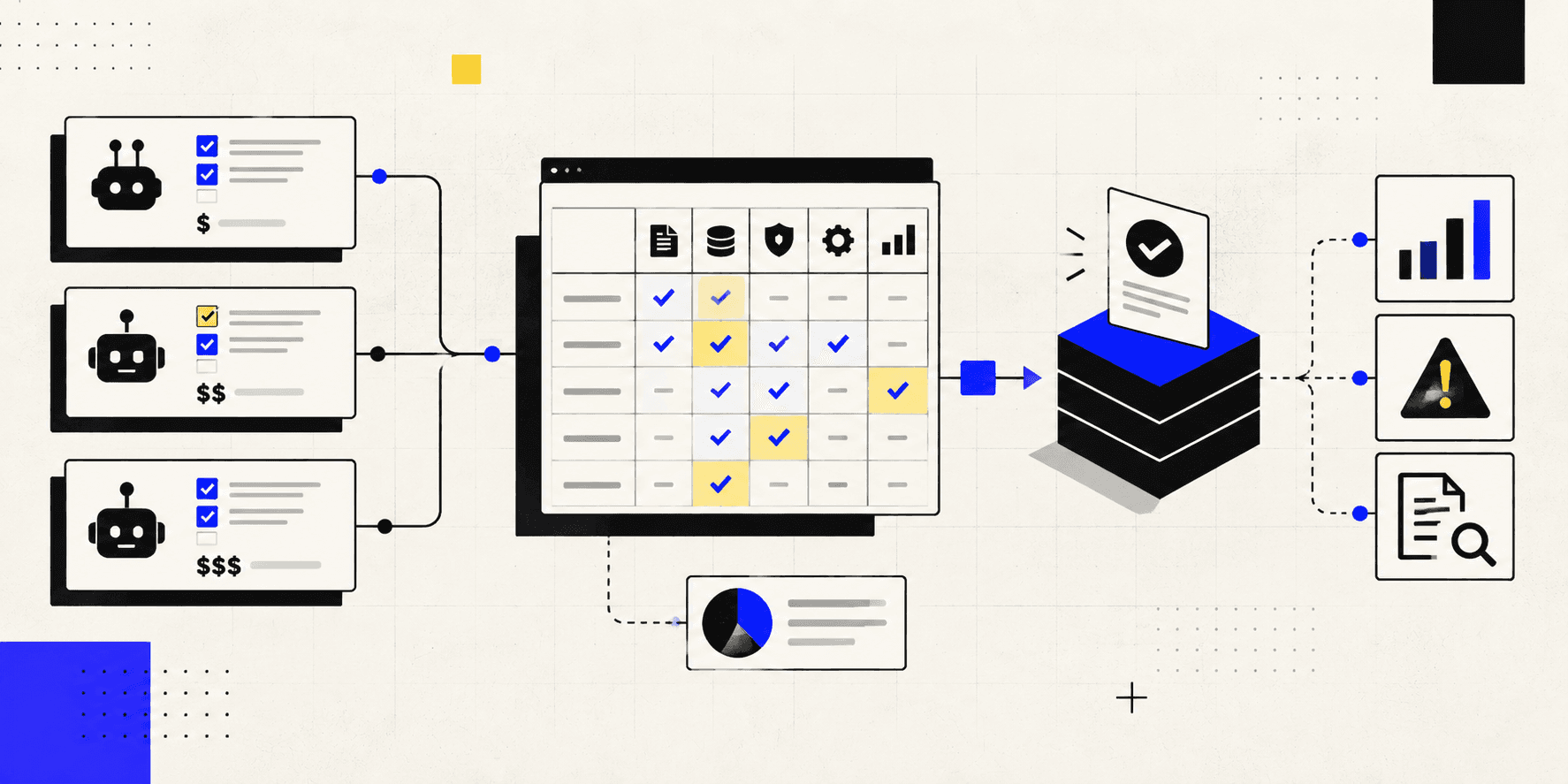
Test a company research tool against real, high-stakes cases before signing, and reject outputs that cannot be traced, verified, and defended. A polished demo is not enough: require source-level evidence, reproduce important findings, test monitoring workflows, and document how the platform handles access, retention, and escalation under your governance requirements.
Introduction
A company research tool should earn a contract by surviving the same scrutiny as the reports it will produce. For compliance, risk, and investment teams, the purchase risk is operational: an untraceable answer can delay onboarding, weaken a diligence decision, or leave a board packet without support. Start with the work your team already struggles to complete, not a vendor's prebuilt demonstration. The useful test is whether a reviewer can retrace a consequential conclusion without relying on the person who ran the research.
Key Takeaways
Use real cases with known answers and unresolved risk signals.
Verify every material citation against the underlying source, not the link alone.
Test scheduled monitoring and escalation before treating a pilot as enterprise-ready.
Build a Company Research Tool Evaluation Framework
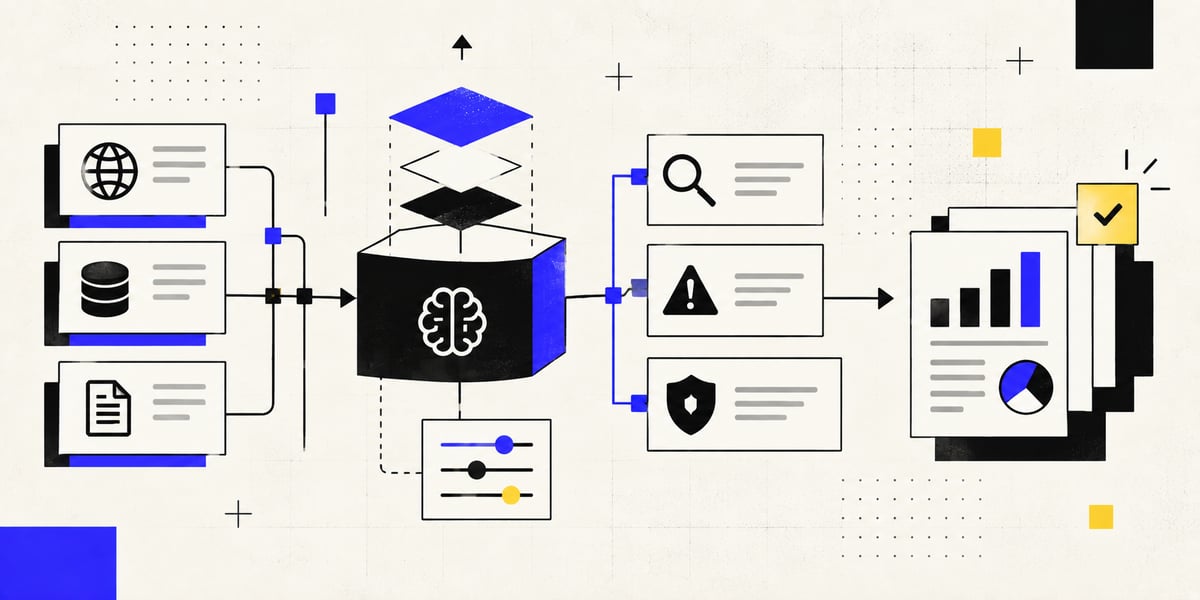
Begin with a controlled evaluation that mirrors a production decision, including the inputs, source constraints, reviewers, and final deliverable your team uses today. A rigorous tool evaluation framework turns vague impressions into a record of what passed, what failed, and what must be contractually addressed before deployment.
Choose cases that expose real operational risk
Use a small set of representative matters rather than generic prompts. Include a completed case with a known outcome, a current matter where the answer is still being investigated, and a case containing ambiguous names, conflicting sources, or changes over time. This forces the system to show how it handles the conditions that make automated due diligence software both valuable and risky.
Historical case: Compare findings with the final approved file.
Live case: Assess usefulness without exposing the final answer.
Adverse signal: Test how conflicting evidence is surfaced.
Name variation: Check entity matching across jurisdictions and languages against research accuracy standards.
Restricted source: Confirm the tool respects access boundaries.
Define acceptance criteria before opening the trial
Set success criteria around reviewability, not output volume. For each case, specify the decision question, required source types, acceptable uncertainty language, reviewer roles, and the exact artifact needed for approval, such as a report, spreadsheet, or briefing deck. A pilot testing plan should also state what happens when the tool cannot substantiate a claim: it must identify the gap rather than convert uncertainty into a confident conclusion.
Assign independent reviewers who did not configure the test. This separates a compelling interface from defensible AI research reports.
Pressure-Test Traceability and Citation Accuracy
The core test for auditable AI research tools is simple: can a reviewer move from a material statement to the exact supporting source, inspect the context, and understand the limits of the conclusion? A working URL is only the beginning. The report must show enough source context for a reviewer to determine whether the citation actually supports the language used.
Audit claims, not just citations
Sample material statements from every test output, especially claims that affect risk ratings, onboarding decisions, or investment recommendations. Run a citation verification process that checks source identity, publication timing, quoted context, factual support, and whether the cited page remains available. The discipline matters because research on deep-research agents found link validity above 94% and relevance above 80%, while factual accuracy ranged from 39% to 77%.[1]
More retrieval is not a substitute for quality control. The broader the research task, the more important a strong review protocol becomes.
Ask the vendor to rerun the same cases after changing the request wording, adding a conflicting document, and removing a favored source. A dependable system should make changed evidence visible and explain the updated conclusion rather than silently producing a different answer.
Test area | What to inspect | Pass condition | Contract implication |
|---|---|---|---|
Source traceability | Claim-to-source path and surrounding context | Reviewer can locate support without vendor help | Require exportable decision records |
Citation accuracy | Whether source supports the exact statement; link validity and relevance alone are insufficient, as the same research found 39–77% factual accuracy despite link validity above 94% and relevance above 80% | Material claims withstand independent sampling | Define correction and escalation process |
Conflicting evidence | How contradictions affect conclusions | Uncertainty and disagreement remain visible | Set exception-handling obligations |
Repeatability | Results across reruns and revised inputs; test whether cited reports can be generated consistently across repeated runs and revised inputs | Changes are attributable to documented evidence | Require version and change history |
The table is a buying filter, not a scorecard for presentation. If a vendor cannot produce a claim-level trail during a supervised trial, a post-signature implementation will not create one by itself.
Test governance as part of the product
Governance should be observable in the test environment. The traceability documentation expected for responsible AI work includes the records needed to understand how a system was used and maintained, so request exports that a risk, legal, or audit team can retain independently.[2]
Test how the platform records inputs, source references, outputs, reviewer changes, and incident handling. Also ask whether decision trails can be exported, how retention settings are configured, and how access is limited to the people who need it. Source citation practices should be part of the workflow rather than an after-the-fact formatting step.
Test Enterprise AI Research Platform Workflows at Scale
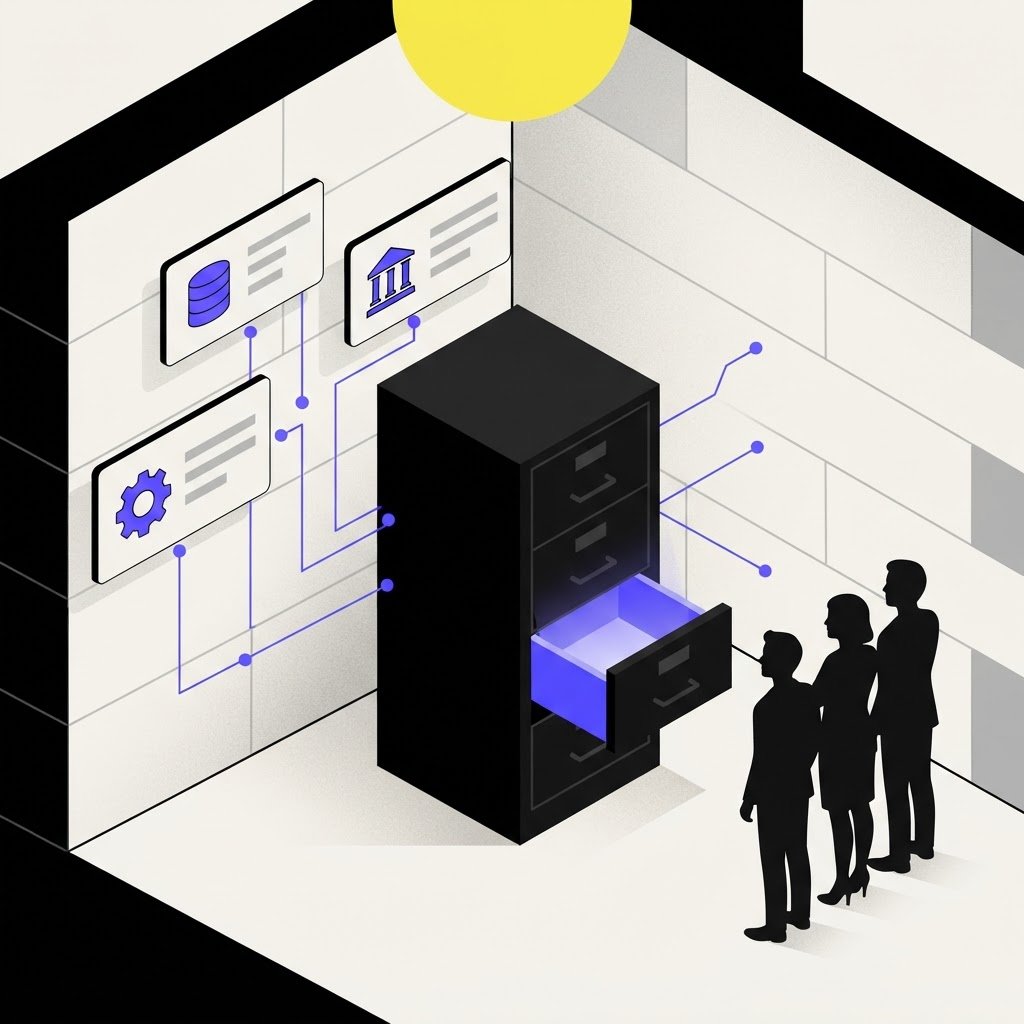
A single successful report does not prove that an enterprise AI research platform can support recurring work across teams. Test the handoff from one-off analysis to repeatable operations: intake, research, human review, approval, monitoring, and escalation. The important question is whether the organization can expand coverage without losing accountability for each decision.
Run a monitoring scenario, not only a research prompt
Create a scenario in which a company must be watched for changes that would alter a prior assessment, such as leadership changes, regulatory developments, job postings, or website updates. Then define the trigger, the owner, the evidence required for an alert, and the action expected after review. This is where continuous KYC monitoring either becomes operationally useful or remains a research demo.
Grep's Loops and Monitors pair scheduled or event-triggered workflows with an always-on screening surface, allowing teams to test ongoing research rather than one-time runs. Its custom agents are designed for high-stakes work such as due diligence, institutional onboarding, and compliance reviews, with citation-backed deliverables that can be inspected by a reviewer.
Test the full alert path with a controlled change. Confirm that the system identifies the signal, preserves the supporting evidence, routes it to the correct reviewer, and keeps the original assessment distinct from the update. A credible monitoring design does not merely notify people; it creates a reviewable record of why the notification existed.
Compare generic AI against a high-stakes research workflow
Having a generic AI tool does not establish suitability for board-facing diligence. When evaluating a generic AI tool against Grep, compare the outputs using the same test files, source requirements, review process, and monitoring scenario. Keep the comparison focused on what your controls require, rather than on generic writing quality. Buyers weighing several platforms before this stage can use this enterprise AI vendor comparison to narrow the shortlist first.
Evaluation dimension | Microsoft Copilot | Grep | What the buyer should verify |
|---|---|---|---|
Research output | Prompt-based response | Traceable report or structured deliverable | Whether material claims can be reviewed |
Evidence handling | Test whether linked sources are available | Claim-level citations and preserved context | Whether sources support conclusions |
Monitoring | Test whether monitoring is user-initiated or automated | Scheduled or event-triggered review workflow | Whether changes reach accountable owners |
Governance record | Depends on configuration and process | Exportable decision trail requirements | Whether audit teams can reconstruct actions |
The distinction is not that generic AI has no role. It is that high-stakes work needs controls that travel with the research, especially when a conclusion will be challenged after the original analyst has moved on.
Grep publishes transparent pricing and offers a free trial with 100 one-time credits, allowing buyers to test real cases before deciding whether to expand the workflow. That is the right sequence for sophisticated teams: validate the work first, then discuss how the workflow would expand across departments.
Make the Contract Decision From Trial Evidence
Convert trial results into a decision memo that names the use case, owners, required controls, unresolved gaps, and deployment conditions. Do not let the vendor's demo notes become the implementation plan. Your record should show which claims were verified, which exceptions required human judgment, and which conditions must be written into commercial and security terms.
Turn findings into commercial requirements
Ask for commitments that match the failures uncovered in testing. If traceability mattered, define the records that must remain exportable. If continuous monitoring mattered, define ownership, alert review, and change management. If the pilot relied on particular sources or integrations, make sure the deployed environment can use them under the same access controls.
Grep has been in regulated production since 2023 and supports exportable decision trails, configurable retention, delete-on-request, scoped least-privilege credentials, and VPC deployment options. Those are concrete areas to validate during a controlled evaluation when the research will inform compliance, onboarding, or diligence decisions.
Use a decision gate before expansion
Approve expansion only after the business owner, security team, compliance lead, and operational reviewers agree that the workflow is reproducible. Document an escalation route for inaccurate output, a process for reviewing policy changes, and a baseline against which future monitored work can be checked. AI governance documentation should reflect the metrics, tests, and processes needed to support deployment, not just a statement of intent.[3]
Finally, retain the failed test cases. They become the most useful regression set when the vendor changes models, sources, integrations, or workflow logic. A trial that captures only success stories cannot protect the organization when the production environment changes.
Conclusion
The contract decision should follow evidence that a research workflow is traceable, auditable, and defensible to a board or regulator. Test real cases, inspect material citations at the claim level, simulate a monitoring event, and convert gaps into deployment requirements. For enterprises moving high-stakes diligence and compliance work beyond generic prompts, Grep may be a fit when a trial confirms that its custom agents and Loops and Monitors meet the required review and governance controls. Keep the test artifacts, because they are the foundation for accountable expansion.
Ready to test research under real scrutiny? Explore Grep pricing plans with your own diligence and monitoring cases.
Frequently Asked Questions (FAQs)
How to automate due diligence with AI agents?
Automating due diligence with AI agents starts by defining the decision question, source boundaries, reviewer responsibilities, and required evidence trail, then testing the agent on completed and live cases before allowing outputs to influence approvals or risk ratings.
What makes AI research defensible for regulators?
AI research is defensible for regulators when each material conclusion can be traced to preserved source context, the system records relevant inputs and reviewer actions, and uncertainty or conflicting evidence is visible rather than hidden behind confident language.
How to run continuous compliance monitoring at scale?
Continuous compliance monitoring at scale requires defined signals, accountable alert owners, documented review actions, and a change record that distinguishes a new finding from the original assessment so teams can demonstrate why each escalation occurred.
Are AI agents secure for high-stakes enterprise data?
AI agents can be used for high-stakes enterprise data only when security review confirms access controls, credential scope, data retention, deployment boundaries, and incident procedures that match the organization's own policies and regulated operating requirements.
How to maintain audit trails for AI-driven decisions?
Maintaining audit trails for AI-driven decisions requires retaining the request, relevant inputs, source evidence, generated output, reviewer edits, approval status, and changes over time in a format that can be independently exported and inspected.
Is AI research audit-ready for a board of directors?
AI research is audit-ready for a board of directors when decision-makers can inspect the evidence behind material claims, understand exceptions and uncertainty, and obtain a durable record of who reviewed, changed, and approved the final conclusion.
Sources
- Cited but Not Verified: Parsing and Evaluating Source Attribution in LLM Deep Research Agents (arxiv.org) ↩
- AI Audit Trail Requirements (CXToday) ↩
- AI RMF Govern Function (NIST) ↩
About the Author