A2A Protocol vs MCP: What Compliance Teams Need to Know in 2026
A2A protocol and MCP explained for compliance leaders: understand the differences that affect audit trails, onboarding, and institutional risk monitoring.
Quick Answer
A2A and MCP solve different compliance problems: A2A lets independent agents delegate work and report status, while MCP connects an agent to approved tools and data. For regulated onboarding and continuous monitoring, the protocol matters less than the controls around identity, permissions, evidence capture, retention, and human approval.
Introduction
Compliance teams should treat agent protocols as a governance decision, not a developer detail. An A2A protocol for institutional onboarding can coordinate distinct research and review agents, while MCP can give a controlled agent access to specific internal systems and data sources. Neither protocol automatically creates a defensible record, because an agent can still use overly broad credentials, retrieve unapproved data, or produce an unsupported conclusion. The operational question is whether each action can be reconstructed when a regulator, auditor, or board asks why a decision was made. Shopmonkey's case study shows what governed agent work can change: its underwriting team cut research from hours to minutes per account.
Key Takeaways:
A2A manages delegated work between agents with explicit task states.
MCP governs an agent's connection to approved tools and context.
Auditability requires controls beyond either protocol's basic specification.

How A2A protocol supports institutional onboarding
A2A is designed for agent-to-agent collaboration across systems. In an institutional onboarding review, a client agent can ask separate remote agents to investigate ownership, adverse media, regulatory exposure, or supporting documentation, then receive task outputs without giving each remote agent unrestricted access to the client's internal context. The A2A protocol specification is designed for potentially very long-running tasks and human-in-the-loop interactions, which fits onboarding reviews that need analyst input along the way.
What A2A changes for a compliance case file
A2A can provide an identifiable task lifecycle for delegated work, including status updates and requests for additional input. That lifecycle can make a case file easier to inspect, provided the implementation records the requesting party, delegated scope, inputs, outputs, approvals, and exceptions. Teams evaluating an A2A implementation should confirm how these records are retained and exported.
Task identity: Link every delegated review to a case record.
Scope: Limit each agent to a documented investigative question.
State changes: Record failures and requests for additional information.
Evidence: Preserve sources behind each factual finding.
Approval: Require human sign-off for consequential decisions.
Where A2A creates new governance work
A2A does not decide whether an agent should be trusted with customer data or whether its output meets policy. A coordinated network can increase the number of data exchanges, delegated tasks, and approval points, which means enterprises using AI agents for due diligence need a clear register of agent identities and allowed actions. A2A in enterprise compliance should therefore be assessed as an operating model, not merely as a connection standard.
MCP and A2A: separate controls for different risks
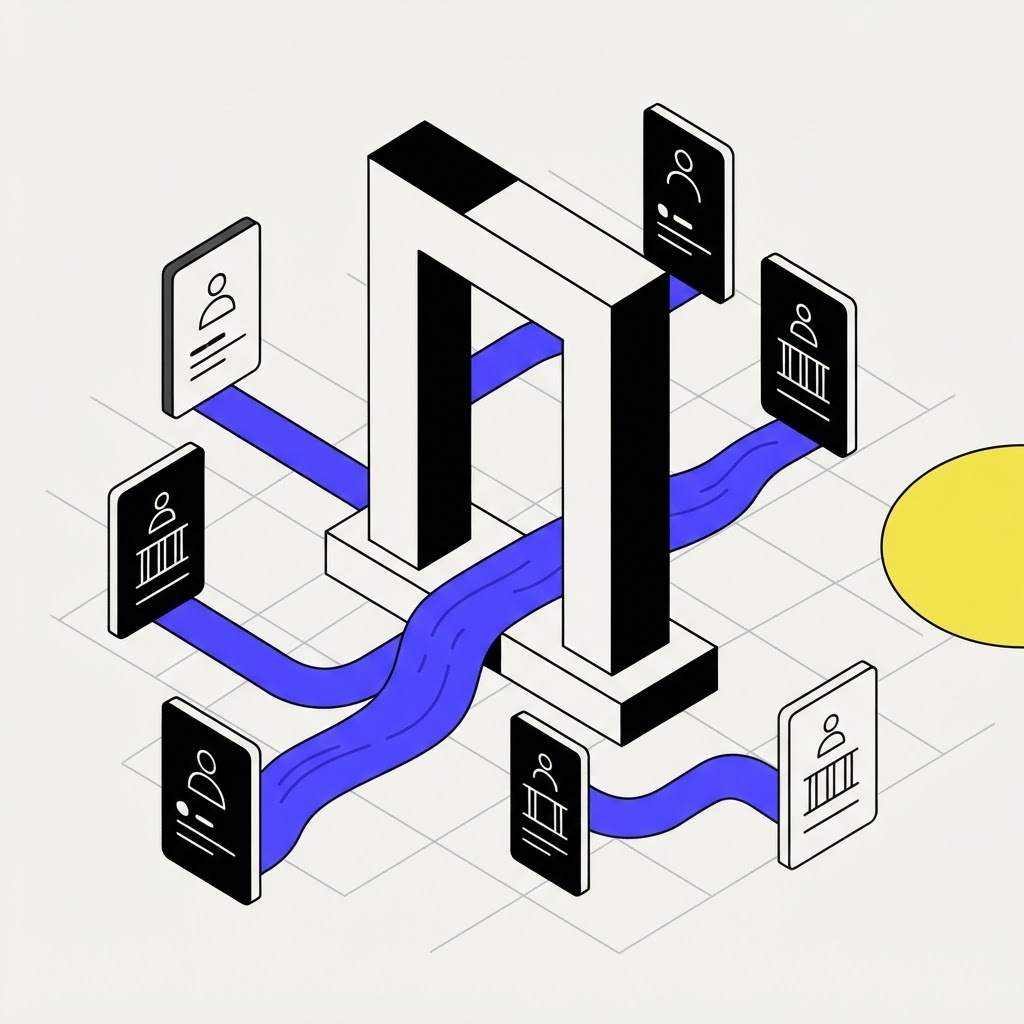
MCP and A2A are complementary rather than interchangeable. As the MCP architecture overview describes, MCP standardizes how an agent connects to tools and context, such as a sanctioned screening database or internal policy repository; A2A standardizes how one agent asks another agent to perform work. A regulated program may use both, but should assign ownership for tool access and delegated work separately.
A side-by-side compliance comparison
This comparison isolates the operational distinction that matters when designing automated compliance and audit-trail technology.
Criterion | A2A | MCP | Compliance control |
|---|---|---|---|
Primary connection | Agent to agent | Agent to tool or context | Separate agent and tool registers |
Core record | Task lifecycle and result | Tool request and response | Case-level evidence trail |
Onboarding use | Delegate distinct review steps | Retrieve approved documents and data | Scoped case permissions |
Monitoring use | Route detected signals for review | Query approved monitoring sources | Escalation and review logs |
Identity and trust | Agent Cards describe each agent and its supported authentication schemes | Access depends on each server's authorization setup | Agent and tool identity registers |
The protocols define communication patterns, not control outcomes. For internal governance, a defensible review should link the final conclusion to underlying sources, permissions, task history, and an accountable reviewer.
Why MCP access needs tighter review
An MCP connection can simplify access to many compatible tools, but convenience removes the custom integration review that previously made a connection visible. MCP can reduce the need for bespoke integrations between compatible agents and tools, but each connection still requires governance. Treat every MCP connection as a permission design problem, with named owners, least-privilege credentials, approved server registries, and revocation procedures.
Turning protocol design into regulatory defensibility
Continuous KYC and AML monitoring systems must demonstrate what changed, what the system observed, and how the organization responded. That requires more than a completed task status or a successful tool call. It requires a durable decision trail that ties a signal to the entity reviewed, the underlying evidence, policy logic, analyst disposition, and subsequent escalation. Teams building toward audit-ready KYC automation should treat that record as a design requirement from the start.
Build controls around the full agent action
The security profile changes with the model, tools, hosting context, deployment method, and use case. The federal request for information on AI agent security describes agent scaffolding software as enabling models to take a range of discretionary actions. For a bank, that means testing the pathway from trigger to tool call to decision record, including failure handling and human intervention.
VPC deployment can provide a controlled deployment boundary for sensitive workloads, but VPC placement does not replace logging and access governance. Grep supports VPC deployment options, scoped least-privilege credentials, configurable retention with delete-on-request, and exportable decision trails for audit. Those controls matter when a monitor watches a counterparty for leadership, website, job-posting, or regulatory changes over time.
Move high-stakes work beyond generic copilots
A controlled compliance case process requires approved data access, repeatable case logic, traceable citations, and review controls for consequential decisions. The distinction between purpose-built compliance agents and generic assistants becomes practical when a team needs custom agents to produce traceable, citation-backed reports, spreadsheets, or slide decks for a defined review. Grep's guide to agent coordination is relevant when separate research tasks must converge into an accountable decision record.
Grep's Loops and Monitors support scheduled or event-triggered workflows and always-on screening, allowing teams to move from one-time due diligence to ongoing review. Its traction is strongest today among very large enterprises, where evidence quality, ownership, and audit readiness often determine whether automation can be put into regulated production.

Conclusion
Use A2A when compliance work requires controlled delegation among agents, and use MCP when agents need governed access to specific tools and context. Before adoption, require vendors to demonstrate identity controls, scoped permissions, source preservation, exception handling, review workflows, retention, and exportable audit records. For banks and fintechs conducting institutional onboarding or persistent screening, Grep is the choice when the requirement is custom AI agents and Loops and Monitors with outputs that remain traceable, auditable, and defensible to a board or regulator. Protocol interoperability can expand automation, but only documented controls make its conclusions accountable.
Ready to evaluate agents against your compliance standard? Explore Grep's custom agents and review the controls behind the output.
Frequently Asked Questions (FAQs)
What is the role of A2A protocol in institutional onboarding?
The role of the A2A protocol in institutional onboarding is to let distinct agents delegate and complete defined review tasks while exposing a task lifecycle that can be associated with a case record, approvals, exceptions, and evidence for later examination.
How do custom AI agents ensure auditability for compliance work?
Custom AI agents ensure auditability for compliance work only when the implementation retains source materials, prompts or task scopes, permissions, tool activity, outputs, analyst actions, and the final decision in an exportable record.
Why choose dedicated AI agents over generic Microsoft Copilot?
Dedicated AI agents are used over generic Microsoft Copilot when a team needs a purpose-built process for due diligence or oversight, including approved data access, repeatable case logic, traceable citations, and review controls for consequential decisions.
Can AI agents perform continuous KYC screening for financial institutions?
AI agents can perform continuous KYC screening for financial institutions by monitoring defined entity signals and routing relevant changes into a documented review process, but a regulated institution must set escalation rules and retain reviewer decisions.
What security protocols protect data in enterprise AI agents?
Security protocols that protect data in enterprise AI agents include authentication, scoped least-privilege credentials, approved tool registries, logging, retention controls, network boundaries, and human authorization for actions that create material compliance consequences.
How are Grep AI agents deployed within a VPC for enterprise security?
Grep AI agents can be deployed with VPC options for enterprise security, while the broader control design should also document access scopes, data retention, audit exports, and the separation of customer information from model training.
About the Author
Miguel Rios-Berrios is Founder and CTO of Grep, with expertise in AI agents, distributed systems, engineering leadership, and fintech compliance. He has spent a decade building distributed teams and developing enterprise agent systems for high-stakes work where traceability and operational controls are essential. Connect on LinkedIn.