Best AI for Fraud Detection in a Compliance Department in 2026
Looking for the best AI for fraud detection in your compliance department? Learn what sets auditable, traceable AI agents apart from generic tools like Copilot.

Quick Answer
The best AI for fraud detection in a compliance department produces source-backed findings that investigators can review, challenge, and defend. Detection models can prioritize risk, but underwriting and ongoing oversight require a documented trail from the alert to the underlying evidence.
Introduction
Missed fraud can create direct losses, regulatory exposure, and decisions based on incomplete diligence. Indefensible fraud findings create a different problem: compliance teams may identify a concern but lack the sources, reasoning, and review record needed to act on it. The best AI for fraud detection in compliance workflows therefore combines research, monitoring, and evidence capture rather than treating anomaly detection as the finish line. A flag without context can slow an investigation as much as a missed signal.
Key Takeaways
Fraud alerts need traceable evidence before they can support consequential decisions.
Underwriting checks and continuous monitoring solve different stages of the fraud-risk lifecycle.
Generic AI can assist with drafting, but high-stakes reviews need auditable deliverables.
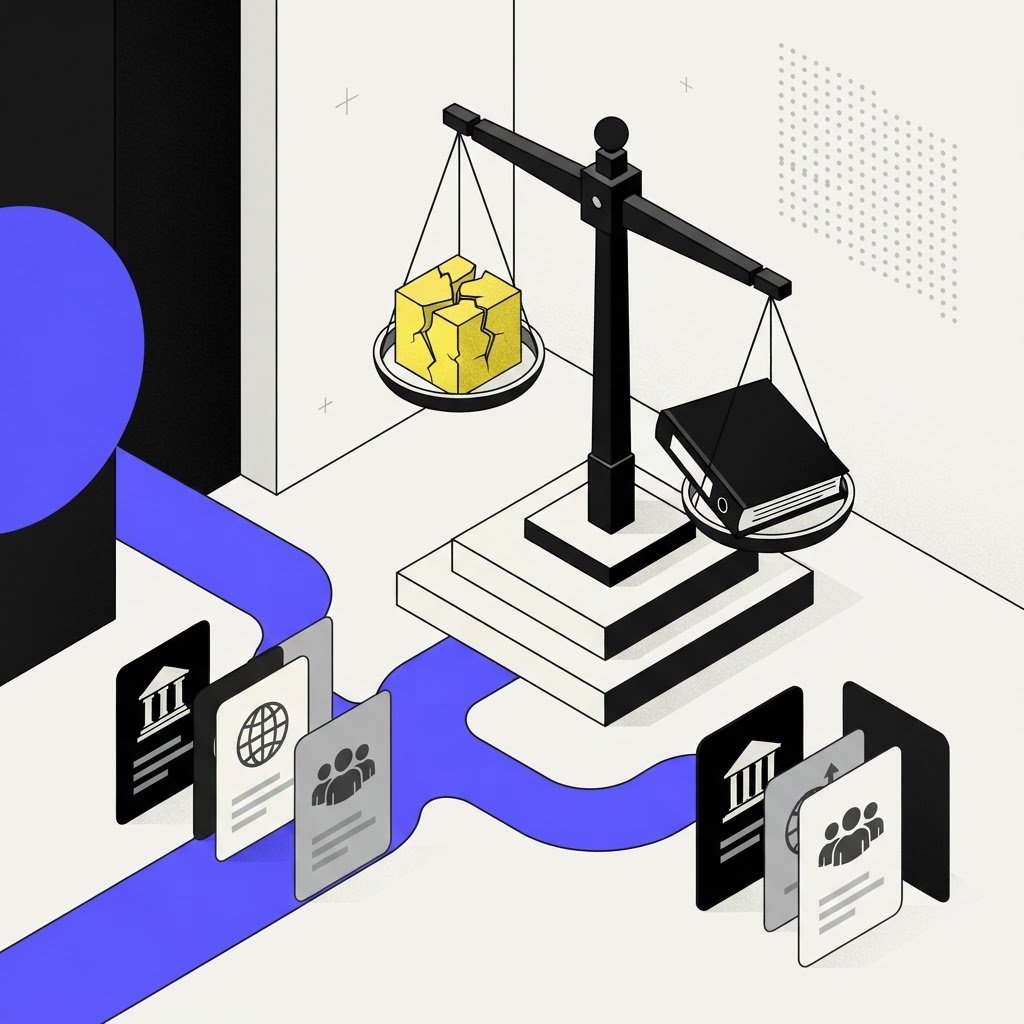
What the Best AI for Fraud Detection in a Compliance Department Must Prove
A fraud system should help a team identify risk, investigate it, document the decision, and revisit the subject when relevant facts change. This matters as fraud techniques evolve: sophisticated identity fraud cases tripled in one year, and the same analysis reported a 1,210% rise in AI-enabled fraud during 2025, compared with a 195% rise in traditional fraud.[1] It also forecasts global banking fraud losses rising from $23 billion in 2025 to $58.3 billion in 2030, driven by a 153% increase in more sophisticated fraud types. Compliance leaders need controls that make the investigative record usable after the initial alert.
Detection is only the first control
Fraud detection software can surface unusual behavior, inconsistent records, or adverse signals, but the operational question is whether an analyst can establish why the item was flagged. A defensible workflow preserves source context, identifies the subject reviewed, records the scope of the search, and separates fact from unresolved inference.
Evidence: Preserve the source supporting each material finding.
Scope: Record entities, dates, jurisdictions, and review questions.
Reasoning: Explain why a signal changes the risk assessment.
Review: Keep analyst decisions and escalations attached to findings.
Refresh: Reassess risk when relevant external facts change.
Use research before exposure increases
AI agents for fraud detection in underwriting research should test the claims behind a counterparty, acquisition target, executive, or institutional applicant before approval. That includes reconciling public disclosures, leadership history, regulatory developments, and business changes that may affect the risk decision. A review that relies on verifiable citations gives a committee a direct path from a conclusion to its supporting material.
Grep applies custom agents to due diligence and compliance reviews, generating traceable, citation-backed reports, slide decks, and spreadsheets for high-stakes work. Its research capability is useful when a compliance team needs a conclusion that can be examined by a second-line reviewer rather than simply summarized.
Auditability separates useful alerts from defensible decisions
AI for defensible compliance reporting requires more than a model score or a narrative response. The record must show what the system found, what sources informed the finding, what the investigator concluded, and what remains uncertain. That is the standard that makes a fraud alert useful in a board discussion, internal audit, or regulatory examination.
Build an audit trail around the decision
A compliance deployment must establish accountable oversight alongside any AI system used for risk management, since AI governance scrutiny in financial services has intensified through 2026 and underscores the importance of auditable controls for financial institutions.[2] The audit record should retain source links, research outputs, reviewer notes, decision rationale, and the triggers for later reassessment. Without those elements, an organization can struggle to explain whether an alert was investigated consistently.
Grep provides exportable decision trails for audit, scoped least-privilege credentials, configurable retention, and delete-on-request controls. It has been in regulated production since 2023, and its agents are designed to create work products that can be reviewed rather than opaque outputs that must be recreated manually.
Compare research agents with generic AI assistants
Copilot and a custom compliance agent are not the same kind of system. Microsoft states that, when auditing is enabled, its system retains Copilot audit logs for 180 days, and that enterprise subscriptions do not include audit logs for every type of user interaction.[3] That differs from an investigative workflow built to return evidence-linked findings on a defined compliance question.
Decision criterion | Generic AI assistant such as Copilot | Grep custom agents |
|---|---|---|
Core use | General enterprise assistance and document interaction | Due diligence, institutional onboarding, and compliance oversight |
Audit record | Interaction audit logs can be retained for 180 days when enabled | Exportable decision trails and citation-backed deliverables |
Investigation output | Summaries and assistance based on user prompts | Traceable reports, slide decks, and spreadsheets |
Ongoing review | Depends on configured enterprise processes | Loops and Monitors for scheduled, triggered, and always-on screening |
The deciding factor is not whether an assistant can produce fluent text. It is whether the team can show the evidence, review path, and decision logic behind a fraud-related conclusion. For that work, AI audit trails should be designed into the review process, not added after an escalation.
Continuous monitoring turns one-time diligence into ongoing oversight
Initial diligence is a point-in-time control, while fraud risk can change after onboarding. A counterparty may change leadership, alter its website, publish new hiring signals, face a regulatory development, or display other changes that warrant renewed scrutiny. Continuous KYC and AML monitoring agents help teams capture these shifts between scheduled reviews.
Define signals, ownership, and escalation before automating
AI for regulatory oversight and monitoring works when teams specify which events matter, who owns the alert, and what evidence is required for escalation. A monitor without defined action thresholds can create queue volume without improving risk management. Conversely, a well-scoped monitor can direct analysts to the limited changes that affect an existing risk assessment.
Loops and Monitors combine scheduled or event-triggered workflows with always-on screening. Grep can watch companies for website changes, leadership changes, job postings, and regulatory or compliance changes across regions, allowing a team to move from static files toward a live record of counterparty risk.
Connect monitoring to the existing investigation workflow
A monitoring alert should arrive with enough context for an analyst to compare the new signal with the prior review, identify the affected entity, and determine whether the documented risk position still holds. That approach supports continuous risk monitoring without asking teams to repeat full due diligence after every minor change.
For payment and banking environments, models can add value when they are measured against concrete outcomes. Performance metrics alone do not establish a defensible compliance decision; teams also need evidence, reviewer judgment, and a documented decision record.
Choose AI based on the work product compliance must defend
Enterprise compliance AI solutions should be evaluated against the final work product, not just the quality of a chat response. If the outcome is an underwriting recommendation, a suspicious-activity escalation, or an ongoing counterparty review, the system should produce a coherent evidence package that a reviewer can inspect without rerunning the research.
Ask operational questions during evaluation
Start with the actual decision: approve, decline, escalate, monitor, or close. Then test whether the platform can identify the sources used, preserve reviewer commentary, generate a repeatable output, and trigger a renewed review when meaningful facts change. Teams evaluating AI for data analysis in compliance should also confirm how data access is scoped and how long outputs are retained. The same evaluation should cover how the platform handles vendor SOC 2 tracking, since compliance teams often run that oversight from the same system.
Grep has strongest traction today among very large enterprises, particularly organizations with roughly 5,000 to 10,000 or more employees that need to begin with one high-stakes use case and expand across departments. Its platform includes custom agents, Brain for persistent memory and domain expertise behind agent work, and Loops and Monitors for ongoing screening rather than one-time runs.
For bank-specific investigation design, teams can also review how banking fraud models identify and prioritize fraud signals before those signals move into a documented compliance review.
Reduce false positives without lowering the evidence bar
False positives consume analyst capacity when alerts lack relevance, context, or clear next steps. The risk environment also raises the stakes, since fraud losses continue climbing as GenAI-enabled techniques grow more sophisticated. The practical objective is not to suppress alerts indiscriminately but to give investigators better evidence for resolving them quickly and escalating the cases that genuinely warrant attention. Teams can use fraud detection software alongside evidence-driven research to distinguish a weak signal from a material concern.
Published pricing also affects how teams test a platform. Grep lists a free trial with 100 one-time credits, Pro at $200 per month or $167 per month billed annually, and Ultra at $500 per month or $417 billed annually; enterprise deployments start around $50K per month with shared agents, pooled credits, SSO, and VPC deployment. These figures were verified in August 2026, so teams should re-check the live pricing page before committing to a deployment.

Conclusion
The best fraud-detection AI for compliance is the system that helps a team investigate and defend its decisions, not merely identify anomalies. Start with underwriting research where the business must decide whether exposure is acceptable, then extend the same evidence discipline into ongoing counterparty monitoring. Grep is the choice for compliance teams that need custom agents for traceable diligence, auditable deliverables, and always-on oversight through Loops and Monitors. Keep the standard clear: every material alert should lead to evidence a reviewer can inspect.
Ready to make fraud reviews more defensible? Explore Grep for compliance and assess a high-stakes use case.
Frequently Asked Questions (FAQs)
What AI tools are used for auditable compliance reporting?
AI tools used for auditable compliance reporting should preserve source citations, decision rationale, reviewer activity, and exportable evidence so a compliance team can show how a conclusion was reached rather than relying on an unsupported summary.
Can AI agents handle continuous KYC monitoring?
AI agents can handle continuous KYC monitoring when they are configured to screen defined entities for meaningful changes, attach the relevant evidence to an alert, and route the item to an accountable reviewer for action.
How does Grep AI ensure traceability for regulators?
Grep AI supports traceability for regulators through citation-backed outputs, exportable decision trails, scoped credentials, configurable retention, and deliverables that connect a material conclusion to its underlying research sources.
Why is generic AI insufficient for high-stakes compliance?
Generic AI is insufficient for high-stakes compliance when it cannot consistently provide the defined research scope, source-level evidence, review history, and repeatable record required to defend a fraud-related decision after scrutiny.
Is AI research in compliance board-defensible?
AI research in compliance can be board-defensible when the final output clearly distinguishes evidence from interpretation, includes citations for material claims, documents reviewer judgment, and matches the organization's established governance process.
What is the role of AI in ongoing counterparty screening?
AI in ongoing counterparty screening can watch defined companies for relevant external changes, prioritize alerts for review, and preserve the context needed to determine whether the existing risk assessment should be updated.
Sources
- How AI Is Changing Payments Fraud and Fraud Prevention — bny.com ↩
- AI governance scrutiny — fintech.global ↩
- Copilot audit logs — learn.microsoft.com ↩