Does Grep Support MCP? An Integration Checklist for Agent Buyers
A practical checklist for agent buyers asking does Grep support MCP, covering integration depth, auditability, and enterprise security standards.
Quick Answer
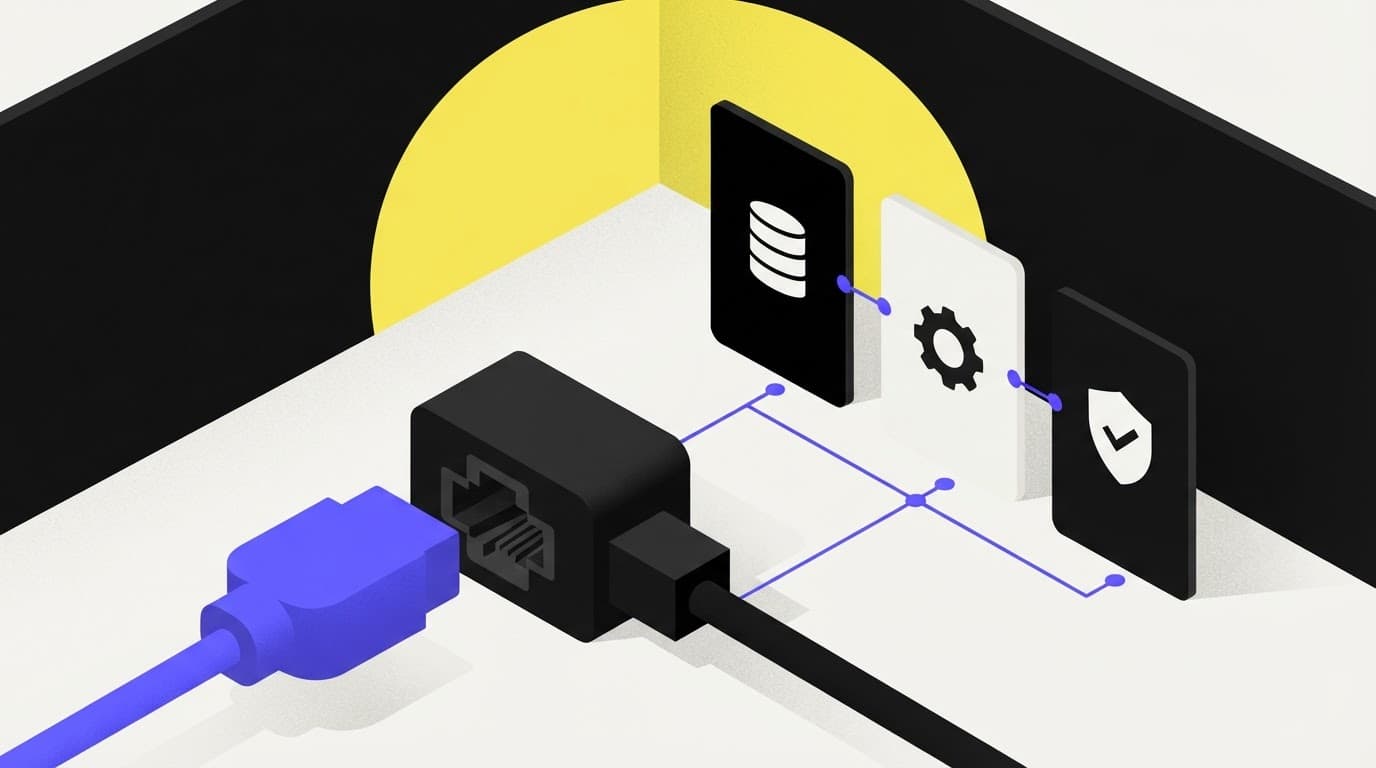
Grep publishes MCP integration guidance for connecting its capabilities to an organization's agent environment. MCP can simplify how agents reach approved tools and data, but regulated buyers should approve the full control model, including credentials, execution boundaries, decision trails, retention, and deployment options.
Introduction
MCP support matters because an agent cannot be trusted in a regulated workflow merely because it can call a tool. Grep provides MCP developer documentation for connecting its capabilities to an organization's own agent environment. For banks, fintechs, and investment firms, the relevant test is whether every connection remains traceable, auditable, and defensible to a board or regulator. A useful integration can still create unacceptable exposure if an agent receives broad access or acts on unverified instructions.
Key Takeaways
MCP support is useful only when access, execution, and outputs remain governed.
Require scoped credentials, sandboxed execution, and exportable audit trails before connecting production data.
Evaluate the agent’s work product alongside its integration architecture and security controls.

MCP Servers for AI Agents: What Buyers Should Verify
The Model Context Protocol is an open protocol for connecting LLM applications with external data sources and tools. It reduces one-off integration work, but it also extends the path through which an agent can retrieve information or request actions. For enterprise due diligence, that connection must be narrowly permissioned and easy to reconstruct after the fact.
Start with the connection boundary
Before approving an MCP connection, document the server, its owner, the tools exposed, the data each tool can access, and the actions the agent may request. The MCP security guidance also covers protocol architecture, security, and authorization.[1] Grep's MCP integration guidance and MCP developer documentation should be reviewed alongside the organization's identity, data-classification, and vendor-risk requirements.
Server ownership: Identify who maintains every connected MCP server.
Tool scope: Permit only documented tools required for the workflow.
Credential scope: Use least-privilege credentials tied to each connection.
Action controls: Separate research access from irreversible operational actions.
Change review: Reassess permissions when tools or prompts change.
Marketplace review: Account for the 15% marketplace-poisoning pattern identified in security research.[2]
Check prompt-injection and supply-chain exposure
MCP makes tool access more portable, not automatically safer. A MCP security analysis addresses architecture, security, and authorization considerations.[3] Research covering 847 attack scenarios across five MCP server implementations found attack success rates 23% to 41% higher than equivalent non-MCP integrations, while supply-chain compromise represented 28% of the identified attack patterns. That makes a documented MCP security checklist a procurement requirement rather than a technical afterthought.
Security Controls That Make Connected Agents Defensible
An agent connected to internal systems needs controls that survive more than a product demonstration. The decision should focus on what happens when a source is misleading, a tool response contains hostile instructions, or a reviewer must explain how an output was created. These are the core security standards financial services organizations should apply to AI agents.
Compare MCP readiness beyond a yes-or-no claim
Use the table to distinguish protocol compatibility from the governance evidence needed for high-stakes work. Grep provides custom AI agents for high-stakes work, including due diligence, institutional onboarding, compliance reviews, and continuous monitoring. For context on how MCP relates to other emerging interoperability standards, see this A2A protocol comparison.
Evaluation area | What to verify | Why it matters |
|---|---|---|
MCP connection | Named servers, approved tools, documented scopes | Limits unreviewed paths into enterprise systems |
Identity and access | Scoped least-privilege credentials | Constrains data exposure and actions |
Execution | Sandboxed execution and approval points | Contains unsafe tool behavior |
Evidence trail | Exportable decision trails and source citations | Supports audit and escalation review |
Deployment | VPC deployment options and retention controls | Aligns the service with enterprise boundaries |
The key distinction is simple: an MCP endpoint proves a connection is possible, while the controls above show whether that connection can be governed in production.
Grep states that it does not train models on customer data and supports configurable retention with delete-on-request. It also supports scoped least-privilege credentials, sandboxed execution, exportable decision trails, and VPC deployment options, which gives security teams concrete controls to test during architecture review.
Require evidence for every material conclusion
For a compliance review or acquisition diligence report, a polished answer is not enough. Reviewers need the source trail, the agent steps, the tool calls, and the basis for the conclusion. Grep produces traceable, citation-backed reports, slide decks, and spreadsheets, while Loops and Monitors support scheduled or event-triggered workflows and always-on screening for changes such as leadership, job postings, websites, and regulatory developments.

How to Run an MCP Integration Review
A practical review should test the exact workflow the organization intends to deploy, not a generic chat example. Start with a bounded use case, such as continuous KYC monitoring or counterparty diligence, then prove that the agent can access only the approved systems and generate a reviewable record.
Test the workflow with realistic failure cases
Ask the vendor to demonstrate how the agent handles conflicting sources, inaccessible records, unexpected tool output, and a request that exceeds its credentials. The MCP server setup process should specify the accountable owner for each server, the authentication method, and the approval route for changes. Security research has also reported 84.6% inter-agent attack success in multi-agent settings, so each added agent or server should be treated as a new trust boundary.
Make governance operational, not aspirational
Require logging that lets an investigator reconstruct what data was accessed, which sources informed the output, and whether a human approved any consequential action. Grep has been in regulated production since 2023 and is built for work where outputs must withstand audit scrutiny, but each buyer still needs to map its own policies to the specific data and actions exposed through MCP.
Conclusion
Grep supports MCP, and that support should be evaluated as part of a broader connected-agent control model. For context on the role of the protocol, review role of MCP servers. The right review verifies scoped access, sandboxed execution, traceable outputs, retention practices, and VPC deployment options against a real workflow. For teams running due diligence, institutional onboarding, compliance oversight, or continuous monitoring, Grep is the appropriate choice when the requirement is custom agents with outputs that can be audited and defended. Treat every MCP server as a production integration, not a convenience feature.
Ready to assess an agent workflow with the right controls? Explore Grep for high-stakes research and monitoring.
Frequently Asked Questions (FAQs)
What is MCP and how does it work with AI agents?
MCP is an open protocol that lets LLM applications connect to external data sources and tools, allowing an agent to retrieve approved information or request permitted actions through defined server interfaces.
Does Grep support MCP for enterprise integrations?
Grep supports MCP for enterprise integrations through published developer documentation and guidance for using Grep from an organization's own agent, while the buyer remains responsible for reviewing the connected systems and permissions.
What are the security standards for AI agents in financial services?
AI agents in financial services should include least-privilege access, sandboxed execution, source and decision logging, controlled retention, human approvals for consequential actions, and deployment boundaries that match internal security policy.
How does Grep maintain data governance without model training on customer data?
Grep maintains data governance without model training on customer data by stating that customer data is not used for model training and by providing configurable retention, delete-on-request, scoped credentials, and exportable decision trails.
Can Grep AI be deployed in a VPC environment?
Grep AI can be deployed with VPC deployment options, enabling enterprises to evaluate a deployment boundary that aligns with their internal network, access-control, and data-governance requirements.
What should enterprises check before integrating MCP servers?
Enterprises should check server ownership, tool permissions, authentication scope, data classifications, prompt-injection handling, change management, audit logging, retention settings, and the escalation path for unsafe or ambiguous agent behavior before integrating MCP servers.
Sources
- MCP security guidance — media.defense.gov ↩
- Breaking the Protocol: Security Analysis of the Model Context Protocol Specification and Prompt Injection Vulnerabilities in Tool-Integrated LLM Agents — arxiv.org ↩
- MCP security analysis — coalitionforsecureai.org ↩
About the Author