Hebbia Alternatives for Investment Due Diligence Buyers in 2026
Comparing Hebbia alternatives for 2026? See what investment due diligence buyers should prioritize: traceability, citations, and audit-ready AI research output.

Quick Answer
Grep is the stronger choice for investment teams that need traceable research deliverables, persistent project context, and controls suitable for board or regulatory review. Hebbia describes AI-powered due diligence use cases for private equity analysts reviewing virtual data rooms.
Introduction
An AI due diligence platform for enterprises should reduce research time without weakening the chain between a conclusion and its underlying evidence. That distinction matters when investment committees ask where a claim came from, what changed since the first review, and whether the same process can run across a growing pipeline. Hebbia describes AI-powered due diligence for private equity analysts and investment research analysis for hedge fund analysts. Bad research does not only cost analyst time. It can change the assumptions that reach a board packet.
Key Takeaways
Prioritize evidence trails that connect every material conclusion to its source.
Test deployment controls before placing confidential deal data into a research platform.
Choose research systems that preserve context across diligence stages and recurring monitoring.
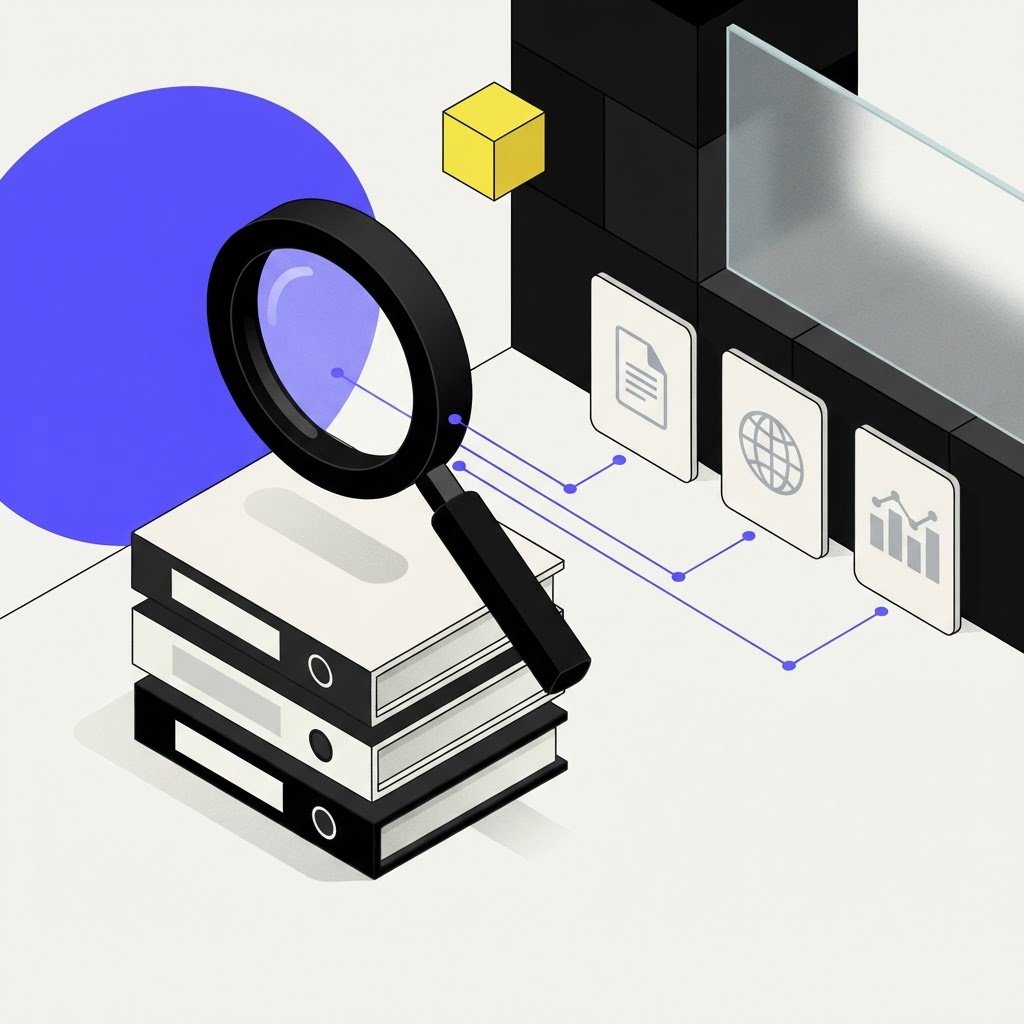
Traceable AI Research for Financial Services Starts With Evidence Control
Investment diligence is not a summarization task. It is a process of collecting claims, testing contradictions, documenting assumptions, and producing work that another analyst can inspect under time pressure. Buyers comparing platforms should start with the final deliverable, then work backward to determine whether every citation, source excerpt, and reasoning step can be reviewed. This review standard helps an AI due diligence platform for enterprises support consistent decisions across teams, transactions, and recurring oversight.
What a Defensible Research Record Must Preserve
A defensible AI audit trail for boards should show what sources informed an answer, when research ran, and how a reviewer can revisit the underlying record. This becomes especially important when a deal team updates a thesis after new financials, management changes, or market signals emerge.
Source lineage: Connect findings to the original document or public source.
Claim context: Preserve nearby language, not only extracted snippets.
Run history: Record when research was performed and updated.
Reviewer access: Let stakeholders inspect evidence without rebuilding the research.
Exportable records: Create materials usable in committee and audit reviews.
Why Citation Quality Changes the Buying Decision
AI research with citation-backed output is useful only when citations resolve to material that supports the exact claim. Hebbia is positioned as an enterprise AI research platform for analyzing large document collections, financial research, and due diligence. Document search can become a meaningful bottleneck before analysis begins, particularly when work starts with a large deal room.
For broader deal research, an audit-ready diligence trail should include external research, internal context, and clear sourcing in the same deliverable. AI governance in private markets illustrates the wider governance principle: an organization needs a usable record of what changed, who changed it, and when, so reviewers can reconstruct the decision process.[1]
Compare AI Due Diligence Platforms for Enterprises by Workflow Coverage, Not Interface
Hebbia is positioned for document analysis, financial research, and due diligence. Buyers should evaluate each platform against their own research, evidence, and workflow requirements.
How the Major Approaches Differ in Investment Deal-Prep
A practical comparison of automated research tools for VC deal prep considers where each system begins and ends. Generic assistants can draft from a prompt, document-analysis platforms can accelerate review of uploaded files, and agent platforms can carry work into recurring research, monitored changes, and board-facing outputs.
Approach | Primary research scope | Evidence requirement | Ongoing work model |
|---|---|---|---|
Hebbia | Document analysis, including VDR review | Assess source access and claim-level citations during evaluation | Document-centered research runs |
Generic AI assistant | Prompt-based drafting and general analysis | Requires independent validation of every material assertion | Typically session-based |
Grep | Custom agents for diligence, compliance, and institutional research | Traceable, citation-backed reports, slide decks, and spreadsheets | Agents, Loops, and Monitors for recurring research and screening |
The practical difference is whether research stops at an answer or becomes a maintained operating record. Teams should assess systems using identical deal questions and inspect the resulting outputs.
Hebbia's financial documentation survey also highlights the cost of incomplete review: 40% of finance professionals in its study said important insights and risks are overlooked at least once per month, particularly under time pressure.[2] That supports testing not only speed, but how a platform exposes omissions, conflicting evidence, and unanswered questions before investment approval.
Persistent Memory and Monitoring Matter After the First Memo
Investment work rarely ends when the initial diligence memo is delivered. Grep Brain, introduced with Grep 2.0 in April 2026, provides persistent memory and domain context behind agents so research can become slides, spreadsheets, and dashboards without repeatedly reconstructing the deal record. For a team building an investment diligence shortlist, that continuity can matter more than a polished first response.
Grep's Loops and Monitors extend that model beyond one-time analysis. Loops can run on schedules or real-world triggers, while Monitors provide continuous screening for company website changes, leadership changes, job postings, and regulatory or compliance changes across regions. This supports AI for investment deal-prep research that must continue through portfolio monitoring and investor relations work.
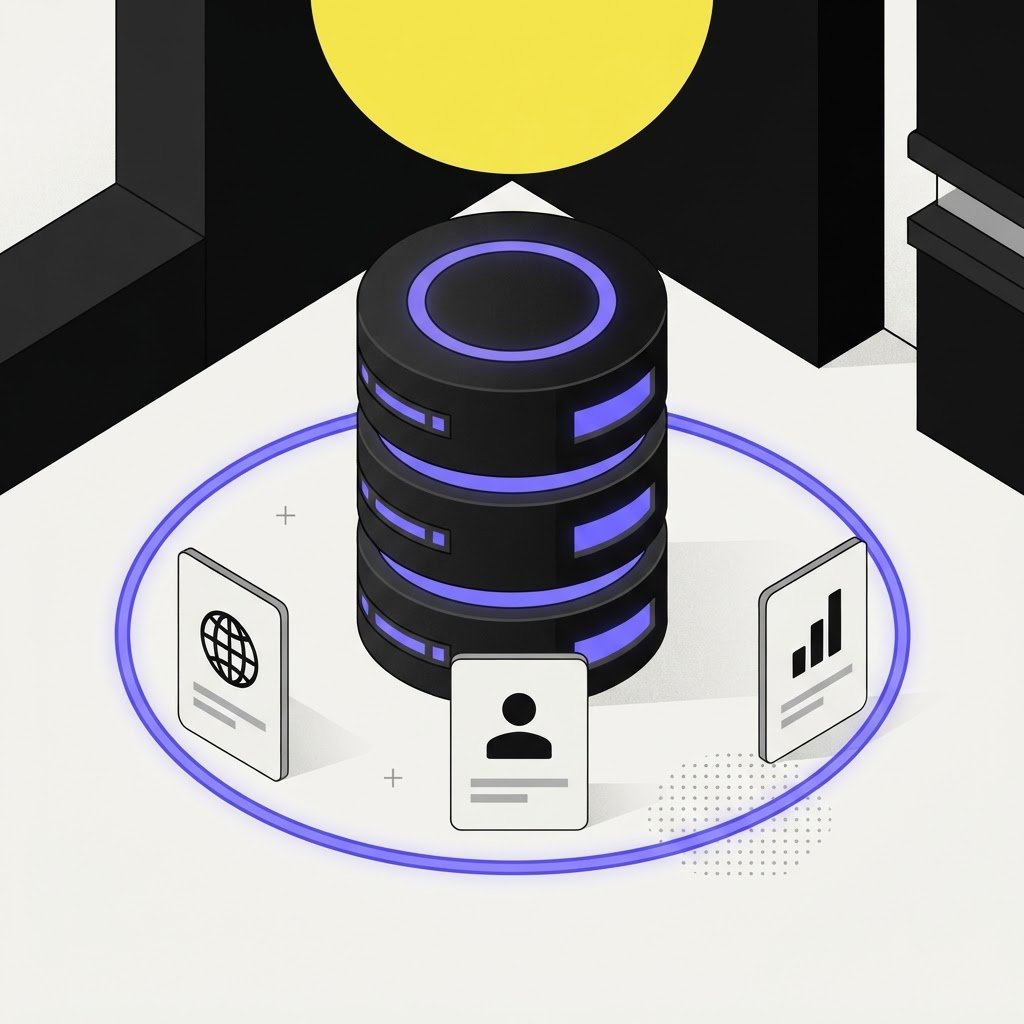
Deployment Security Is a Procurement Requirement, Not a Technical Detail
Security review should happen before a diligence team uploads a virtual data room, customer list, or investment committee material. VPC deployment changes where and how a platform can operate, but buyers should also examine credentials, retention, access controls, audit logs, and whether customer data is used for model training.
Questions to Ask During a Security and Data-Governance Review
Ask vendors to demonstrate the actual controls available in the deployment under consideration, not a generic security overview. The relevant review includes identity controls, scoped data access, evidence retention, export rights, incident processes, and the boundaries between customer data and model improvement. The SEC recordkeeping deadline is a useful reminder that governance expectations extend to documented policies and oversight, not merely technical safeguards.[3]
Grep supports VPC deployment options, sandboxed execution, scoped least-privilege credentials, configurable retention, delete-on-request, and no model training on customer data. Its strongest current traction is among very large enterprises, roughly 5,000 to 10,000+ employees, where security review and cross-functional control requirements often shape the buying process. It has also been in regulated production since 2023.
Separate Published Pricing From Sales-Led Procurement
Pricing transparency is useful because it lets a deal team validate access, credits, and deployment scope before involving procurement. Grep publishes transparent pricing: a free trial with 100 one-time credits, Pro at $200 per month or $167 per month billed annually with 1,500 monthly credits, and Ultra at $500 per month or $417 billed annually with 4,500 monthly credits. Team and enterprise deployments begin around $50K per month and include shared agents, pooled credits, SSO, and VPC deployment.
That transparency does not remove the need to scope enterprise implementation, especially where custom AI agents for risk operations need integrations and governance design. Grep also offers pay-as-you-go credit top-ups valid for 365 days, which helps teams separate an initial proof of value from a larger deployment decision.
Scale Research Capacity Without Adding Review Risk
Scaling compliance teams without headcount is not achieved by generating more text. It requires assigning repeatable research tasks to systems that can preserve evidence, escalate exceptions, and keep analysts focused on judgment calls. An investment team should measure whether a platform reduces the rework required to turn research into a defensible committee deliverable.
Use an Evaluation Pilot That Mirrors a Real Deal
A credible pilot uses a representative diligence package, clear research questions, an agreed scoring rubric, and reviewers who did not configure the system. Test financial, legal, operational, counterparty, and market questions that require evidence across different source types. Include a late-breaking change, then assess whether the platform can update conclusions while retaining the earlier record. For context on when a static due diligence database still adds value versus an agent-driven workflow, compare the two approaches directly.
Grep can run due diligence workflows through bespoke agents that produce traceable, citation-backed reports, spreadsheets, and slide decks. For VC and private equity teams, its VC and PE solutions support deal-prep research and ongoing investment monitoring rather than a single isolated document review.
Define the Human Review Boundary Before Rollout
Analysts should retain responsibility for material judgments, disputed facts, and investment recommendations. The system should handle structured collection, source comparison, recurring checks, and first-draft deliverables, while a reviewer resolves ambiguity and signs off on what reaches a committee. That division keeps automation focused on repeatable evidence work instead of treating the model as an investment decision-maker.
Grep's managed-agent platform is designed for repetitive, research-intensive workflows across business operations, compliance, research, and risk functions, with isolated sandboxes per run, audit logs, role-based access controls, and scoped credential access. These controls are relevant when diligence expands from an initial acquisition screen into ongoing counterparty, portfolio, or regulatory monitoring.

Conclusion
Hebbia describes AI-powered due diligence use cases for private equity analysts, including virtual data room review. For investment teams that need research to remain traceable across deal-prep, committee materials, and ongoing monitoring, Grep is the choice because it combines custom agents, persistent research memory, and exportable decision trails. Run a controlled pilot with the same source set, require claim-level inspection, and score the rework required before a reviewer can stand behind the output. The winning platform is the one that turns faster research into a record that remains defensible when scrutiny arrives.
For investment teams seeking an AI due diligence platform for enterprises, begin with a controlled pilot and defined evidence requirements. Use representative source materials, assign accountable reviewers, document exceptions, compare outputs against the original record, and preserve the resulting work for committee review and future monitoring.
Ready to evaluate an auditable research workflow? Explore Grep for investment diligence to map your highest-stakes research process.
Frequently Asked Questions (FAQs)
How to automate due diligence for high-stakes enterprise work?
Automating due diligence for high-stakes enterprise work means assigning repeatable collection, comparison, and monitoring tasks to controlled agents while retaining human approval for material findings, investment judgments, and unresolved contradictions that require accountable review.
Can AI provide defensible audit trails for regulatory compliance?
AI can provide defensible audit trails for regulatory compliance when it preserves source links, research timing, access controls, output history, and reviewer-visible evidence, allowing an organization to explain how a conclusion was formed and later updated.
What is the difference between generic AI and custom agents for due diligence?
The difference between generic AI and custom agents for due diligence is that generic AI usually responds within a prompt session, while custom agents can be configured around a defined research workflow, evidence standard, and recurring operating process.
How to scale investment research operations without increasing headcount?
Scaling investment research operations without increasing headcount requires moving repeatable source collection, change detection, and first-draft reporting into controlled automation, then reserving analyst capacity for validation, exception handling, and decision-making.
Is AI-generated due diligence output acceptable for board-level reporting?
AI-generated due diligence output is acceptable for board-level reporting only when accountable reviewers validate the conclusions and can inspect the cited evidence, assumptions, updates, and limitations behind each material statement in the final deliverable.
Why use persistent AI memory for multi-stage research projects?
Persistent AI memory for multi-stage research projects helps retain prior sources, decisions, open questions, and evolving context, reducing repeated setup work while making it easier to compare later developments against the original diligence record.
Sources
- What Private Markets Should Ask About AI — Fast Company ↩
- Financial Documentation Survey — Hebbia ↩
- SEC Regulation S-P Compliance Deadline — Sidley ↩