Why Is Competitive Intelligence Suddenly Everyone's Job?
Competitive intelligence isn't just a strategy team's task anymore. See why every department now needs it and how automated monitoring keeps enterprises ahead.
Quick Answer
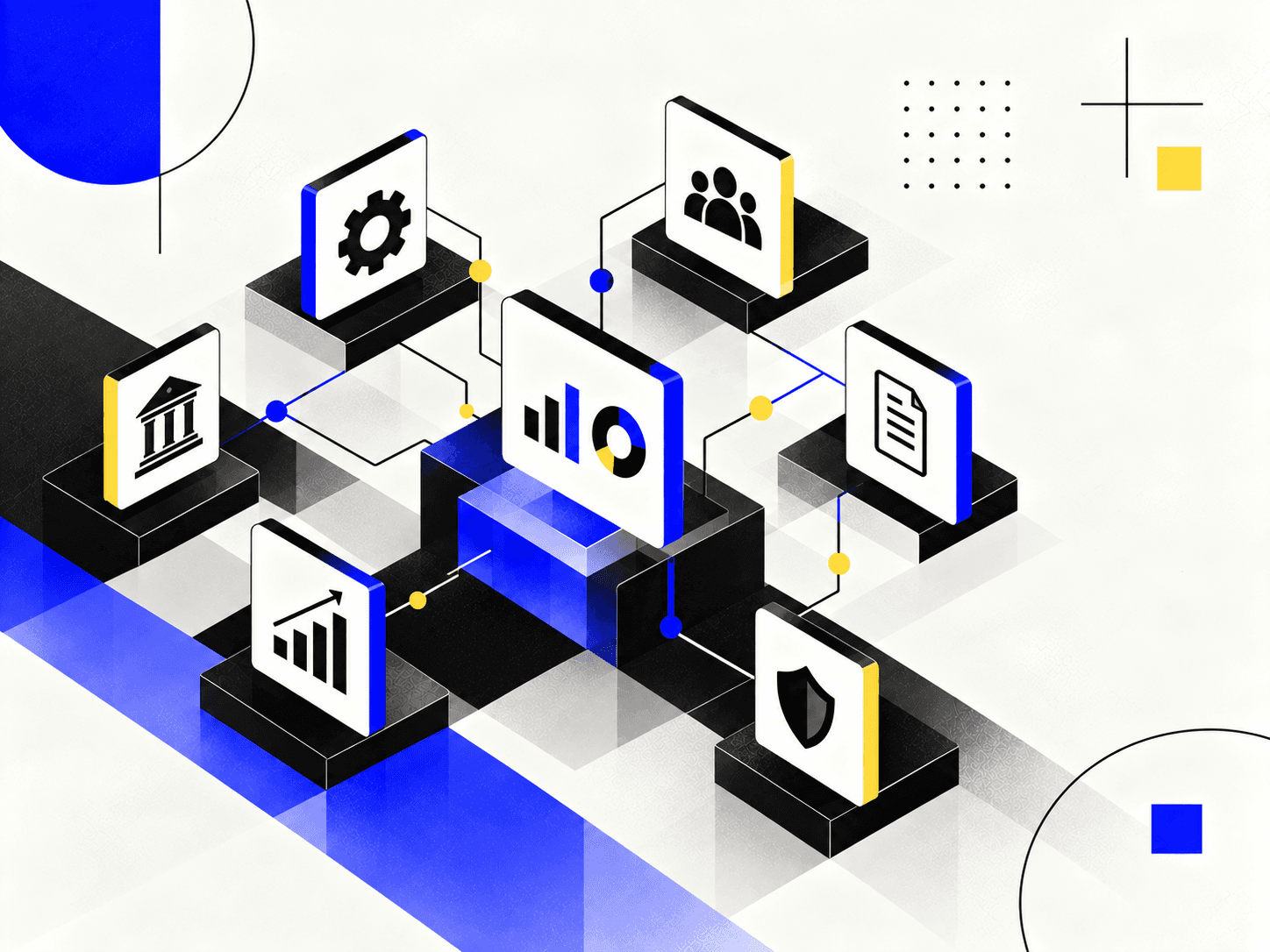
Competitive intelligence is now everyone's job because the signals that change a market no longer arrive on a quarterly schedule. Product, sales, compliance, legal, and executive teams each encounter different competitor moves, so enterprises need a shared, traceable monitoring system rather than scattered research requests.
Introduction
Competitive intelligence has moved from a specialist function to distributed operating work. A product leader sees a feature release, a salesperson hears a pricing objection, and a compliance officer spots a regulatory change, yet none of those signals matters if it stays in one inbox. For banking, fintech, and institutional investing teams, a missed leadership hire, market entry, or policy shift can alter a decision already in motion. The failure is rarely a lack of information; it is the absence of a durable way to capture, verify, route, and revisit it.
Key Takeaways:
Competitive intelligence now depends on signals gathered across multiple enterprise teams.
Continuous monitoring is more useful than periodic reports for fast-moving competitor activity.
Traceable AI agents help teams scale research without multiplying manual work.
Why Competitive Intelligence Has Become Distributed Work
Competitive intelligence was once treated as a strategy-team deliverable because market movement appeared manageable through periodic analysis. That assumption no longer holds. Competitors can change pricing, publish job openings, alter positioning, appoint executives, enter adjacent markets, or respond to regulation between scheduled reviews. Competitive intelligence turns information about competitors and market conditions into inputs for decision-making.
Signals arrive where the work happens
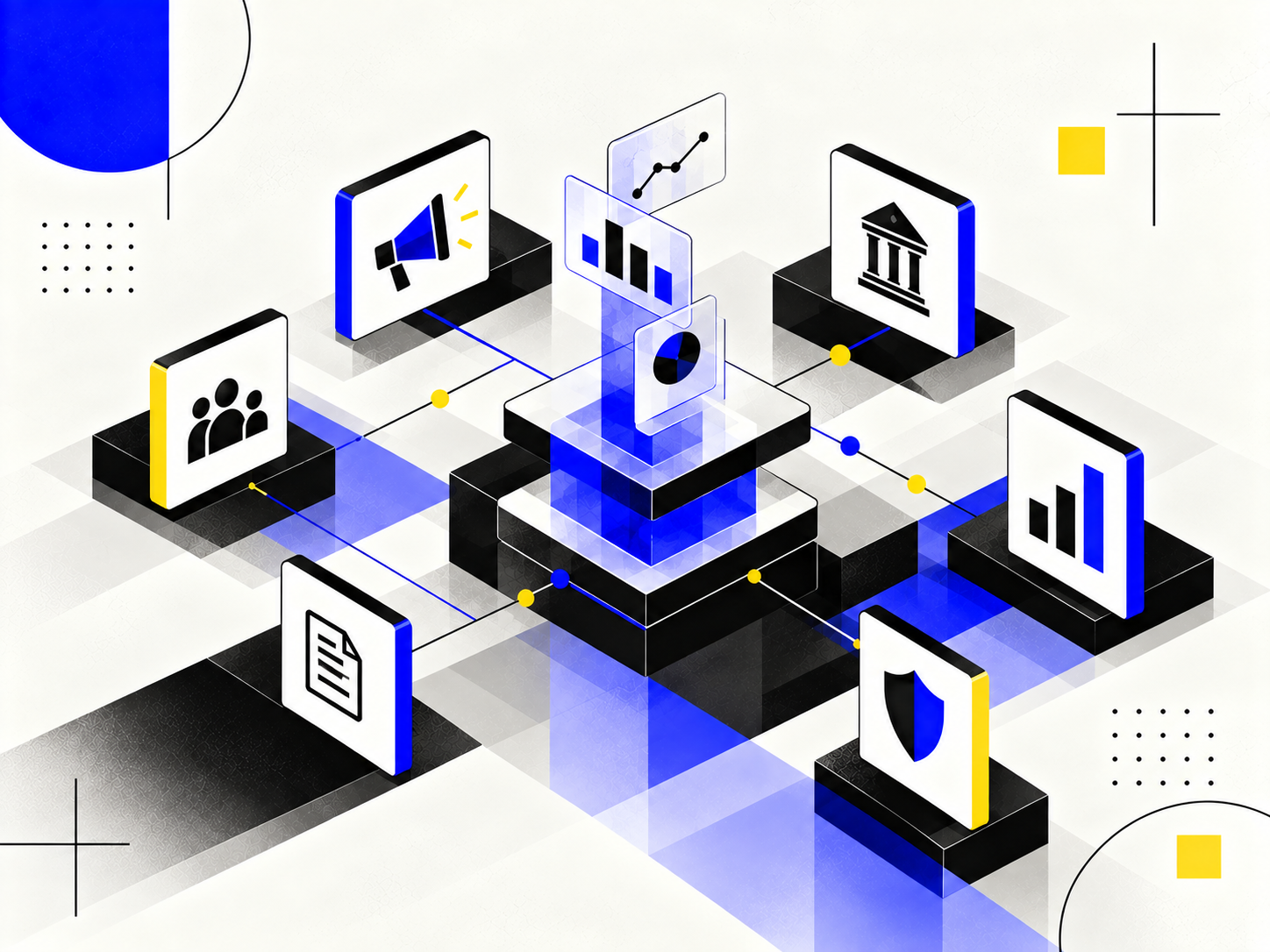
Each function sees a different part of the competitive picture, which makes a centralized intake model incomplete unless every team can contribute evidence. The practical shift is not asking every employee to become an analyst. It is defining which signals matter, who needs them, and how verified changes become usable context for a decision. Competitive intelligence commonly draws on public records and government databases alongside software tools that gather and analyze large datasets. An automated market-monitoring workflow can give teams a shared way to capture those changes without relying on scattered requests.
Product releases: Watch feature pages, integrations, and roadmap signals.
Leadership changes: Track executive hires, departures, and board appointments.
Job postings: Detect expansion plans, new capabilities, and market priorities.
Pricing updates: Capture package changes before sales conversations expose them.
Regulatory shifts: Flag policy changes affecting product design or risk.
Why quarterly research cannot keep pace
A quarterly deck can summarize what happened, but it cannot reliably alert a deal team to a competitor's new institutional offering or tell compliance that a jurisdiction has changed its supervisory posture. Survey data published by Sedulo Group found that 40% of insights, strategy, or marketing leaders continuously review competitive intelligence insights using monitoring tools, while 55% say CI research still plays a limited role in long-term strategic planning. That gap shows why market research and CI should not be treated as interchangeable: research explains a market, while CI must detect consequential movement inside it.
How Enterprise Competitive Monitoring Changes Across Departments
Distributed ownership works only when the monitoring output is specific enough to support the recipient's next decision. Sales does not need a generic market digest. Compliance does not need a feature-release roundup. An effective system separates the signal from the action while preserving the source trail that lets a stakeholder assess whether the finding deserves escalation.
Different teams need different evidence
Sales leaders need changes in competitor messaging, pricing, partnerships, and account-level positioning because those details reshape active conversations. Product teams need releases, integrations, architecture signals, and job postings that reveal where a rival is investing. Compliance and risk teams need regulatory, licensing, leadership, and public-record changes that could affect an institution's exposure, counterparties, or strategic assumptions.
That is why generic alerts often create more noise than value. A useful alert identifies what changed, when it changed, why it matters to the receiving team, and the underlying source. In financial services, the policy environment can move on an explicit timetable: a May 2026 White House action requested an FRB report within 120 days and directed federal financial regulators to take steps within 180 days after their review. Changes to financial technology regulatory frameworks can therefore become competitive inputs, not merely legal updates.
Manual tracking versus persistent monitoring agents
The real tradeoff is not human judgment versus automation. It is whether people spend their time finding routine changes or interpreting verified changes that deserve a response. Manual tracking can work for a narrow competitor set, but it becomes fragile when several departments track different signals across regions and the same fact must be explained repeatedly. In a Contify case study, a global industrial manufacturer reduced manual data gathering and formatting by 60 to 70%, freeing analysts for strategic planning. The distinction between AI competitor research and manual tracking is therefore operational as well as analytical: repeatable collection can leave people to evaluate significance and decide what happens next.
The table shows the operational difference between a one-off research model and an always-on model.
Operating model | Trigger | Output | Traceability |
|---|---|---|---|
Periodic manual research | Planning cycle or ad hoc request | Static report | Depends on analyst documentation |
Shared monitoring workflow | Scheduled or event-driven change | Role-specific alert and research trail | Source-backed and reviewable |
Generic AI prompt | User asks a question | Single-session response | Varies by prompt and source handling |
Custom research agents | Defined business rules and live signals | Repeatable decision-ready deliverable | Designed for audit and escalation |
The important distinction is persistence. Teams need context to survive beyond the person who first noticed a signal, especially when an issue moves from sales to legal, then to executive review.
What Always-On Competitive Intelligence Looks Like in Practice
Always-on competitive intelligence is a monitoring loop with a clear scope, named entities, meaningful triggers, accountable recipients, and an evidence trail. It does not mean collecting every mention of a company. It means watching the changes that could alter a commercial, regulatory, investment, or strategic decision.
Build loops around decisions, not broad topics
Start with a decision that would be expensive to make with stale information. A payments team might track a named rival's hiring in compliance, new geographic launches, pricing-page changes, executive appointments, and regulatory announcements. An investment team might monitor a portfolio company's competitors for fundraising, partnership announcements, product releases, and management turnover. This is where always-on monitoring loops become more useful than recurring analyst requests because the workflow runs whether or not someone remembers to initiate it.
Scope matters because broad monitoring quietly becomes unreadable. One owner should define the entities, signal types, confidence bar, review cadence, and escalation path. Another owner can validate whether the signal changes a decision. The same structure supports proactive regulatory change monitoring agents, where a regional policy update is linked to the specific products, counterparties, or markets that may be affected. Supervisors are widening the regulatory perimeter to capture fintechs, critical third parties, and new crypto activities, while implementation is fragmenting across the U.S., EU, UK, and Asia Pacific, according to Citrin Cooperman.
Preserve evidence when stakes are high
Generic AI can speed up early exploration, but its output is not automatically defensible for a board, regulator, or audit review. A Gartner survey cited by Contify found that 53% of consumers said they do not trust AI tools for search and information gathering. That distrust is not solved by asking users to trust a cleaner summary; it is addressed by preserving sources, documenting the logic of the research, and making the result reviewable.
Grep's competitive intelligence platform is built for the higher bar: custom AI agents for mission-critical research, with traceable and auditable outputs. Its Loops and Monitors combine scheduled or event-triggered workflows with ongoing screening for website changes, leadership changes, job postings, and regulatory or compliance changes across regions. That matters most for large financial-services organizations, where Grep's traction is strongest today, when intelligence must move from an operating team into formal oversight.

Conclusion
Competitive intelligence became everyone's job because competitors now create relevant signals in too many places for a small research team to catch alone. The answer is not to turn every department into a full-time analyst, but to give each department relevant, source-backed monitoring and a clear escalation path. Build monitoring around decisions, track named signals, and preserve the evidence needed to challenge or defend a conclusion. For enterprises managing high-stakes research across teams, Grep is the choice for turning continuous signals into traceable work that can stand up to executive, audit, and regulatory scrutiny.
Ready to replace ad hoc tracking with persistent research? Explore Grep's monitoring approach for high-stakes competitive work.
Frequently Asked Questions (FAQs)
What defines an effective competitive monitoring loop?
An effective competitive monitoring loop defines named companies, decision-relevant signals, accountable recipients, escalation criteria, and source-backed records so findings become durable operating context rather than a stream of disconnected alerts.
How can large enterprises scale research without adding headcount?
Large enterprises can scale research without adding headcount by automating repeatable collection and change detection, then reserving human review for interpretation, approval, escalation, and decisions that require domain judgment.
Why use custom AI agents for high-stakes due diligence?
Custom AI agents are useful for high-stakes due diligence because they can apply defined research rules repeatedly while producing traceable outputs that reviewers can examine before presenting conclusions to a board or regulator.
Can AI agents perform continuous KYC and monitoring?
AI agents can support continuous KYC and monitoring by screening for defined company, leadership, website, job-posting, regulatory, and compliance changes, while human teams retain responsibility for reviewing and acting on material findings.
What is the difference between generic AI and enterprise-grade research agents?
The difference between generic AI and enterprise-grade research agents is that generic AI usually responds within a single session, while enterprise-grade agents can follow defined workflows, retain relevant context, and generate reviewable research trails.
How does persistent memory improve AI research outcomes?
Persistent memory improves AI research outcomes by retaining relevant organizational context and prior work, which reduces repeated setup and helps research deliverables reflect the standards, entities, and decisions that matter to the team.
About the Author
David Aviles is Head of GTM at Grep, with roughly nine years of experience helping seed-to-scale software companies build go-to-market motions. His background includes Optimizely, Amplitude, and Mintlify, with practical expertise in B2B sales, customer acquisition, and startup growth. Connect on LinkedIn.